The Paradox of the Infinite Archive
We live in an era of unprecedented documentation. Every keystroke, GPS coordinate, and fleeting thought is captured in a cloud of silicon and light. Yet, this abundance is a mirage. While a clay tablet from Mesopotamia can survive four millennia in the sand, a digital file from 2004 can become unreadable in a decade. We are trading durability for accessibility, building our collective memory on a foundation of proprietary code and volatile hardware that is designed to be replaced, not preserved.
The phenomenon is known as the Digital Dark Age. It is not a sudden crash, but a slow, systemic leak. Information is lost not because it is deleted, but because the tools required to interpret it vanish. When a software company goes bankrupt or a platform pivots its API, millions of records become orphaned. We are witnessing a real-time erasure of the early internet, where the cultural artifacts of the 1990s and 2000s are disappearing faster than historians can categorize them.
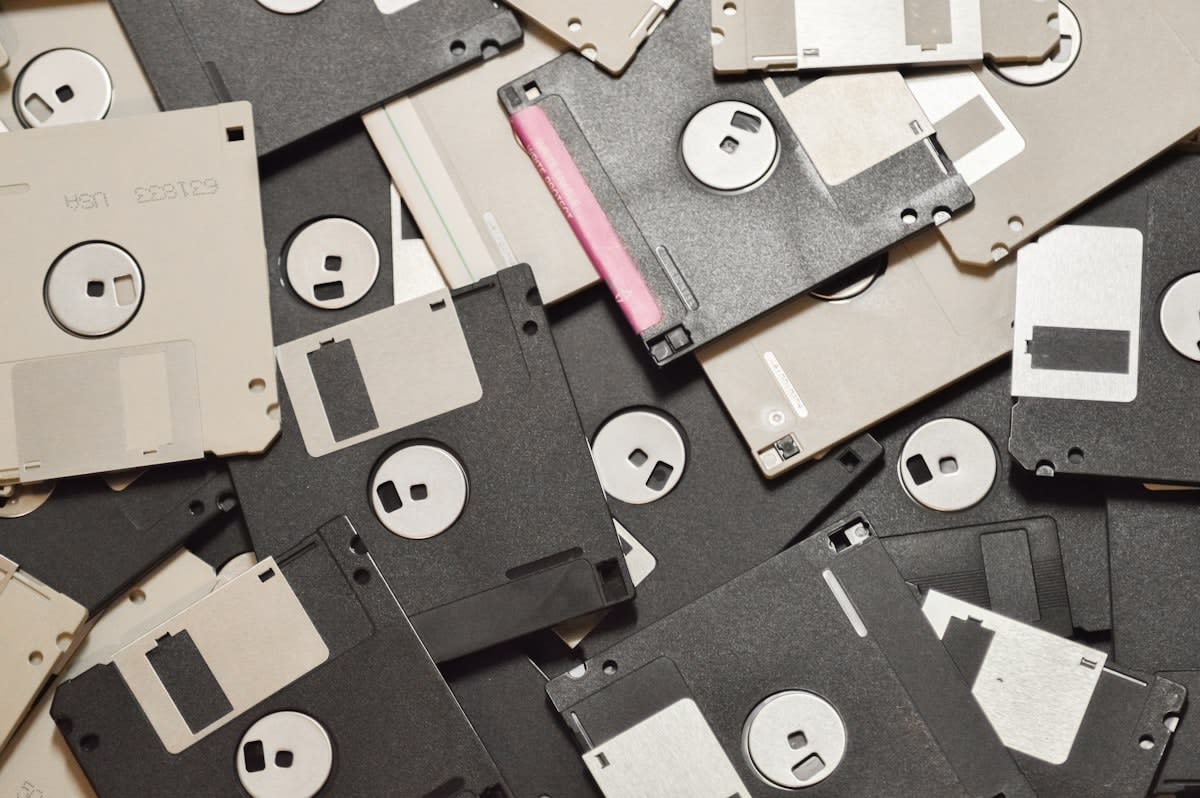
"The digital record is incredibly fragile. We are in a situation where we have more information than ever before, but it is stored in formats that are rapidly becoming obsolete, leaving us with a potential gap in the historical record."— Vint Cerf, Google Internet Evangelist and TCP/IP Co-designer
Consider the death of Adobe Flash. For two decades, Flash was the engine of web creativity, powering millions of games, animations, and interactive artworks. When support officially ended in December 2020, a massive swath of internet history simply stopped working (Source: Adobe, 2020). Unless a project like Ruffle can emulate the environment, those works are effectively gone. This isn't just about nostalgia; it's about the loss of the primary sources that define our current cultural evolution.
| Medium | Estimated Lifespan | Primary Failure Mode | Recovery Effort |
|---|---|---|---|
| Vellum/Parchment | 1,000+ Years | Physical Decay/Fire | Low (Visual) |
| CD-ROM/DVD | 10-30 Years | Disc Rot/Oxidation | Medium (Hardware) |
| Hard Disk Drive | 3-5 Years | Mechanical Failure | High (Forensics) |
| Cloud Storage | Indefinite* | Account Deletion/API Change | Extreme (Legal/Tech) |
Beyond the hardware lies the silent killer: bit rot. Over time, the magnetic polarity of a hard drive or the charge in a flash cell flips. A single bit changing from a 0 to a 1 can corrupt an entire encrypted archive, rendering the file an unreadable string of gibberish. In the world of professional archiving, this is a constant battle. We are no longer just fighting fire and flood; we are fighting the laws of thermodynamics and the inherent instability of electrons.
From a practitioner's perspective, the debate in the archives is currently split between migration and emulation. Migration involves constantly converting files to new formats—moving a Word 95 document to a .docx, for example. But every conversion loses metadata and introduces artifacts. Emulation, on the other hand, attempts to recreate the entire original computer environment in software. The friction arises when you realize that emulating a 1998 OS requires a level of documentation that often doesn't exist. Archivists are essentially trying to build a time machine for code, often without the blueprints.
The Walled Garden Crisis
The early web was a wild, decentralized frontier. GeoCities allowed anyone to carve out a digital home. When Yahoo closed GeoCities in 2009, millions of pages vanished (Source: Yahoo, 2009). While the Internet Archive attempted to scrape the data, the loss was catastrophic. Today, the problem is worse because our history lives in 'walled gardens.' Our conversations, photos, and professional networks are locked inside proprietary databases owned by Meta, X, and ByteDance.
If a modern social media platform collapses, the data doesn't just become hard to read—it disappears entirely because the user never truly owned the file; they owned a license to view it on a specific interface. This shift from ownership to access is the single greatest threat to 21st-century history. We are outsourcing our memory to corporations whose primary incentive is quarterly growth, not millennial preservation.
- API Restrictions: Platforms increasingly block scrapers, preventing archives like the Wayback Machine from capturing real-time data.
- Ephemeral Content: The rise of 'Stories' and disappearing messages creates a culture of planned obsolescence for communication.
- Proprietary Formats: Vendor lock-in ensures that data cannot be easily exported to open-source standards.
- Centralized Failure: A single server outage or account ban can erase a decade of a person's digital existence.

The delta between our current state and the situation a decade ago is stark. In 2014, the web was still largely indexable. Today, a significant portion of human interaction happens in encrypted apps or behind login screens. The 'visible web' is shrinking while the 'dark web' (in the sense of unindexed content) is expanding. We are moving toward a future where the only surviving records of the 2020s will be the official press releases of corporations and the curated archives of state governments.
However, resilience is emerging. Open-source movements are pushing for 'Universal Archiving' standards. Projects like the WARC (Web ARChive) format are attempting to standardize how web crawls are stored so they can be read by any future software. The goal is to move away from the 'save as' mentality and toward a 'preserve the environment' philosophy.
"The challenge is not just saving the bits, but saving the meaning. A database without its schema is just a pile of numbers. We must preserve the context of how information was accessed and used."— Digital Preservation Coalition, Strategic Framework
Does this mean we are doomed to a blank spot in the history books? Not necessarily. The solution lies in aggressive decentralization. By adopting open formats like PDF/A and utilizing distributed storage systems, we can decouple our history from the lifespan of a single company. The urgency is immediate; every day we wait, more of the early digital culture evaporates into the ether.
Fact-Check & Accuracy Note
Key claims regarding the end of Adobe Flash (2020) and the closure of GeoCities (2009) are sourced from official company announcements. The lifespan of storage media is based on industry-standard data recovery benchmarks. The debate between migration and emulation is a core tenet of the Digital Preservation Coalition's guidelines. Note: The exact percentage of 'lost' web data is a subject of ongoing debate among computer scientists due to the difficulty of measuring the unindexed web.