9 killed as Naga-Kuki clashes flare across 3 Manipur districts within 24 hrs
Source Entity
Latest News: Todays Latest News Headlines from India & World | Hindustan Times | Hindustan Times
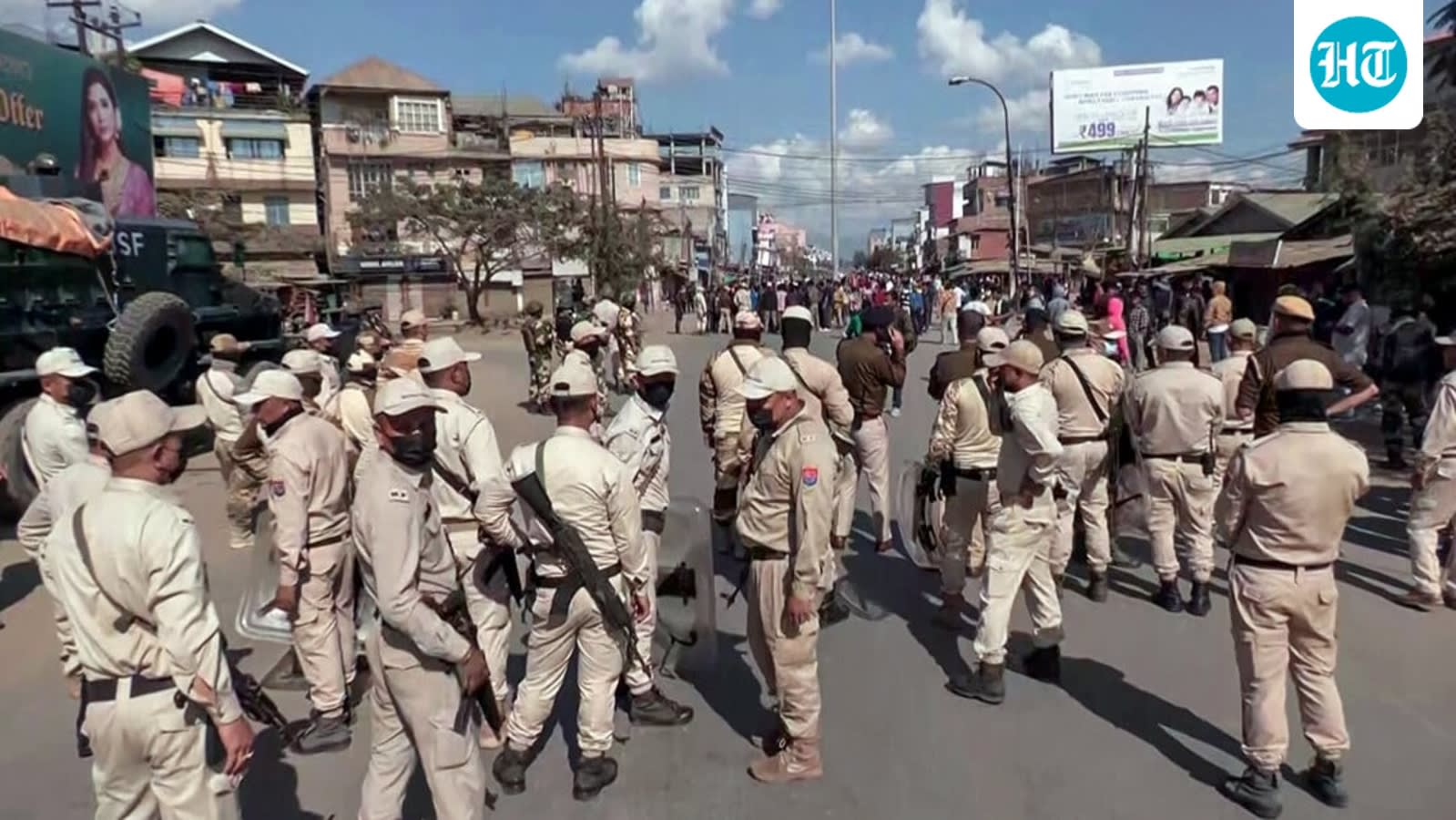
A Kuki woman named Domkhonei Touthang was killed during a security operation to demolish illegal bunkers in Manipur's Kamjong district. The incident sparked armed clashes and led authorities to impose prohibitory orders to restore order.
Tensions Escalate in Manipur: The Chassad Incident
On the night of October 9, 2026, the fragile security situation in Manipur’s Kamjong district suffered a significant setback. A woman, identified as Domkhonei Touthang—a mother of five—was tragically killed after sustaining gunshot wounds to the neck. The incident occurred during a security operation aimed at dismantling illegal bunkers situated near the Chassad police station, an area characterized by a complex demographic landscape involving Kuki and Naga communities.
The Security Operation and Its Consequences
The operation, conducted by a joint force comprising the civil police, the Indian Reserve Battalion (IRB), and the Border Security Force (BSF), was initiated following intelligence reports regarding the proliferation of unauthorized fortifications. As the security teams attempted to neutralize these illegal structures, they were met with resistance from local women who sought to disrupt the demolition efforts. According to official reports, unidentified individuals opened fire during the ensuing chaos, resulting in the fatal injury of Touthang and subsequently triggering a broader exchange of fire between armed factions.
Inter-Community Friction in Kamjong
The geography of this violence is particularly sensitive. Chassad village, while located in a Naga-dominated district, maintains a Kuki-majority demographic. This intersection of community interests often creates flashpoints for ethnic tension. The subsequent exchange of fire between Kuki and Naga armed groups following the shooting suggests that the incident has exacerbated long-standing grievances. The reported torching of several houses further indicates a rapid deterioration of the local security environment, moving beyond a isolated tactical operation into a communal confrontation.
Regulatory Response and Prohibitory Orders
In response to the escalating violence and the threat to public safety, district authorities moved swiftly to impose prohibitory orders. By invoking Section 162 of the Bharatiya Nagarik Suraksha Sanhita (BNSS), officials have restricted movement within a 400-meter radius of the Chassad police gate junction. This legal intervention is a standard but critical measure to prevent the assembly of mobs and to allow security forces to establish a perimeter, thereby containing the volatile situation before it can spread to neighboring villages.
Broader Implications for State Stability
This incident highlights the persistent challenges facing security forces in Manipur, where the removal of illegal bunkers is often perceived as a targeted action against specific groups. The presence of armed groups operating alongside civil protests complicates law enforcement efforts significantly. As the state continues to grapple with episodic violence, the reliance on bunker demolition drives as a tool for peacebuilding remains a contentious strategy. The tragic loss of civilian life underscores the urgent need for a more nuanced approach to conflict resolution that prioritizes the safety of the local population while addressing the root causes of regional militarization.
Conclusion and Future Outlook
The events in Kamjong reflect the deep-seated instability that has plagued regions of Manipur. As officials work to maintain the current restrictions and quell the active exchanges of fire, the long-term outlook remains uncertain. Restoring peace will likely require not only a robust security presence but also a concerted effort toward de-escalation and dialogue between the Kuki and Naga communities to prevent further loss of life and property.
Multiple Citing Sources
Verification Required?