HSBC, Ant Digital test AI-agent payments using tokenized deposits
Source Entity
Cointelegraph by Nate Kostar
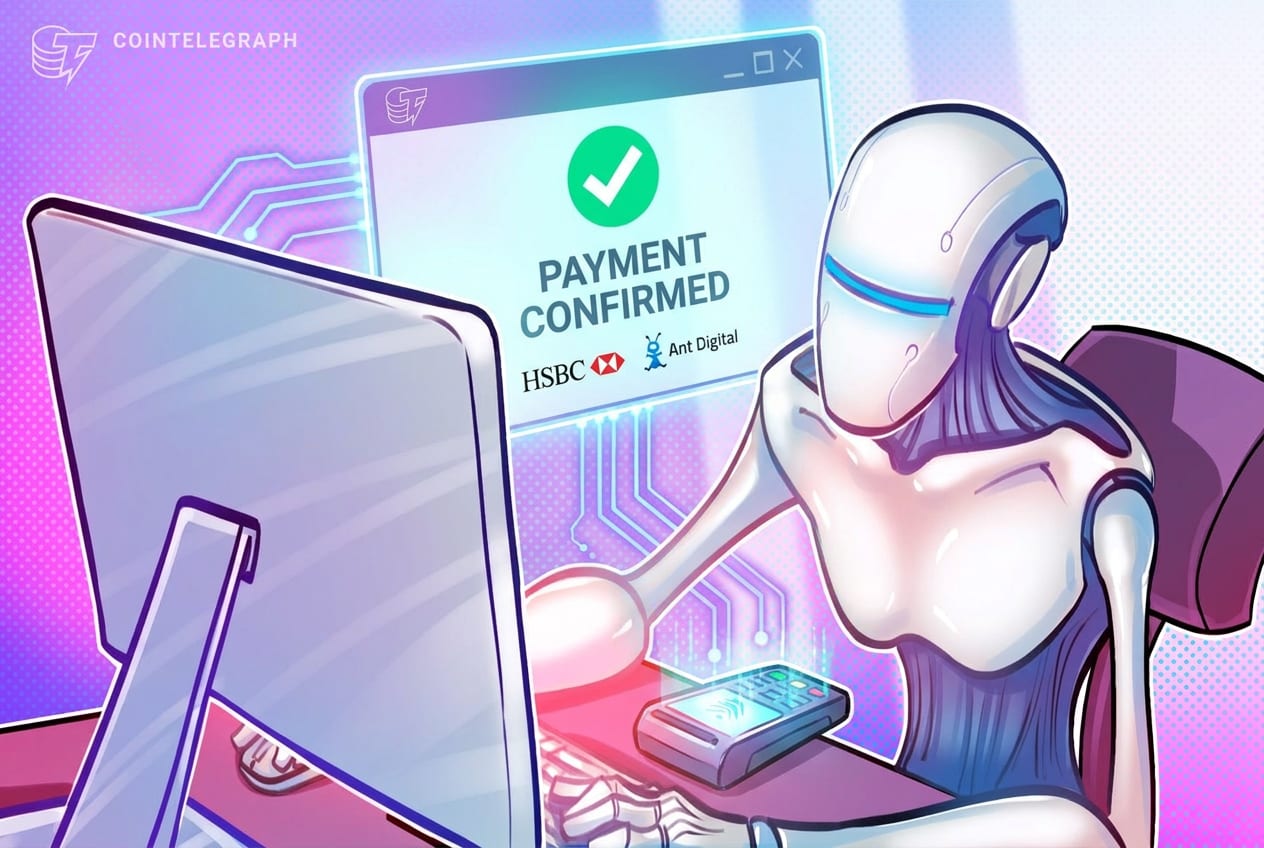
HSBC and Ant Digital have successfully tested a system allowing AI agents to perform autonomous micropayments using tokenized deposits. This collaboration leverages blockchain technology to enable real-time settlement and automated risk management for machine-to-machine transactions.
The Future of Autonomous Finance: HSBC and Ant Digital's AI Breakthrough
In a significant development for the intersection of artificial intelligence and financial technology, HSBC and Ant Digital Technologies have successfully concluded a technical trial that enables AI agents to conduct autonomous micropayments. By utilizing HSBC’s tokenized deposit service, the pilot demonstrates a move toward a machine-to-machine economy where AI entities can independently discover, purchase, and settle digital services without human intervention.
Integrating AI Agents with Blockchain Settlement
The infrastructure behind this trial is built on the convergence of three distinct technologies: HSBC’s Tokenised Deposit Service, Ant Digital’s Anvita Flow network, and the Jovay Testnet. Anvita Flow acts as the discovery layer, allowing AI agents to navigate and identify services, while the Jovay layer-2 blockchain provides the environment for execution. This architecture ensures that when an agent identifies a service, the payment transaction is not only swift but also cryptographically verified on a distributed ledger.
Real-Time Risk Management and Settlement
A critical hurdle for autonomous finance has historically been the risk associated with machine-led transactions. In this trial, HSBC integrated real-time risk checks directly into the payment flow. This ensures that every micropayment is vetted for security and compliance before settlement occurs. By combining these risk parameters with the speed of tokenized deposits, the system effectively mitigates the volatility and latency issues typically associated with traditional cross-border or automated payment systems.
Implications for the Digital Economy
The successful demonstration of this system points toward a future where AI agents function as independent economic actors. In this paradigm, AI assistants could manage personal or corporate financial workflows, paying for data access, cloud computing resources, or specialized software tools in real-time. This reduces the friction of manual procurement and allows for a more granular, efficient consumption of digital services, potentially revolutionizing how businesses interact with service providers.
Scaling Toward Future Trends
While currently confined to the Jovay Testnet, the implications for the broader financial sector are profound. The ability to settle transactions instantaneously on-chain signifies a shift away from batch processing toward continuous, real-time liquidity management. As AI agents become more prevalent in enterprise environments, the need for a robust, secure, and automated payment rail—like the one tested by HSBC and Ant Digital—will likely become a standard requirement rather than an experimental curiosity.
Conclusion
This pilot marks a pivotal step in the evolution of programmable money. By successfully linking AI-driven service discovery with the secure, regulated infrastructure of a major banking institution, HSBC and Ant Digital have provided a blueprint for how machines will transact in the coming decade. As this technology matures, it promises to enhance the efficiency of global digital commerce while providing the necessary safeguards to ensure financial stability in an increasingly automated world.