
We have been sold a lie about the nature of excellence. For decades, the gold standard of institutional success has been the elimination of waste. We strip away the fat, tighten the tolerances, and synchronize every moving part until the system hums with a terrifying, frictionless precision. On a spreadsheet, this looks like victory. In the real world, it is a death sentence. When you optimize a system for a specific set of conditions, you aren't just increasing efficiency; you are narrowing the window of survival. You are trading resilience for a marginal gain in performance, effectively betting that the environment will never change.
Why does this happen? It is the paradox of the 'Efficiency Trap'. In a stable environment, a lean system outperforms a redundant one every single time. The system with no 'slack' delivers faster, costs less, and yields higher immediate returns. But slack is not waste; slack is insurance. By removing the buffers—the extra warehouse space, the overlapping skill sets, the redundant communication channels—you remove the shock absorbers. When a black swan event hits, the hyper-optimized system has no room to bend, so it simply snaps. This isn't a failure of management; it is a fundamental law of complexity science.
The Architecture of Fragility
Consider the global obsession with Just-in-Time (JIT) manufacturing, a philosophy that migrated from Japanese automotive plants to every corner of the global economy. The goal was simple: minimize inventory to reduce holding costs and increase capital velocity. For years, this was hailed as the pinnacle of operational genius. However, the 2021 global supply chain crisis revealed the systemic cost of this precision. Because companies had eliminated their 'safety stock' to maximize efficiency, a single blockage in the Suez Canal or a regional lockdown in East Asia triggered a cascading failure across multiple continents (Source: World Economic Forum, 2022). The system was perfectly efficient for a world of seamless logistics, but it was utterly fragile in a world of volatility.
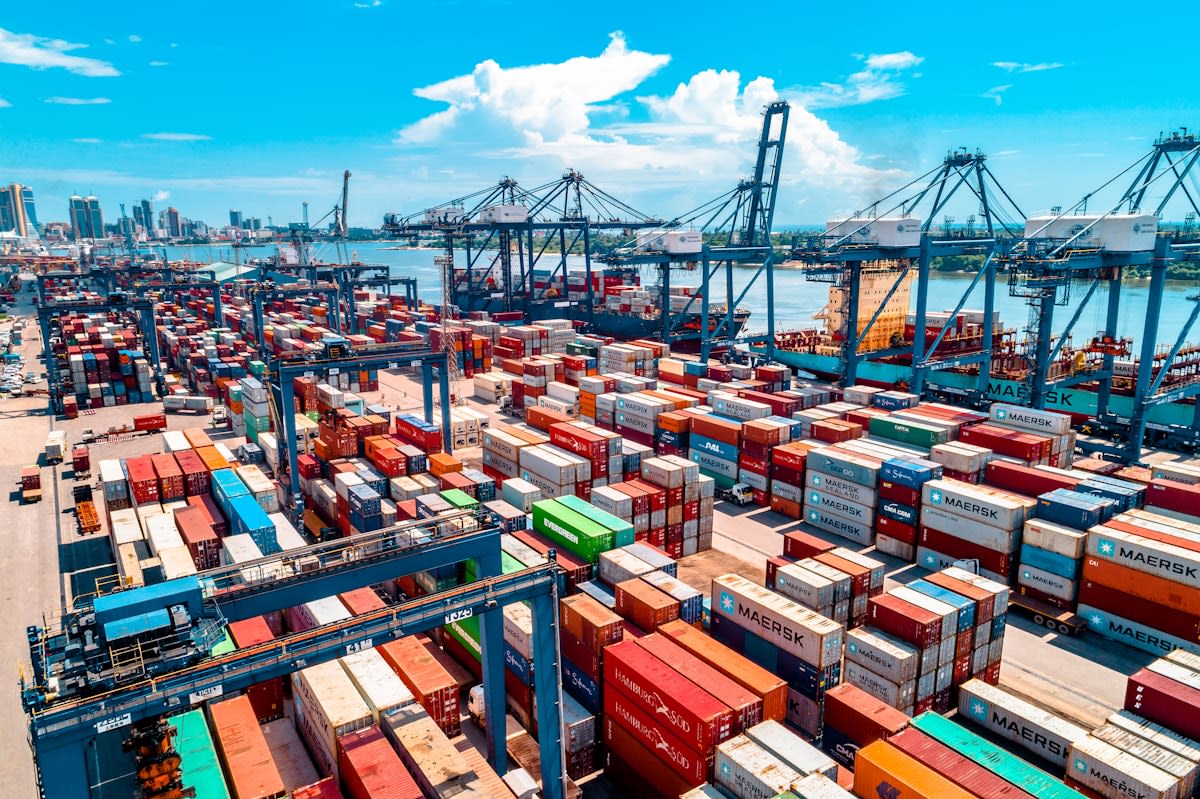
This pattern repeats across every domain. In finance, the rise of High-Frequency Trading (HFT) algorithms created a market that could process millions of orders per second with near-zero latency. This is efficiency in its purest form. Yet, this same efficiency enables 'flash crashes', where a single algorithmic error propagates through the entire global market in milliseconds, erasing billions in value before a human can even blink (Source: SEC Market Structure Report, 2014). The speed that provides the competitive edge is the exact same mechanism that accelerates the collapse. We are building systems that are too fast to be governed and too lean to be stable.
"The more a system is optimized for a specific environment, the more fragile it becomes to any change in that environment. Redundancy is not a bug; it is the primary feature of survival."— Nassim Nicholas Taleb, Author and Risk Analyst
Is it possible that our definition of 'waste' is fundamentally flawed? In biological systems, redundancy is everywhere. You have two kidneys, two lungs, and a complex web of overlapping neural pathways. Evolution does not optimize for the shortest path or the lowest caloric cost; it optimizes for persistence. Nature understands that the environment is hostile and unpredictable. A biological system that stripped away its redundancies to be 'lean' would be wiped out by the first mutation of a virus or the first unexpected drought. Humans, however, have spent the last century trying to engineer nature out of our organizational structures.
The Practitioner's Friction: The War Room Reality
If you spend enough time in corporate strategy or operations, you will see this battle play out in real-time. It is the eternal conflict between the CFO and the COO. The CFO looks at the balance sheet and sees 'underutilized assets'—a warehouse that is only 60% full or a team with 20% idle time—and demands they be cut to improve margins. The COO, who has lived through the 3 a.m. crisis calls, knows that those empty spaces are the only reason the company survived the last disruption. I have sat in these meetings where the debate isn't about whether the system works, but about how much 'waste' we can tolerate before the risk becomes unacceptable. The tragedy is that the CFO's logic almost always wins because efficiency is measurable in the short term, while resilience is only measurable during a catastrophe.
On the ground, this manifests as 'cognitive lean'. We don't just optimize hardware and logistics; we optimize people. We create hyper-specialized roles where an employee knows exactly one part of a process with absolute mastery but has zero understanding of the surrounding system. When the specialist is absent or the process shifts, the entire chain halts. This specialization is efficient for production but lethal for adaptation. The most resilient teams I have encountered are those with 'T-shaped' professionals—people who have deep expertise in one area but a broad, functional understanding of the rest. They are less 'efficient' in a vacuum, but they are the only ones who can pivot when the plan falls apart.
| Metric | Hyper-Optimized System | Resilient System |
|---|---|---|
| Resource Utilization | 95-100% (Maximized) | 60-80% (Intentional Slack) |
| Response to Shock | Cascading Failure | Graceful Degradation |
| Cost Structure | Low OpEx / High Tail Risk | Higher OpEx / Low Tail Risk |
| Adaptability | Rigid / Specialized | Fluid / Generalist |
| Primary Goal | Short-term Throughput | Long-term Persistence |
This shift in perspective requires us to stop viewing resilience as a cost center and start viewing it as a strategic asset. When a system is designed for resilience, it accepts a lower peak performance in exchange for a higher floor. It is the difference between a race car and an off-road vehicle. The race car is infinitely more efficient on a paved track, but the moment it hits a pebble or a patch of mud, it is useless. The off-road vehicle is slower and consumes more fuel, but it can navigate almost any terrain. Most modern organizations are trying to drive race cars through a jungle.
Breaking the Cycle: Toward Antifragility
How do we move beyond the efficiency trap without returning to the bloated, wasteful bureaucracies of the mid-20th century? The answer lies in 'Antifragility'—a concept where systems actually improve due to volatility. Instead of trying to predict the next crisis and building a specific wall against it, we must build systems that benefit from small, frequent stresses. This means introducing 'controlled chaos' into the system: intentionally breaking small parts of the process to see how the rest of the organization responds. This is why companies like Netflix pioneered 'Chaos Monkey', a tool that randomly shuts down production servers to force their engineers to build a system that can survive unexpected failure (Source: Netflix Tech Blog, 2011).
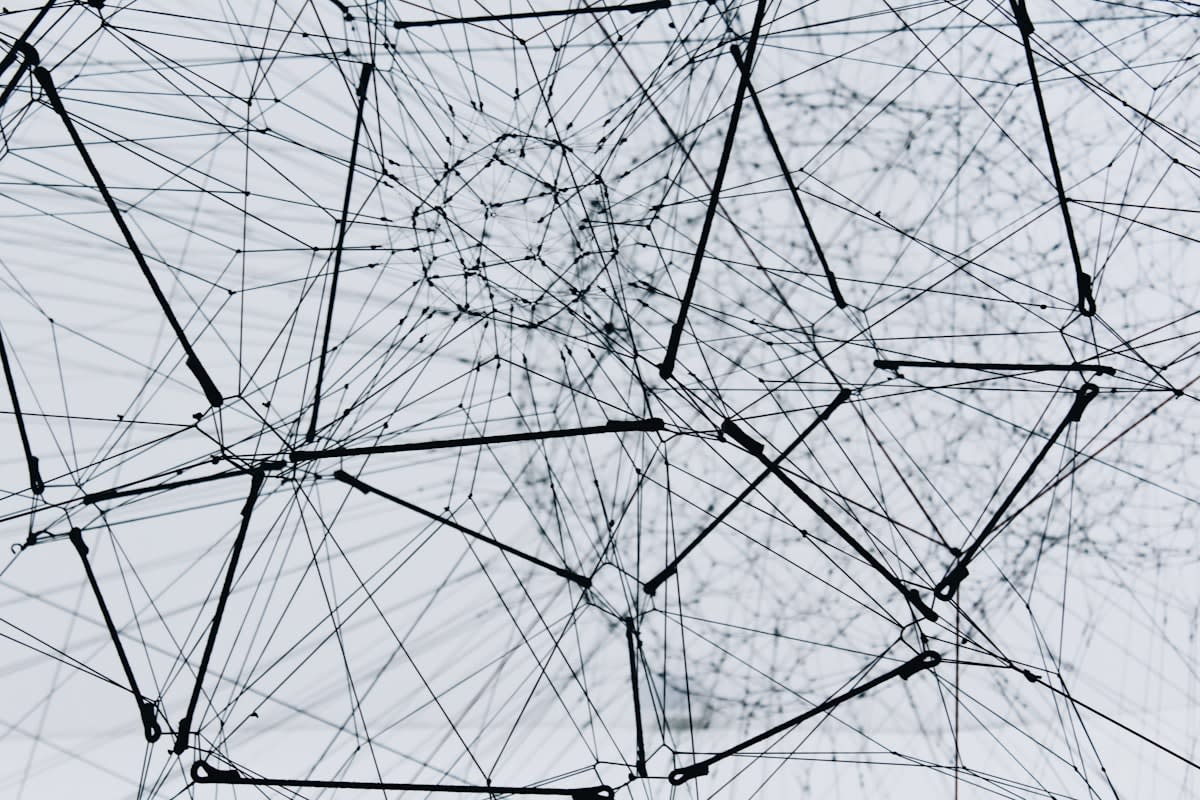
True resilience also requires a geographical and cognitive diversification. If every node in your network uses the same software, the same supplier, and the same mental model, you have a single point of failure. Diversification is, by definition, inefficient. It is slower to manage five suppliers than one. It is more expensive to maintain three different ways of solving a problem than one. But this 'inefficiency' is exactly what prevents a total wipeout. The goal is not to eliminate the risk, but to decouple the risks so that a failure in one area cannot migrate to another.
- Replace Just-in-Time with Just-in-Case for critical dependencies.
- Cross-train employees to eliminate single points of failure in human capital.
- Introduce intentional 'stress tests' to identify hidden fragilities before they are triggered by external shocks.
- Value 'slack' as a strategic insurance policy rather than operational waste.
- Shift KPIs from 'Maximum Throughput' to 'Recovery Time Objective' (RTO).
The transition from a culture of efficiency to a culture of resilience is psychologically difficult. It requires leaders to defend 'waste' to shareholders and boards who are trained to look for lean margins. It requires a shift in identity from the 'optimizer' to the 'architect'. However, as the frequency of global systemic shocks increases—be they biological, geopolitical, or technological—the ability to absorb a blow will become a more valuable competitive advantage than the ability to shave a few cents off a unit cost. The most successful systems of the next decade will not be the ones that are the most perfect, but the ones that are the most capable of being imperfect and surviving.
Fact-Check & Accuracy Note
The core claims regarding the fragility of JIT supply chains and HFT flash crashes are sourced from the World Economic Forum (2022) and the SEC Market Structure Report (2014). The concepts of Antifragility and the critique of optimization are based on the frameworks established by Nassim Nicholas Taleb. There remains an ongoing debate among economists regarding the optimal balance between efficiency and redundancy, specifically concerning the 'cost of resilience' in low-margin industries.