When Mahatma Gandhi wrote to Russian writer Leo Tolstoy on non-violence and morality
Source Entity
Nikita Mohta
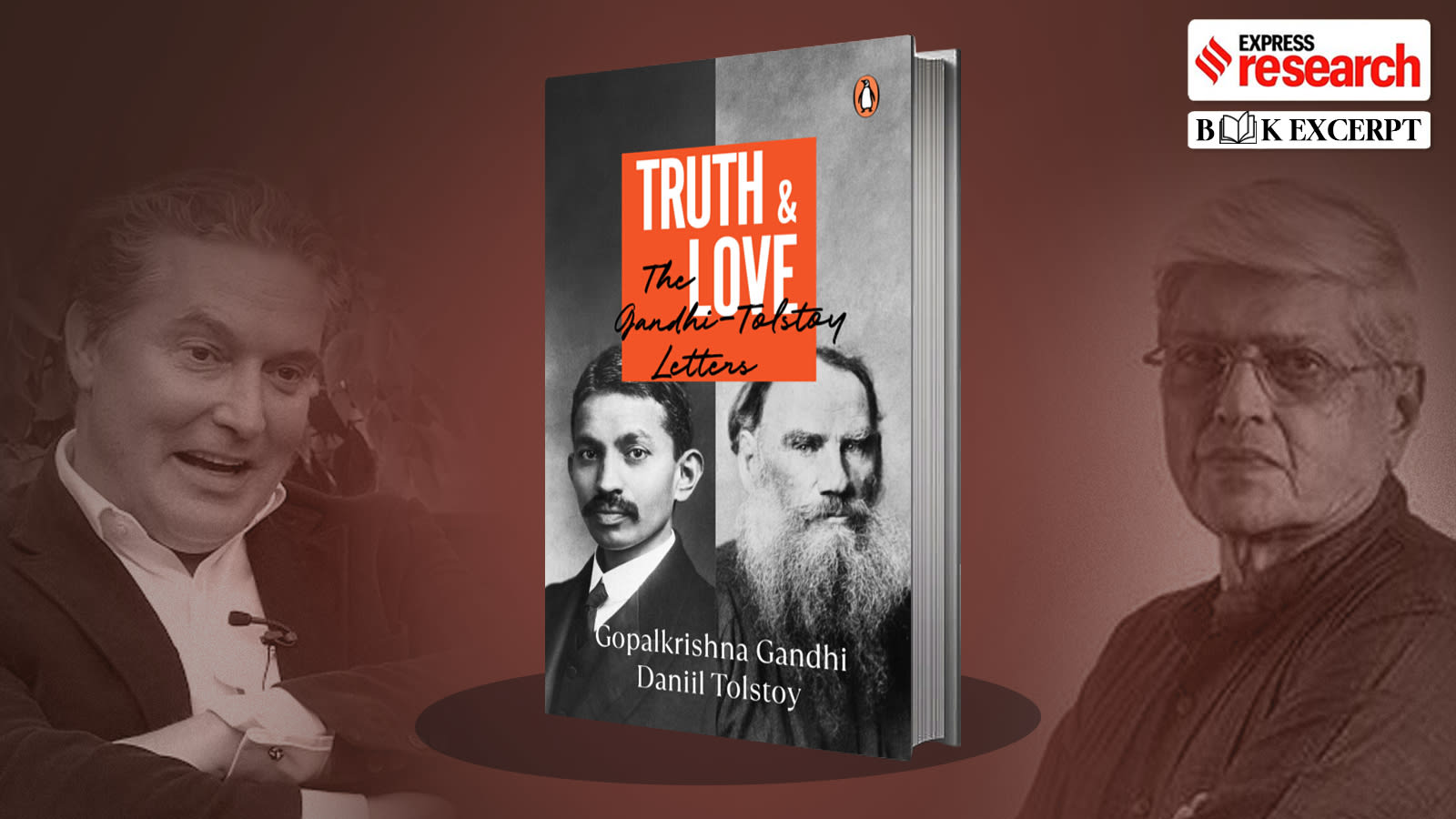
A new book, 'In Truth and Love: The Gandhi-Tolstoy Letters', explores the historic correspondence between Mahatma Gandhi and Leo Tolstoy. The work highlights their shared commitment to non-violence and moral truth, bridged by their descendants.
The Intellectual Bridge: Gandhi and Tolstoy
The correspondence between Mahatma Gandhi and the Russian novelist Leo Tolstoy represents one of the most profound intellectual dialogues of the 20th century. While Gandhi’s political philosophy of Satyagraha—or truth-force—is widely documented, the specific nuances of his epistolary relationship with Tolstoy have remained an under-explored facet of his development. The publication of In Truth and Love: The Gandhi-Tolstoy Letters (Penguin Random House India, 2026) serves to rectify this, bringing to light the profound moral synergy between two of history’s greatest proponents of non-violence.
A Legacy Reclaimed by Descendants
The significance of this collection is amplified by the involvement of the authors: Gopalkrishna Gandhi, the grandson of the Mahatma, and Daniil Tolstoy, a direct descendant of the Russian literary icon. This collaboration transforms the book from a mere academic compilation into a personal, intergenerational inquiry. By revisiting these letters, the authors provide a unique perspective on how the ideologies of their ancestors were not merely theoretical constructs, but lived experiences born out of personal conviction and moral urgency.
The Crucible of South Africa
Central to this correspondence is the context of Gandhi’s early activism in the Transvaal, South Africa. As noted in the provided details, Gandhi utilized these letters to articulate the struggles of the Indian community against discriminatory legislation. For Gandhi, the act of writing to Tolstoy was a way to ground his burgeoning philosophy of non-violent resistance in a global intellectual framework. The letters reveal that Gandhi’s commitment to non-violence was tested in the fires of colonial oppression, where he and his followers chose imprisonment over compliance.
Shared Truth and Moral Clarity
Despite being separated by vast geographical and cultural distances, Gandhi and Tolstoy found common ground in their relentless search for truth. Tolstoy, nearing the end of his life, and Gandhi, in the early stages of his political evolution, shared a belief that non-violence was not merely a passive state but a radical, transformative power. This shared conviction provided a moral foundation for what would later become the primary mechanism for India's independence movement.
Broader Implications and Historical Impact
This exchange underscores the global nature of non-violent resistance. By engaging with Tolstoy’s thoughts, Gandhi was able to refine his own approach to civil disobedience, ensuring that his methods were rooted in a deep ethical commitment to morality. The publication of these letters serves as a timely reminder of the necessity of intellectual discourse in shaping political change, suggesting that the most enduring revolutions are those founded on consistent moral principles rather than mere political expediency.
Conclusion
In summary, the release of In Truth and Love provides a vital contribution to the historical record. It bridges the gap between the Russian literary tradition of moral inquiry and the Indian political tradition of non-violent activism. As society continues to navigate complex conflicts, the insights shared between Gandhi and Tolstoy remain highly relevant, offering a timeless blueprint for how individuals can maintain their integrity and pursue justice even under the most challenging circumstances.