Will Donald Trump get to meet Kim Jong Un again?
Source Entity
Latest News: Todays Latest News Headlines from India & World | Hindustan Times | Hindustan Times
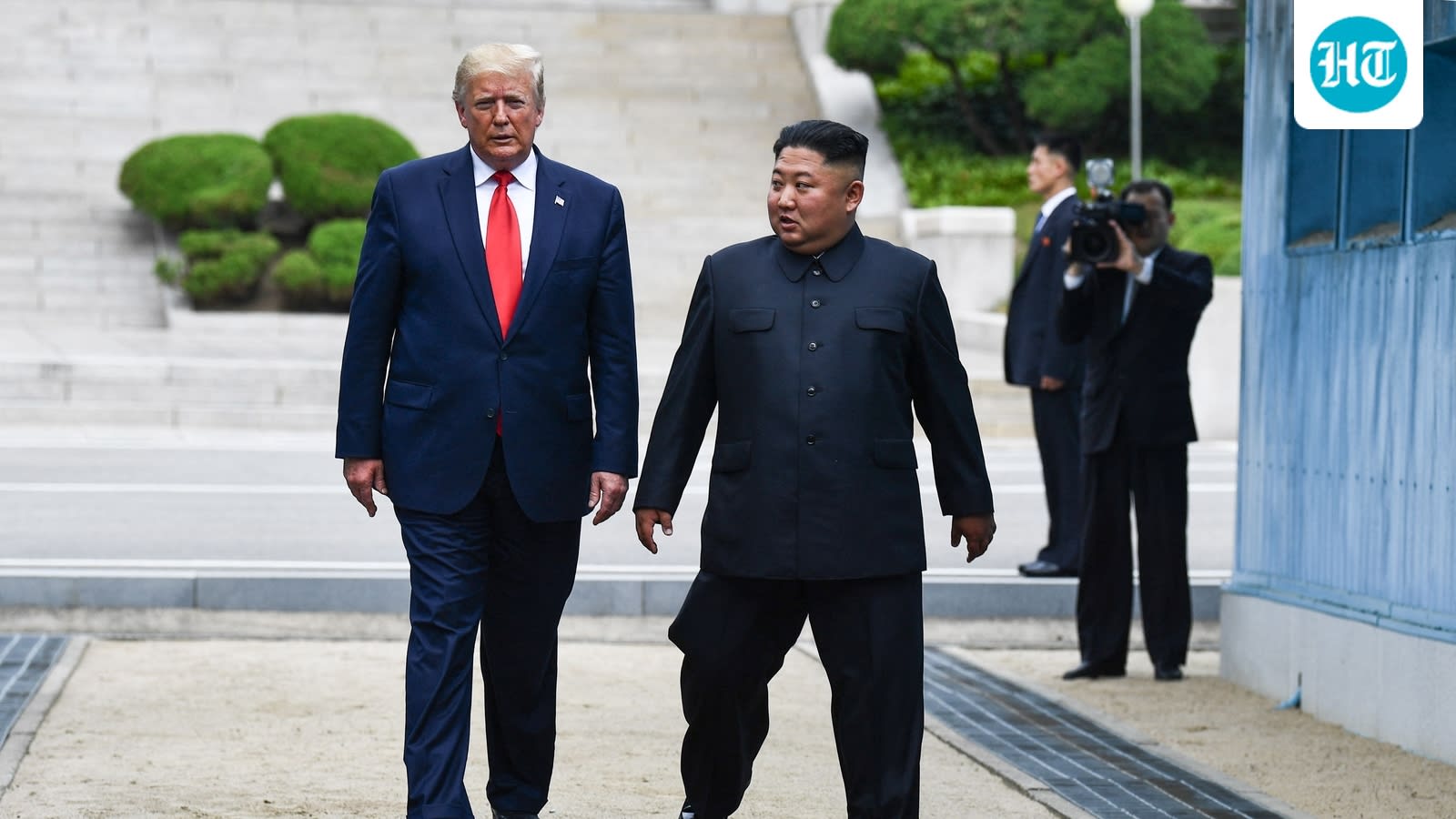
Donald Trump is seeking another summit with North Korean leader Kim Jong Un to address nuclear tensions. However, negotiations remain deadlocked as Pyongyang refuses to abandon its nuclear arsenal, a core demand of the United States.
The Persistent Stalemate: U.S.-North Korea Relations
The relationship between the United States and North Korea has proven to be one of the most intractable challenges in modern diplomacy. Over the course of several decades, six consecutive American presidents have attempted to curb or dismantle North Korea’s nuclear weapons program, yet each has faced substantial failure. The current discourse suggests that Donald Trump is seeking to break this cycle by pursuing another summit with Kim Jong Un, potentially leveraging upcoming international events like the APEC summit in November to facilitate a meeting.
The Diplomacy of High Stakes
The ambition to hold another summit is not merely a diplomatic gesture but a significant strategic gamble. Reports suggest that former U.S. envoys have speculated about the unprecedented possibility of a sitting American president visiting Pyongyang. Such a move would be a historic departure from tradition, intended to inject momentum into a stalled peace process. However, the efficacy of this approach remains highly debated, as previous attempts at personal diplomacy have often yielded more optics than tangible policy shifts.
The Denuclearization Divide
The fundamental barrier to progress remains the conflicting definitions of success. For the United States, the ultimate goal is the complete denuclearization of the Korean Peninsula—the dismantling of the regime's most potent weapon systems. Conversely, Kim Jong Un has signaled that his willingness to engage in dialogue is contingent upon the U.S. abandoning these specific demands. This impasse reflects a deeper structural mistrust that has defined the region for generations.
Strategic Concessions and Military Posture
Recent efforts to rekindle negotiations have included tangible concessions, such as the curtailing of long-planned military exercises with South Korea. While these moves are framed as confidence-building measures intended to soften the diplomatic environment, they also raise concerns regarding the readiness and security posture of the U.S.-South Korea alliance. Critics argue that such concessions, when met with continued intransigence from Pyongyang, may weaken the overall bargaining position of the United States.
Future Trends and Regional Implications
As the prospect of a potential summit looms, the future of the Korean Peninsula remains tied to the delicate balance between maximum pressure and direct engagement. If the U.S. continues to prioritize high-level summits without addressing the core demand for disarmament, the cycle of diplomatic fatigue is likely to continue. Regional stability will depend on whether both parties can find a middle ground that respects the security interests of all stakeholders, a task that has thus far remained elusive in the face of North Korea’s nuclear ambitions.
Verification Required?