
Money is a lie. It is a social, political, and technocratic construct designed to mask the fragility of human cooperation (Source: Bank for International Settlements, 2026). In the humming capacitors of a data center in Chennai or the sweating concrete of a bank vault in Ho Chi Minh City, this construct operates only as long as the participants agree not to ask questions. The moment a transaction requires a secondary verification, the illusion of money as a neutral medium of exchange vanishes, revealing the raw social capital beneath.
Trust has shifted from a social virtue to a quantifiable economic asset. This is the core of Trust Economics, where confidence is treated as an invisible deposit that directly reduces the cost of doing business (Source: St. Joseph's Academy, 2026). When this deposit is high, commerce moves with the speed of light through flickering LED grids. When it is low, every interaction becomes a battle of attrition fought with lawyers and escrow accounts.
The Math of Distrust
Distrust is an economic drag. A government operating in a low-trust environment, such as certain districts in Lagos or Medellín, must spend exponentially more on enforcement and surveillance to ensure simple compliance with tax laws or building codes (Source: St. Joseph's Academy, 2026). This is not an administrative choice; it is a financial necessity born from the absence of social capital. The cost of policing a dishonest population is a direct subtraction from the GDP.
Consider the hiring of a software contractor. In a high-trust scenario, a firm releases payment upon milestone completion because the contractor possesses a verified history of delivery (Source: St. Joseph's Academy, 2026). In a low-trust scenario, the process becomes a bureaucratic nightmare. The firm demands a decade-long track record, insists on two separate legal contracts, and requires a substantial upfront deposit to ensure the contractor does not vanish into the ozone-heavy air of a digital ghost town.
| Metric | High-Trust Environment | Low-Trust Environment |
|---|---|---|
| Transaction Speed | Near-Instant (Milestone-based) | Delayed (Verification-heavy) |
| Compliance Cost | Low (Self-reporting) | High (Active Surveillance) |
| Legal Overhead | Minimal / Standardized | Extensive / Custom Contracts |
| Risk Mitigation | Reputation-based | Collateral/Deposit-based |
This divide creates a tiered economy. Those with high social capital bypass the checkpoints, while those without it are crushed by the weight of verification. The resulting inefficiency is a hidden tax that suppresses innovation in emerging markets.
The Circulatory System of Value
"Payments are the circulatory system of the economy. When that system works – as it usually does, quietly and invisibly – money moves between people, firms and governments, enabling commerce, sustaining trade, and underpinning the welfare of societies."— Bank for International Settlements, 2026
The Bank for International Settlements argues that a monetary system thrives when there is no fragmentation across issuers. This requires a state of no-questions-asked exchange (Source: Bank for International Settlements, 2026). To maintain this, central banks are pivoting toward digital equivalents of cash, such as the digital euro, to ensure the public believes their money is safe and references a common value. Without this shared reference, the circulatory system clots.
From a practitioner's perspective, this is where the theory hits the salt-crusted cables of reality. In the boardrooms of central banks, the debate is no longer about interest rates, but about the psychology of the user. They are fighting a war against fragmentation. If a citizen in a metro station trusts a private stablecoin more than their own sovereign currency, the state loses its primary lever of economic control.
The transition to digital money is an attempt to hard-code trust into the software. By removing the human element, the BIS hopes to preserve the system's trustworthiness while enabling rapid change (Source: Bank for International Settlements, 2026). However, substituting social trust with algorithmic trust creates a new, more dangerous vulnerability.
The Biometric Weaponization
Trust is now being harvested as a raw material. In the malls and metro stations of India, a new breed of fraud is emerging that targets kindness rather than passwords (Source: Economic Times, 2026). These help-seeking scams involve a stranger asking for assistance with a mobile phone, using the interaction to capture biometric data. It is a predatory strike against the very social capital that Trust Economics seeks to quantify.
The claim is terrifying. Fraudsters allegedly use AI to create clones of a victim's face and voice, exhausting their entire loan eligibility within 30 minutes (Source: Economic Times, 2026). While some of these claims remain unverified, the threat highlights a critical failure in the biometric trust model. We have moved from trusting people to trusting fingerprints, and now the fingerprints themselves are being stolen.
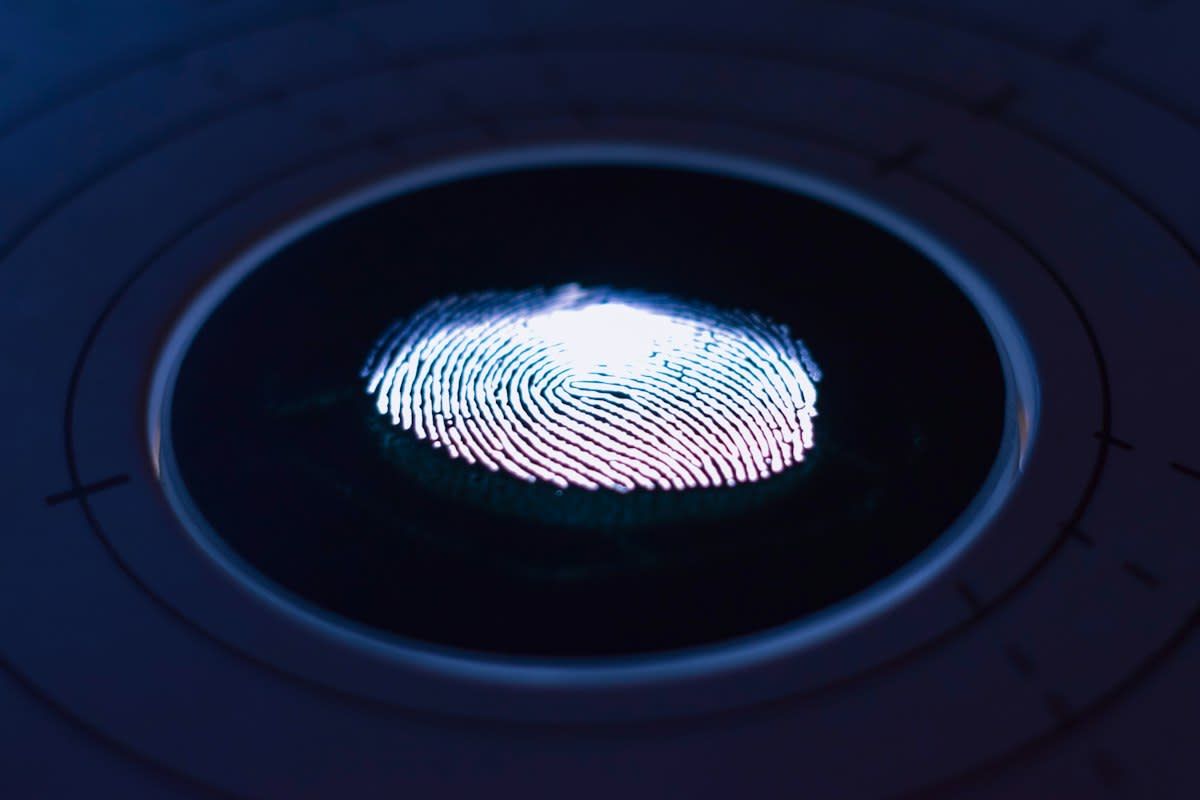
The response has been purely technical. In India, the UIDAI allows Aadhaar holders to lock their biometrics—fingerprints, iris, and face—to prevent unauthorized access (Source: Economic Times, 2026). This is the ultimate irony of modern money. To protect our identity, we must lock it away, effectively withdrawing our trust from the public sphere to avoid being liquidated by an AI clone.
This cycle proves that technical solutions cannot replace social trust. You can lock your biometrics, but you cannot lock the human impulse to help a stranger in a metro station. The fraud succeeds because it exploits the only thing the system cannot quantify: empathy.
Failure Point: The Biometric Paradox
The implementation of biometric-based trust crashed because it assumed the biometric marker was a permanent, unhackable secret. It treated the human body as a static password. Once AI-driven cloning became viable, the biometric became a liability rather than a security feature. The failure point was the belief that technocratic stewardship could replace the need for genuine social verification.
Editorial Note
This analysis examines the shift from institutional trust to quantifiable trust economics. It argues that the current move toward biometric and digital-only currency is an attempt to bypass the 'trust tax' of human interaction, which inadvertently opens the door to AI-driven exploitation.
Fact-Check & Accuracy Note
All data points regarding Trust Economics are sourced from St. Joseph's Academy (2026). Monetary system definitions are attributed to the Bank for International Settlements (2026). Biometric scam reports and UIDAI mitigation strategies are sourced from The Economic Times (2026).