Country has lost its way, but always finds its path back: Murli Manohar Joshi
Source Entity
India Latest News: Top National Headlines Today & Breaking News | The Hindu
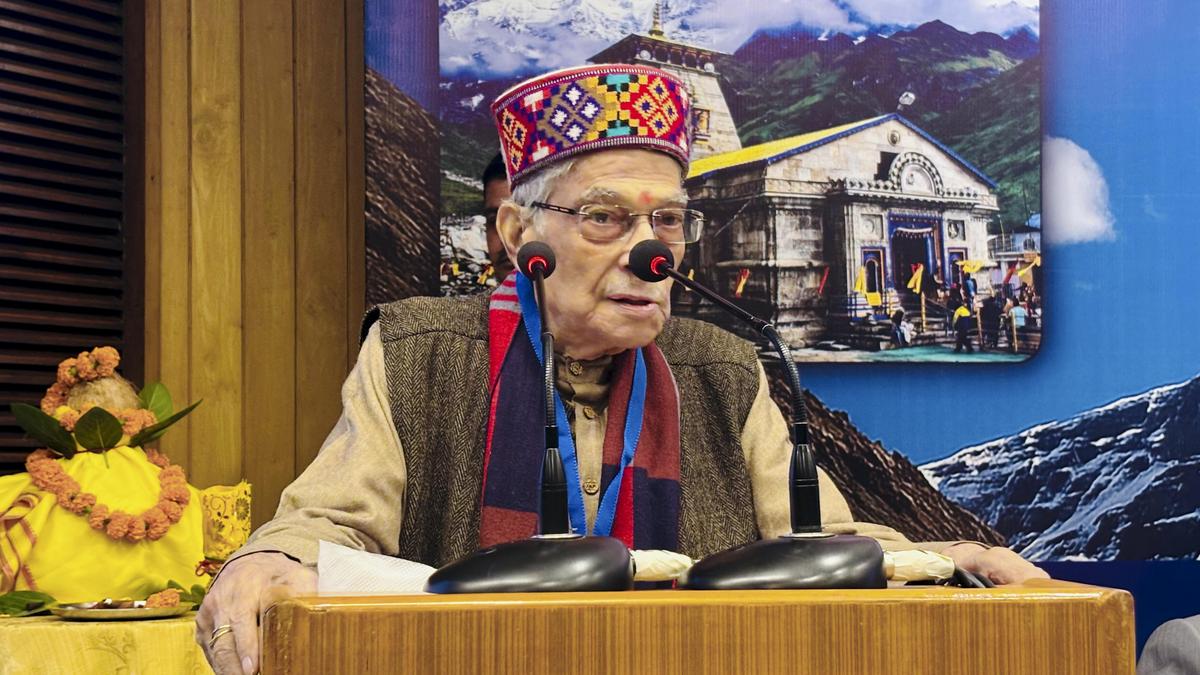
BJP veteran Murli Manohar Joshi has expressed concerns over the deep-rooted nature of corruption and the erosion of public trust in Indian politics. He specifically highlighted issues regarding the accountability of the Ayodhya Ram Temple trust and the handling of youth protests.
The Evolving Landscape of Indian Political Accountability
Veteran BJP leader Murli Manohar Joshi recently offered a candid critique of the current state of Indian governance, emphasizing a growing trust deficit that threatens the democratic fabric of the nation. By addressing issues ranging from the management of the Ayodhya Ram Temple trust to the handling of youth protests at Jantar Mantar, Joshi highlights a systemic concern regarding transparency and the disconnect between political leadership and the populace. His observations suggest that the country is grappling with an existential crisis of confidence, one that necessitates a return to the principles of consensus and accountability.
The Crisis of Corruption and Public Trust
Joshi’s assertion that corruption has become deeply embedded in the societal core serves as a sobering indictment of modern political culture. By moving beyond individual instances of graft, he points toward a structural issue where the mechanisms of oversight—such as the administration of the Ayodhya Ram Temple trust—are being scrutinized by the public. The debate over alleged embezzlement within the trust is not merely a financial dispute; it is a symbolic battle over the stewardship of a project with immense religious and emotional significance for the Hindu community.
The Ayodhya Legacy: From Movement to Governance
Reflecting on the historical trajectory of the Ram Temple movement, Joshi underscores a fundamental shift in strategy. While the BJP’s initial vision centered on achieving consensus, the resolution eventually shifted to the judicial domain through Supreme Court intervention. Joshi’s pointed question regarding the government's role in forming the trust suggests that the responsibility for the temple’s integrity rests squarely with the state. This highlights the inherent tension in state-sponsored religious projects, where political authority and spiritual sanctity often collide.
Navigating Youth Unrest and Institutional Integrity
Beyond religious issues, Joshi’s critique of the handling of youth protests at Jantar Mantar reflects a broader concern for the treatment of civil dissent. When the state fails to adequately address the grievances of its youth, it risks alienating the very demographic that shapes the nation's future. By linking these protests to a broader 'trust deficit,' Joshi argues that the government’s inability to listen and engage fairly undermines the democratic process, forcing a reassessment of how the state interacts with its citizenry.
The Path Toward Institutional Reform
Looking ahead, the implications of these critiques suggest that the path back to stability lies in restoring faith in public institutions. Joshi’s emphasis on the need for 'fair elections' and robust oversight mechanisms implies that the current political climate is unsustainable. Future trends in Indian politics will likely be defined by how political parties reconcile their ideological agendas with the modern demands for transparency, administrative efficiency, and the protection of the right to dissent.
Concluding Reflections
Ultimately, Murli Manohar Joshi’s perspective serves as a reminder that political legitimacy is not a permanent state but a continuous process of earning public trust. As the country navigates the complexities of religious governance and civil protest, the demand for accountability will only intensify. The challenge for contemporary leadership will be to move past the current atmosphere of suspicion and restore a sense of institutional integrity that aligns with the democratic aspirations of the Indian people.
Verification Required?