INDIA bloc meet: Opposition to sharpen EC, BJP attack - what's on agenda
Source Entity
ROHITASHWA RANJAN
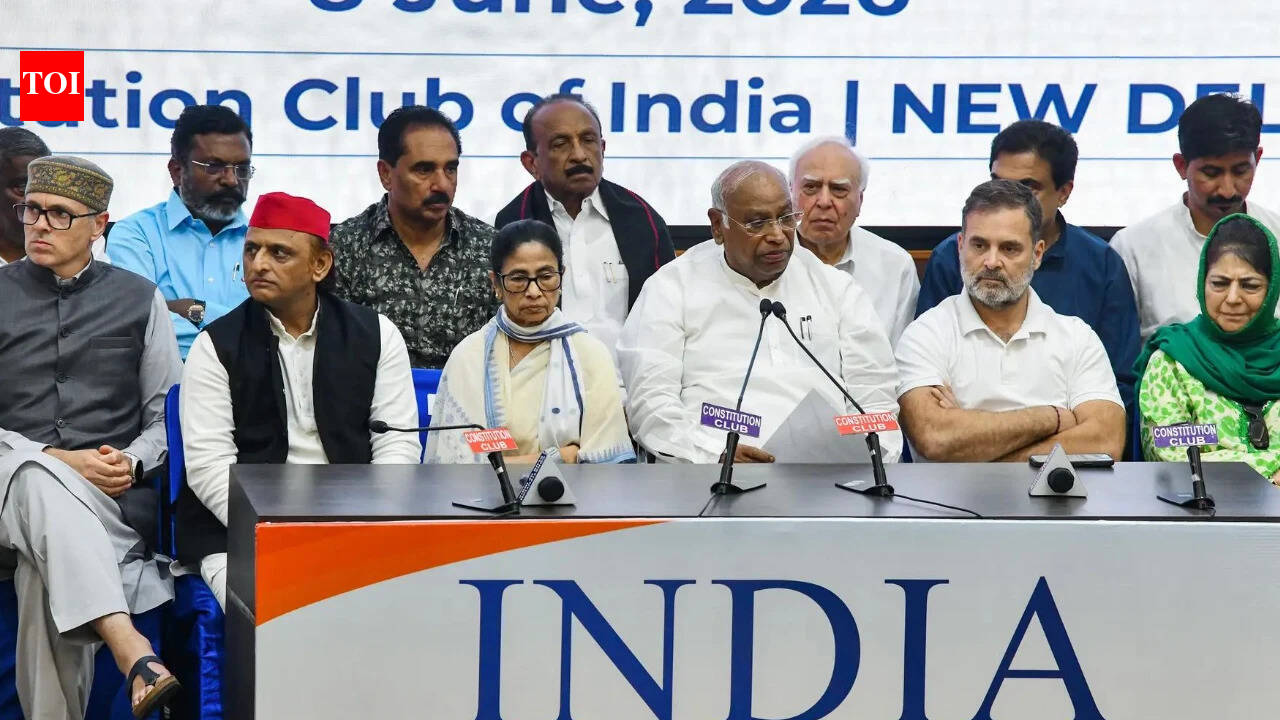
The Congress Working Committee and the INDIA bloc are launching a nationwide agitation, demanding the resignation of PM Modi and Amit Shah over alleged electoral roll irregularities. The opposition alleges that 13.3 crore names were improperly deleted during the Election Commission's Special Intensive Revision process.
The Electoral Integrity Crisis: Congress and INDIA Bloc Confront the Election Commission
The Indian political landscape is currently witnessing a significant escalation in tensions as the Congress Working Committee (CWC) and the broader INDIA bloc have initiated a direct challenge against the Election Commission of India (ECI). At the heart of this confrontation is the Special Intensive Revision (SIR) of electoral rolls, an exercise that the opposition claims has led to the systematic and unauthorized deletion of 13.3 crore names from voter registries. This development has transformed into a high-stakes standoff, with the opposition framing the process as a form of 'vote chori' (vote theft) orchestrated to undermine democratic participation.
Targeting the Leadership: The Allegation of 'Match-Fixing'
During a landmark CWC meeting, party president Mallikarjun Kharge articulated a shift in the opposition's strategy by moving beyond the Election Commission to target the executive leadership directly. By labeling Chief Election Commissioner (CEC) Gyanesh Kumar a 'small fish' and asserting that the primary responsibility lies with Prime Minister Narendra Modi and Home Minister Amit Shah, the Congress has framed the issue as an alleged 'match-fixing' scheme. This rhetoric, strongly endorsed by Chairperson Sonia Gandhi, signals a tactical pivot to hold the highest levels of government accountable for administrative actions taken by the poll body.
The Mechanics of the Dispute: SIR and Voter Rolls
The primary technical grievance involves the SIR process, which the opposition argues lacks constitutional validity. By demanding the immediate suspension of this revision exercise and the restoration of the 13.3 crore deleted names, the INDIA bloc is seeking to reverse what they characterize as an institutional attempt to skew the electorate's composition. This dispute highlights the critical importance of electoral roll accuracy, as any perceived bias in the registration process serves to erode public trust in the electoral mechanism itself.
Mobilizing the Opposition: The INDIA Bloc Strategy
The INDIA bloc is currently coalescing to formalize a unified response to these grievances. Despite varying levels of participation—with parties like the Aam Aadmi Party and DMK notably absent—the coalition is moving toward a strategy of nationwide agitation. This collective action is intended to amplify their demands for the removal of CEC Gyanesh Kumar and the initiation of a parliamentary motion. The upcoming meetings are expected to finalize a draft notice for the Lok Sabha, setting the stage for a dramatic parliamentary session.
Broader Implications for Indian Democracy
The ongoing row underscores a deepening divide between the ruling Bharatiya Janata Party (BJP) and the opposition coalition regarding the neutrality and transparency of independent constitutional bodies. If the opposition succeeds in its bid to move a motion against the CEC, it would represent a rare and significant parliamentary challenge to the independence of the Election Commission. Conversely, the government's ability to navigate these allegations will be a litmus test for the resilience of India's democratic institutions in the face of intense political polarization.
Looking Ahead: The Path Toward Agitation
As the INDIA bloc prepares for countrywide protests, the political climate is set to become increasingly volatile. The demand for the resignation of the Prime Minister and Home Minister represents a maximalist position, indicating that the opposition is prepared to escalate this conflict significantly. Future trends will likely depend on the Election Commission's willingness to provide transparency regarding the SIR process and the government's response to the mounting pressure from the parliamentary opposition.
Multiple Citing Sources