‘President of the Unites States’: White House’s AI accord includes spelling error
Source Entity
Ariana Baio
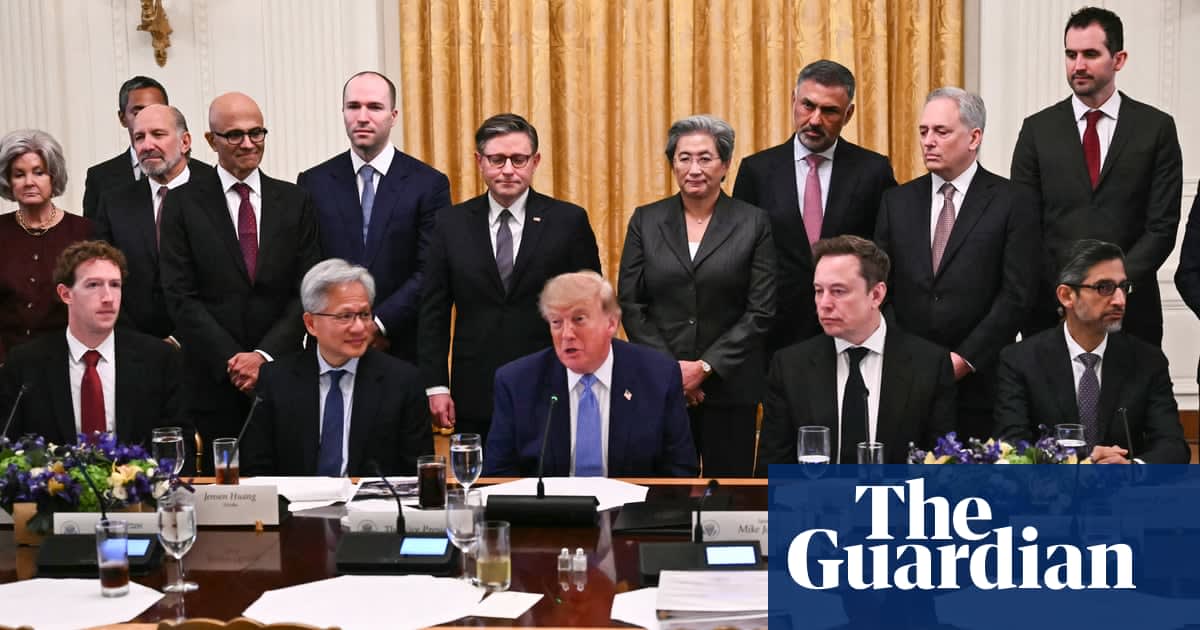
The White House issued an official AI accord containing a misspelling of 'United States' under President Trump's signature. This document also highlights the administration's attempt to rebrand artificial intelligence as 'super intelligence' amidst growing public concern.
The White House AI Accord: A Symbolic and Linguistic Shift
On Tuesday, the White House hosted a high-profile meeting between President Donald Trump and several major technology executives, including Nvidia CEO Jensen Huang and SpaceX CEO Elon Musk. The event culminated in the signing of a voluntary accord aimed at the safe development of artificial intelligence. However, the document, which was intended to signal a new era of cooperation between the government and the private sector, became the subject of intense scrutiny due to an embarrassing typographical error: the phrase “President of the Unites States” appeared directly under the President’s signature.
The 'Super Intelligence' Rebranding Effort
Beyond the administrative oversight, the accord serves as a vehicle for President Trump’s explicit attempt to redefine the nomenclature of the industry. By labeling the technology “super intelligence,” the administration is attempting to move away from the established term “artificial intelligence.” This terminology has been used by the President during high-stakes diplomatic engagements, such as the visit of Chinese President Xi Jinping and his address to the United Nations General Assembly. This effort suggests a desire to frame AI not merely as a tool, but as a transformative, perhaps even existential, force.
Navigating Public and Political Skepticism
This rebranding comes at a politically sensitive time. As public apprehension regarding the rapid, and potentially uncontrollable, evolution of AI grows, President Trump has largely dismissed fears of the technology posing a direct threat to humanity. His overt partnership with tech titans like Musk and Huang serves as a double-edged sword; while it highlights a commitment to American technological leadership, it also risks alienating voters concerned about the societal impacts of AI, such as workforce displacement and data privacy, particularly as midterm elections approach.
The Intersection of Policy and Performance
Critics have pointed out that the effort to “officially” rename the technology appears to be a top-down mandate, as evidenced by the document signed alongside industry leaders. While the administration views this as a bold step toward defining the future, the misspelling of the nation’s name adds a layer of administrative friction that undermines the gravity of the official act. It remains to be seen whether this document will be entered into the Federal Register, which would codify the error into the permanent record of presidential actions.
Future Implications for Tech Governance
Looking forward, the administration’s focus on “super intelligence” likely signals a shift toward a more aggressive, industry-led approach to tech regulation. By aligning with leaders of the most powerful AI firms, the White House is signaling that it prefers collaborative development over restrictive oversight. However, the disconnect between this ambitious branding and the reality of public sentiment creates a notable political vulnerability, one that the administration will have to manage as the rapid pace of technological change continues to dominate the national conversation.
Multiple Citing Sources