
We have been lied to about balance. For years, the corporate world and the wellness industry have peddled the idea of work-life balance as a static destination—a perfect 50/50 split where professional ambition and personal peace coexist in a serene, unchanging harmony. This conceptualization is not just unrealistic; it is a psychological trap. When we frame balance as a goal to be achieved, every deviation feels like a failure. The resulting stress is not caused by the workload itself, but by the cognitive dissonance created when our messy, fluid reality refuses to align with this rigid, imaginary ideal.
The obsession with balance ignores the fundamental nature of human existence, which is characterized by oscillation, not equilibrium. Whether we look at hormonal fluctuations or the shifting demands of a global economy, the pursuit of a 'middle' often creates more friction than it resolves. Why do we treat the tension between our roles as a problem to be solved rather than a dynamic to be managed? By shifting the narrative from balance to integration, we move away from the anxiety of 'not having enough' of one thing and toward a model of resilience.
The Telework Paradox and the Erosion of Clarity
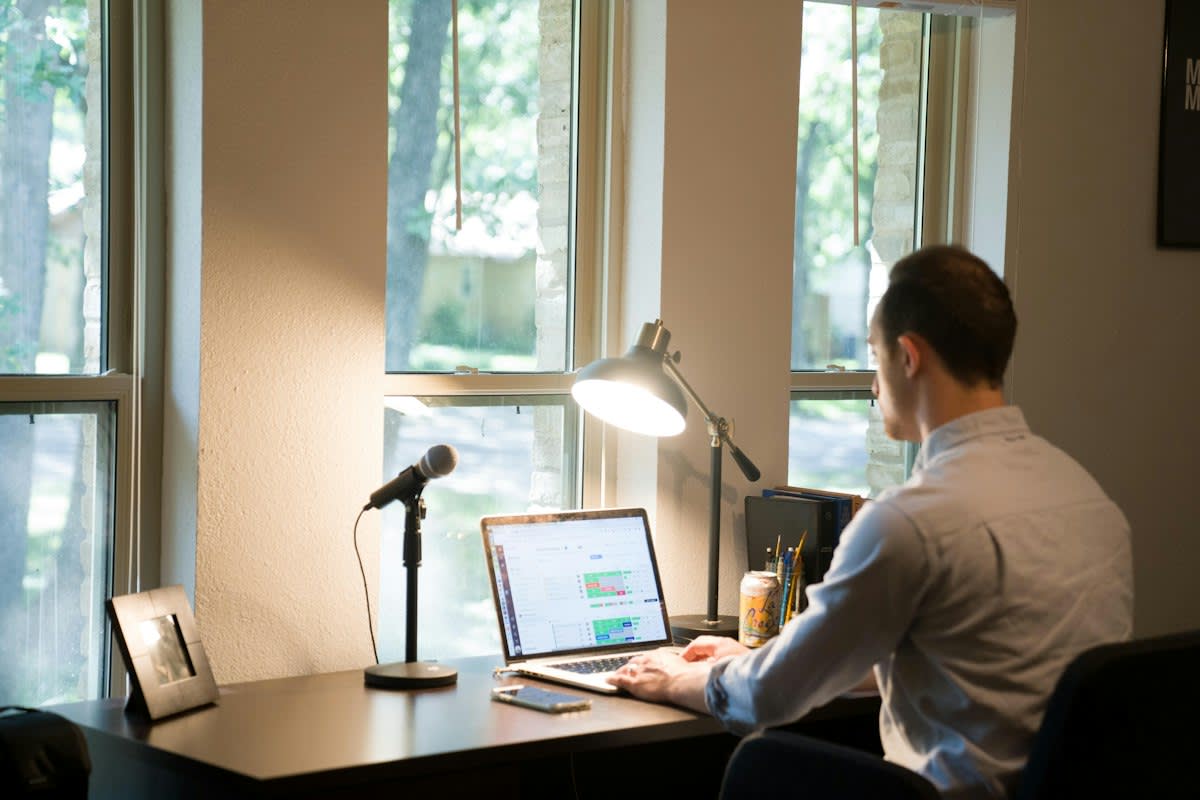
Consider the great migration to remote work. On paper, telework was the ultimate tool for achieving the elusive balance, promising the end of the commute and the reclamation of domestic space. However, the reality has been far more complex. Research indicates that greater telework has been associated with increased work pressure and a significant reduction in role clarity (Source: Beekman et al., 2025). When the physical boundaries of the office vanish, the mental boundaries vanish with them. The result is a state of perpetual availability, where the 'balance' we sought becomes a blurred line that allows work to seep into every corner of our private lives.
This friction is exacerbated by how organizations approach professional development. There is a critical distinction between organizational support for capability development (ET) and the perceived autonomy and flexibility of online learning platforms (OLP) (Source: Frontiers in Psychology, 2026). While OLP offers the promise of self-regulated learning, it often places the entire burden of 'balancing' development with daily output on the employee. This shift in responsibility transforms a benefit into a chore, adding yet another metric to the balance sheet that the modern worker feels they are failing to optimize.
Does the solution lie in more flexibility, or in more structure? The evidence suggests that without clear role definitions, flexibility becomes a catalyst for stress rather than a cure. The anxiety stems from the ambiguity of expectation. When we don't know where our professional obligations end and our personal life begins, we spend more energy managing the boundary than performing the work.
Emotional Intelligence as the True Stabilizer
If balance is a myth, what actually works? The answer may lie in the internal capacity to navigate chaos rather than the external attempt to eliminate it. A study of employees in Lebanon and other Middle East and North Africa countries revealed a powerful positive association between emotional intelligence (EI), work-life balance, and job satisfaction (Source: News-Medical, 2026). The key takeaway here is that the 'balance' these employees reported was not a result of their schedules, but their ability to understand and manage their emotions within those schedules.
"Employees who reported stronger abilities to understand and manage emotions also tended to report greater satisfaction with their jobs."— Research Findings on Lebanese Employees, News-Medical (2026)
This suggests that work-life balance is not a set of conditions, but a perceived ability to manage competing roles. It is a psychological state of efficacy. When an individual possesses high EI, they stop fighting the tide of conflicting demands and instead learn how to swim through them. The stress dissipates not because the demands decrease, but because the internal friction—the feeling of being overwhelmed—is mitigated by a superior emotional toolkit.
This shift in perspective turns balance from a logistical problem into a developmental opportunity. Instead of demanding shorter hours or more vacation days, the focus shifts to building the emotional infrastructure necessary to handle high-pressure environments without losing one's sense of self. It is the difference between trying to stop the storm and building a better ship.
From the perspective of those of us who have spent years analyzing organizational behavior, this is where the real internal debate happens. Within HR circles and executive suites, there is a quiet tension between the 'wellness' narrative—which focuses on perks like gym memberships and meditation apps—and the reality of 'performance culture.' Practitioners know that a yoga class cannot fix a broken reporting structure. The real friction occurs when leadership expects 'resilience' from employees while simultaneously maintaining an environment that creates chronic instability. The 'balance' conversation is often used as a smokescreen to avoid discussing systemic inefficiency.
Biological Homeostasis: The Danger of the Middle
The biological world offers a humbling lesson in the dangers of pursuing a rigid middle. In the realm of endocrinology, the assumption is often that 'more' or 'less' is the problem, and the 'middle' is the goal. However, the Framingham Heart Study and subsequent research into testosterone levels indicate a more nuanced reality: both low and high testosterone are linked to a higher risk of heart rhythm disorders, with the lowest risk found around the middle of the normal range (Source: ScienceAlert, 2026). While this seems to support the 'balance' narrative, it actually highlights that biological health is about staying within a functional range, not hitting a specific point.
| The Balance Myth (Static) | Dynamic Integration (Functional Range) |
|---|---|
| Goal: 50/50 split of time/energy | Goal: Capacity to manage shifting priorities |
| View of Stress: A sign of imbalance | View of Stress: A biological signal for adaptation |
| Method: Time-blocking and rigid boundaries | Method: Emotional intelligence and biological regulation |
| Outcome: Guilt when the split fails | Outcome: Resilience through flexibility |
Similarly, our physiological response to stress is not something to be eliminated, but regulated. The act of smiling, for instance, is not just a social gesture; it is a biological intervention. Regular smiling can affect the levels of cortisol—the hormone that regulates stress—while boosting endorphins, dopamine, and serotonin (Source: Bozeman Daily Chronicle, 2026). This is a form of micro-regulation. It does not 'balance' the life of the individual, but it alters the chemical environment in which they operate, making them more capable of handling stress.

We are seeing this move toward 'closed-loop' systems even in medical technology. The development of the ECHO (electrocatalytic closed-loop health optimization) implant for managing diabesity is a prime example. Rather than relying on a static dose of medication, the device allows for dynamically controlled metabolic interventions to restore normal blood glucose levels (Source: GenEngNews, 2026). This mirrors the ideal psychological state: a system that can sense a deviation and apply a precise, temporary correction to return to a functional range, rather than a system that tries to maintain a frozen state of perfection.
Designing for Resilience over Equilibrium
To escape the stress of the balance pursuit, we must embrace the concept of 'seasons.' There are seasons of intense professional growth where work will naturally dominate, and seasons of recovery where health and family take precedence. The stress arises when we try to force every season to look like a perfect spring. By accepting the ebb and flow, we align ourselves with the biological and professional realities of the 21st century.
- Prioritize Emotional Intelligence: Focus on the ability to manage emotions rather than the ability to manage the clock (Source: News-Medical, 2026).
- Demand Role Clarity: Push for explicit definitions of responsibilities to counteract the pressures of telework (Source: Frontiers in Psychology, 2026).
- Implement Micro-Regulations: Use simple biological triggers, like intentional positivity and smiling, to modulate cortisol levels (Source: Bozeman Daily Chronicle, 2026).
- Focus on Functional Ranges: Accept that health and productivity exist in ranges, not at fixed points (Source: ScienceAlert, 2026).
Ultimately, the pursuit of balance is a pursuit of control. But control is an illusion in a globalized, hyper-connected world. The people who thrive are not those who have 'balanced' their lives, but those who have built the capacity to be unbalanced without breaking. They have traded the fragile peace of the equilibrium for the robust strength of the integrated life.
Fact-Check & Accuracy Note
Key claims regarding telework pressures are sourced from Beekman et al. (2025) via Frontiers in Psychology. The correlation between emotional intelligence and WLB is based on quantitative data from Lebanese employees (News-Medical, 2026). The relationship between testosterone and heart rhythm is attributed to the Framingham Heart Study (ScienceAlert, 2026). The debate remains ongoing regarding whether telework inherently increases stress or if the stress is a result of poor organizational implementation.