The honeymoon period for the global digital nomad has ended. For years, municipal governments in mid-sized cities and coastal hubs viewed the arrival of high-earning remote workers as a windfall of untaxed capital and a boost to the local service economy. They rolled out the red carpet with special visas and co-working incentives, believing that the influx of San Francisco or London salaries would lift all boats. But the reality was far more corrosive. When a software engineer earns a salary that dwarfs the median local income by a factor of ten, they do not just buy coffee; they outbid local families for every available apartment, effectively pricing the workforce that keeps the city running out of their own neighborhoods.
This economic distortion has forced a realization among city planners: traditional tax codes are too slow to combat the velocity of remote-work gentrification. Income taxes are difficult to collect from foreigners or remote employees whose payroll remains in another jurisdiction. Consequently, local governments have turned to the one tool they control with absolute authority: zoning. By manipulating land-use regulations, cities are no longer just managing growth; they are engaging in a form of economic warfare designed to curb the influence of the remote work elite and reclaim urban space for the permanent resident.
The Tactical Use of Land-Use Codes
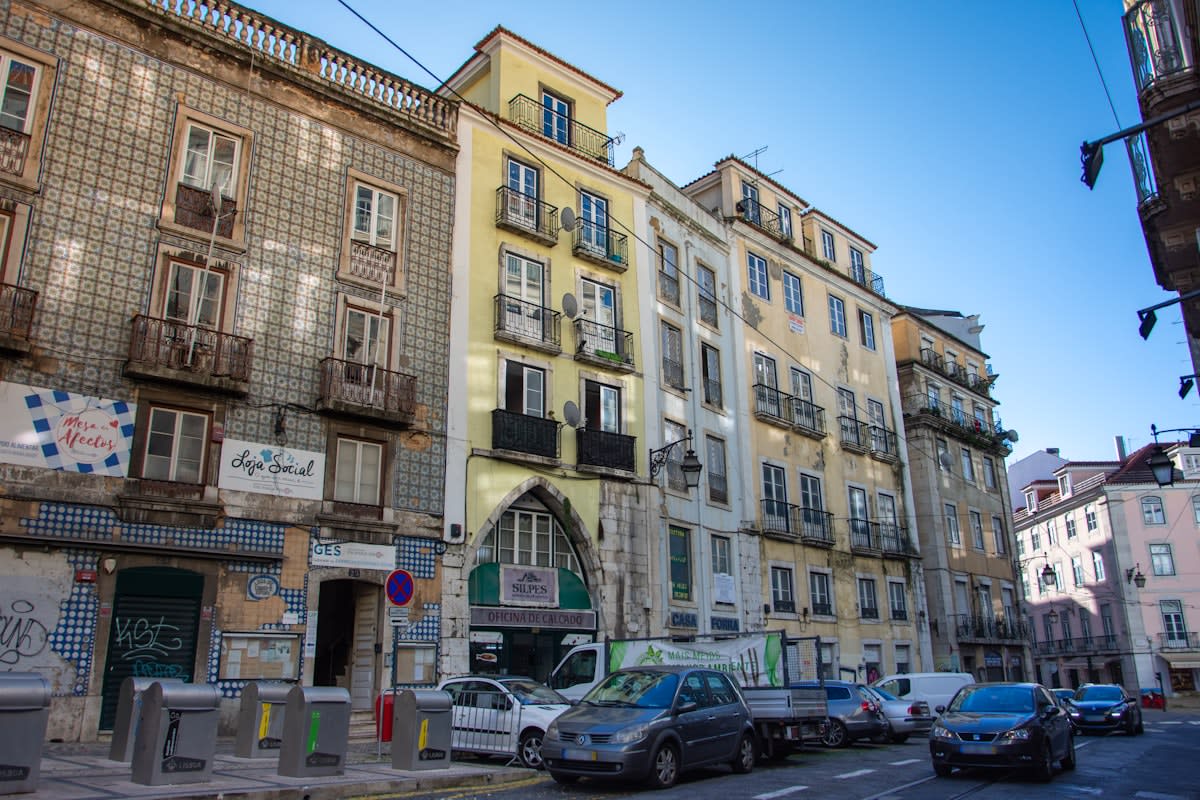
Zoning is rarely about the buildings themselves; it is about the people those buildings attract. In cities like Lisbon, the reaction to the housing crisis has been swift and restrictive. The Portuguese government's Mais Habitação program represents a fundamental realignment in how the state views residential property. By limiting new licenses for short-term rentals and restricting the conversion of residential units into tourist lodgings, the city is attempting to force a correction in the rental market. This is not a request for cooperation; it is a legislative wall built to stop the hemorrhage of affordable housing.
Does the remote worker realize they are being targeted? Often, they do not until they find that the luxury loft they intended to lease is suddenly rezoned for mixed-use or restricted by new local occupancy laws. In Mexico City, particularly in the Roma and Condesa neighborhoods, the friction has reached a boiling point. Local authorities are examining ways to limit the density of short-term rentals, which have seen growth rates exceeding 20% year-over-year in some sectors. The goal is to break the incentive for landlords to prioritize nomadic elites over long-term tenants who contribute to the social fabric of the community.
"We are seeing a transition from the city as a product for consumption by the global elite back to the city as a place of residence for the local citizen."— Urban Policy Analyst, European Housing Observatory
The mechanism of this weaponization is often subtle. It manifests as a sudden increase in the requirements for 'primary residence' verification or the implementation of strict 'anti-speculation' zoning that penalizes properties left vacant for more than six months. By making it legally cumbersome or financially punitive to maintain a secondary home for remote work, cities are effectively raising the cost of entry for the nomadic class. This is a surgical approach to social engineering, targeting the specific asset—residential real estate—that the remote worker uses to anchor themselves in a low-cost environment.
| Strategy | Attraction Zoning (Old) | Defense Zoning (New) |
|---|---|---|
| Short-term Rentals | Permissive/Unregulated | Strict caps/License quotas |
| Residential Conversion | Encouraged for investment | Restricted to protect stock |
| Occupancy Rules | Flexible/Nomadic | Primary residence mandates |
| Tax Treatment | Low entry barriers | Vacancy taxes/Luxury levies |
Why is this happening now? The trigger was the decoupling of income from geography. When wealth is portable, the traditional social contract of the city—where high-earners pay for the infrastructure they use through local taxes—collapses. The remote worker consumes the city's amenities, uses its roads, and drives up its prices, but their economic loyalty remains with a corporate headquarters three time zones away. Local governments have realized that if they cannot tax the income, they must tax or restrict the access to the land.
In North American hubs like Austin, Texas, the battle is slightly different but the logic remains the same. The city has faced an explosion in housing costs, with some areas seeing price increases of 25% over a three-year window. While the 'tech migration' was initially hailed as a victory, the resulting displacement of the creative and service classes has led to a political backlash. Zoning boards are now under immense pressure to mandate 'missing middle' housing—duplexes and townhomes—not necessarily to increase supply for everyone, but to prevent the total domination of the landscape by luxury single-family estates owned by remote executives.
The Zoning Paradox
Zoning weaponization occurs when land-use laws are used not for urban planning, but as a proxy for wealth redistribution and social control in the face of global capital flight.
The irony is that many of these remote workers believe they are escaping the bureaucracy of their home cities, only to find themselves entangled in a more aggressive form of local governance. They are no longer viewed as 'entrepreneurs' or 'innovators,' but as economic colonizers. This shift in perception is reflected in the legislation. When a city council votes to ban the conversion of a historic warehouse into luxury lofts, they are not just preserving architecture; they are denying the remote elite a foothold in the neighborhood.
Beyond the residential sector, this trend is bleeding into commercial zoning. Cities are beginning to restrict the number of 'co-working spaces' allowed in residential zones, recognizing that these hubs act as magnets for the nomadic class and further drive up local rents. By classifying these spaces as commercial rather than residential, cities can push them into industrial zones or charge higher commercial property taxes, effectively making the nomadic lifestyle more expensive to maintain.
Is this a sustainable strategy? Perhaps not. There is a risk that over-regulation will lead to 'ghost towns' of luxury vacancies where owners keep properties empty rather than renting to locals at regulated rates. However, for the local politician, the risk of a vacant luxury condo is far more acceptable than the risk of a displaced voting bloc. The political calculus has shifted from attracting growth to managing the fallout of that growth.
Impact of Zoning Restrictions on Rental Price Volatility
Executive Insight
+18.4%
YTD Growth
The broader implication is a move toward the 'Fortress City.' We are seeing the emergence of urban environments that are intentionally designed to be less attractive to the transient, high-earning class. By prioritizing long-term tenure over short-term flexibility, cities are attempting to rebuild the social cohesion that was eroded by the AirBnB-ification of their centers. This is a rejection of the 'city as a service' model in favor of the 'city as a community' model.
Ultimately, the weaponization of zoning is a symptom of a deeper structural failure in the global economy. When the means of production are digital and the means of residence are physical, the friction between the two will always manifest in the soil. The remote work elite may have the mobility to move to the next 'undiscovered' gem, but as more cities adopt these defensive zoning strategies, the map of available sanctuaries is shrinking. The gates are closing, and the cost of entry is no longer just financial—it is residential.