13 Killed As Cab Gets Buried After Landslide In Himachal's Lahaul-Spiti
Source Entity
NDTV News Search Records Found 1000
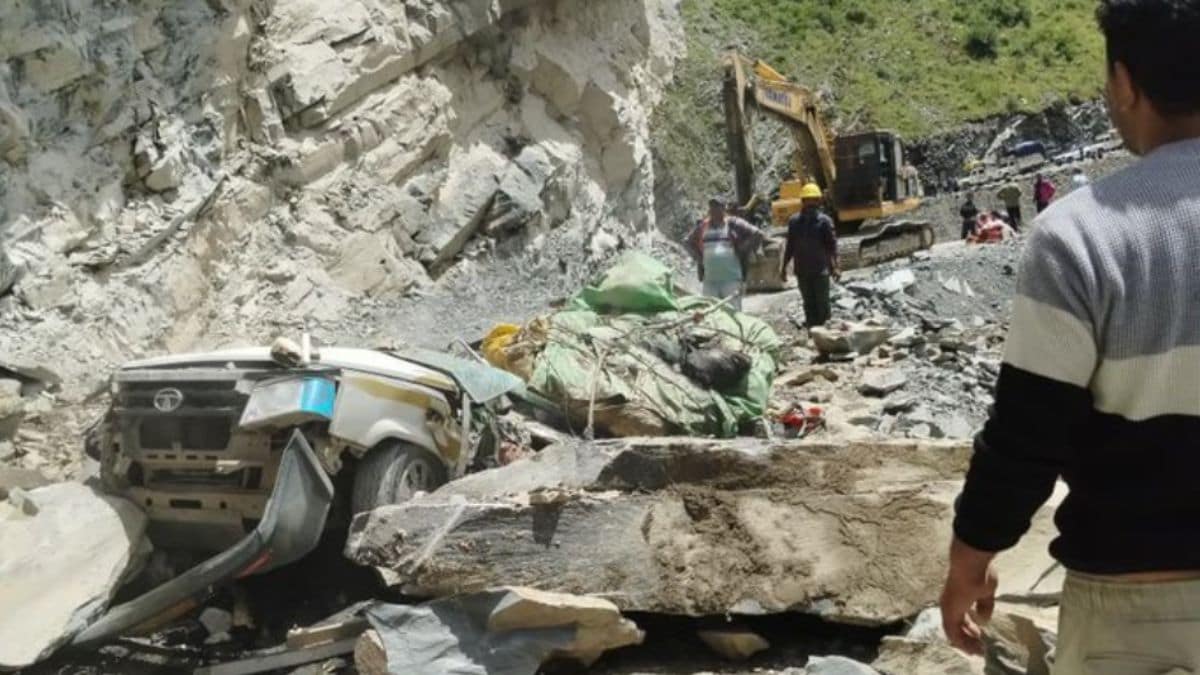
A tragic landslide in Himachal Pradesh's Lahaul-Spiti district claimed 13 lives after falling boulders crushed a passenger vehicle. The accident, which occurred on the Udaipur-Killar road, also resulted in a fire that consumed the wreckage.
Tragedy Strikes Lahaul-Spiti: A Detailed Analysis of the Fatal Landslide
On Friday, July 24, 2026, a devastating landslide in the Lahaul-Spiti district of Himachal Pradesh resulted in the tragic deaths of 13 individuals. The incident occurred on the precarious Udaipur-Killar road near Kuddu Nala, when massive boulders suddenly dislodged from a hillside, directly impacting a Tata Sumo taxi. The force of the impact completely crushed the vehicle, which was reportedly carrying 15 passengers at the time, leaving only two survivors.
The Human Cost and Rescue Efforts
Among the 13 deceased were a woman and her six-month-old infant, highlighting the profound human toll of this catastrophe. Reports indicate that the passengers had been stranded overnight at Tindi due to prior road closures, attempting to reach Killar from Kullu when the disaster struck. Following the initial impact, the rear of the vehicle caught fire, further complicating rescue operations. Bystanders and personnel from the Indian Army arrived at the scene to battle the blaze and recover the victims from the wreckage.
Geographical and Environmental Context
The Lahaul-Spiti region is characterized by its rugged, high-altitude terrain, which makes it inherently susceptible to geological instability. The Udaipur-Killar road is a critical, albeit dangerous, lifeline for remote communities in the Pangi valley. The combination of steep gradients, unpredictable weather patterns, and loose geological formations creates a constant risk of rockfalls and landslides, particularly during the monsoon season or periods of environmental flux.
Broader Implications for Mountain Infrastructure
This incident underscores the recurring challenges of maintaining safe transit routes in the Himalayas. While road connectivity is essential for the economic and social integration of remote districts like Chamba and Lahaul-Spiti, the vulnerability of these mountain passes remains a significant concern. The fact that the vehicle was overloaded highlights the immense pressure on local transportation networks, where limited road access often forces passengers to rely on overcrowded transit options despite the known risks.
Future Trends and Safety Management
As climate patterns shift and extreme weather events become more frequent in the Himalayan region, the necessity for robust early-warning systems and improved road engineering becomes paramount. Experts emphasize that while total prevention of natural landslides is impossible in such volatile terrain, the integration of real-time monitoring and stricter enforcement of vehicle occupancy standards could mitigate some of the risks. Moving forward, authorities will likely face increased scrutiny regarding the structural integrity of these mountain corridors and the protocols governing travel during periods of high geological instability.
Multiple Citing Sources
Verification Required?