Show HN: I'm a 15 Year Old Wannabe Engineer, This Is a Cycloidal Gearbox I Built
Source Entity
Hacker News
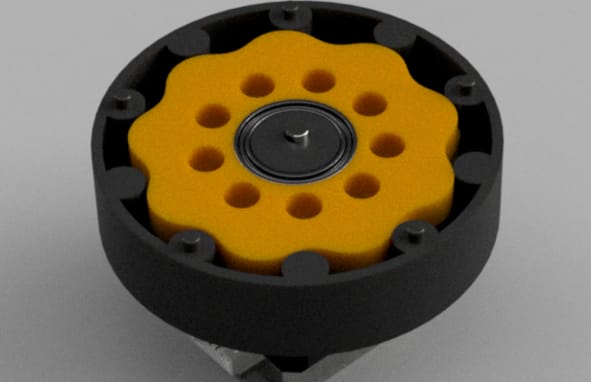
A 15-year-old developer shared their engineering journey in building a functional cycloidal gearbox using custom Python scripts. The project highlights the iterative design process from initial testing to a successful 3D-printed integration with a NEMA 17 motor.
Engineering Innovation: The Rise of Young Makers
The recent showcase of a custom-built cycloidal gearbox by a 15-year-old engineer serves as a compelling case study in the democratization of mechanical engineering. By leveraging open-source tools and additive manufacturing, young innovators are increasingly bypassing traditional prototyping barriers. The project demonstrates a sophisticated understanding of mechanical systems, specifically the cycloidal drive, which is prized for its high torque density and reduced backlash compared to traditional planetary gears.
The Iterative Design Lifecycle
The developer’s journey from Version 1 to Version 3 illustrates the quintessential engineering design cycle: testing, failure, and refinement. Version 1 served as a proof-of-concept for a Python-based generator, establishing the core mathematical logic. The transition to Version 2, which attempted to miniaturize the design to a NEMA 17 footprint, highlights the harsh realities of hardware engineering. The failure of this version due to the inherent precision limitations of standard 3D printing underscores the critical importance of tolerance management in mechanical design.
Overcoming Additive Manufacturing Limitations
One of the most significant hurdles in desktop engineering is the gap between theoretical CAD models and the reality of 3D-printed tolerances. Version 2 failed because the tight clearances required for a micro-cycloidal drive exceeded the capabilities of consumer-grade printers. However, the successful implementation of Version 3, which utilized a larger footprint to accommodate greater manufacturing variances, demonstrates a practical shift in problem-solving. By increasing the size, the engineer effectively compensated for the material inconsistencies and dimensional inaccuracies inherent in fused deposition modeling (FDM).
The Role of Software in Hardware Development
A pivotal component of this project is the custom Python script used to automate the gear generation. By basing the script on geometry principles often associated with professional CAD software like SolidWorks, the developer has created a scalable workflow. This methodology—using code to generate complex mechanical geometries—is a growing trend in modern engineering, allowing for rapid iteration that would be impossible with manual CAD modeling alone.
Broader Implications and Future Trends
This project reflects a broader trend in the 'Maker' community where hobbyists are producing industrial-grade components at home. As 3D printing technology continues to improve in resolution and material science, the barrier to entry for building complex robotics and automation systems continues to drop. We can expect to see more decentralized engineering efforts where software-defined hardware becomes the standard, enabling a new generation of engineers to iterate on complex mechanical designs with minimal capital expenditure.
Conclusion
The successful development of a functional cycloidal gearbox by a young developer is a testament to the power of accessible technology. By mastering the intersection of software (Python scripts) and hardware (3D printing and NEMA 17 integration), the project highlights how iterative failure leads to technical maturity. As these tools become more refined, the gap between hobbyist projects and industrial applications will continue to shrink, paving the way for further innovation in the field of mechanical engineering.