We know 15k websites are infected. how do we tell them?
Source Entity
Hacker News
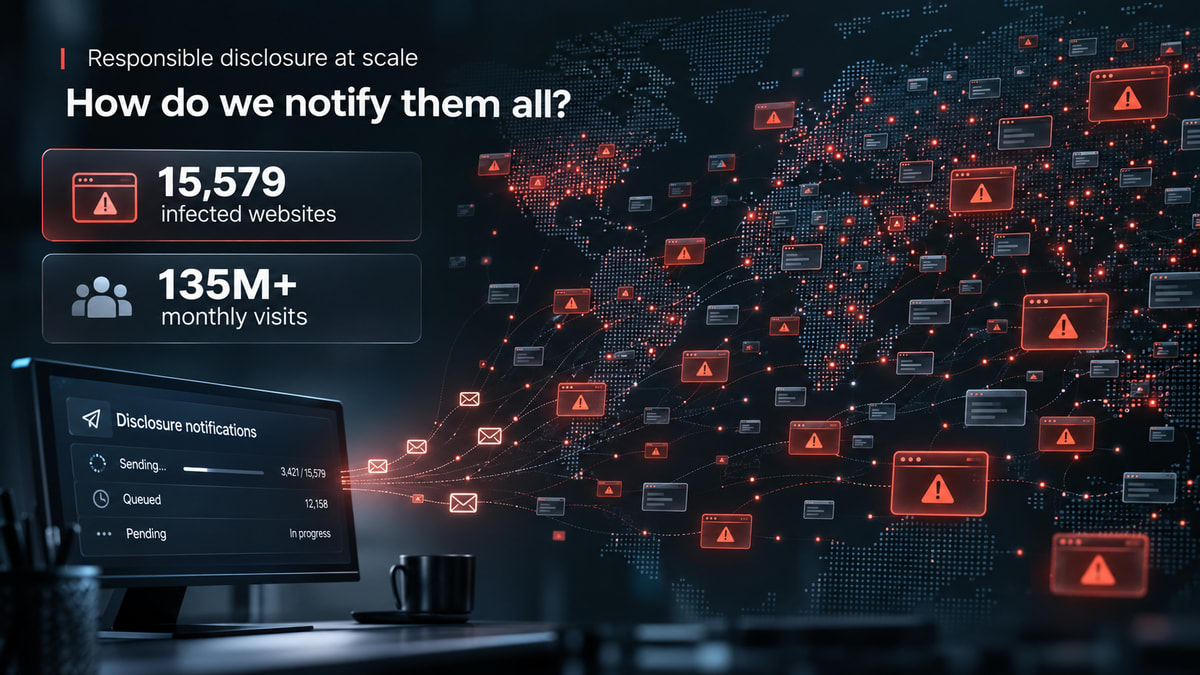
Security researchers have identified over 15,500 websites compromised by malicious JavaScript, affecting an estimated 135 million monthly visitors. The scale of these infections has created a significant challenge for responsible disclosure and remediation efforts.
The Scaling Crisis in Cyber Threat Disclosure
The recent identification of 15,579 websites compromised by malicious JavaScript highlights a critical bottleneck in modern cybersecurity: the disparity between threat detection capabilities and the capacity for responsible disclosure. With an estimated 135 million monthly visits across these infected domains, the potential for large-scale data exfiltration, credential theft, or the distribution of secondary malware is immense. This scenario underscores the reality that while automation has significantly bolstered our ability to scan the web for vulnerabilities, the human-centric process of notifying site owners remains dangerously antiquated.
The Mechanics of the Infection
At the center of this discovery is the presence of malicious JavaScript injected into legitimate sites. These scripts often operate silently, executing in the user's browser without triggering immediate alerts. Because these websites are likely compromised through common vulnerabilities—such as outdated plugins, insecure server configurations, or compromised third-party dependencies—they serve as a persistent vector for cybercriminals. The sheer volume of 15,579 sites suggests a systematic campaign rather than isolated incidents, likely leveraging automated exploitation tools to scale the infection rate.
The 'Responsible Disclosure' Bottleneck
Traditionally, the cybersecurity community relies on 'responsible disclosure' to mitigate risks. This involves contacting the domain owner, providing evidence of the breach, and offering guidance on remediation. However, as the Report URI team has demonstrated, this model is reaching a breaking point. When the rate of identification far outpaces the rate of successful communication, the security community faces a moral and logistical dilemma. If thousands of site owners cannot be reached or lack the technical resources to clean their infrastructure, the infected sites remain active, continuing to pose a threat to their unsuspecting visitors.
Broader Implications for Web Security
This incident forces a broader conversation about the accountability of service providers and the necessity for automated, standardized communication protocols for security vulnerabilities. The current landscape is fragmented; many site administrators are not reachable through public contact information, or they view security notifications as spam. Without a centralized, trusted mechanism for issuing mass security alerts, the gap between detection and neutralization will continue to widen, emboldening threat actors who know that the 'time-to-remediate' is currently on their side.
Future Trends and Potential Solutions
Moving forward, the industry may need to transition toward more aggressive, automated notification frameworks. This could involve leveraging ISP-level alerts, integrating with hosting provider automated security dashboards, or creating a standardized 'security.txt' protocol that is universally adopted to facilitate easier outreach. As threat intelligence capabilities continue to evolve, the ability to identify infections will only improve. If we do not address the communication gap, we will be left with a digital ecosystem where millions of users are perpetually exposed to malicious code, despite our technical ability to see exactly where the threats reside.