NVS-03 reaches geosynchronous orbit; satellite in good health
Source Entity
India Latest News: Top National Headlines Today & Breaking News | The Hindu
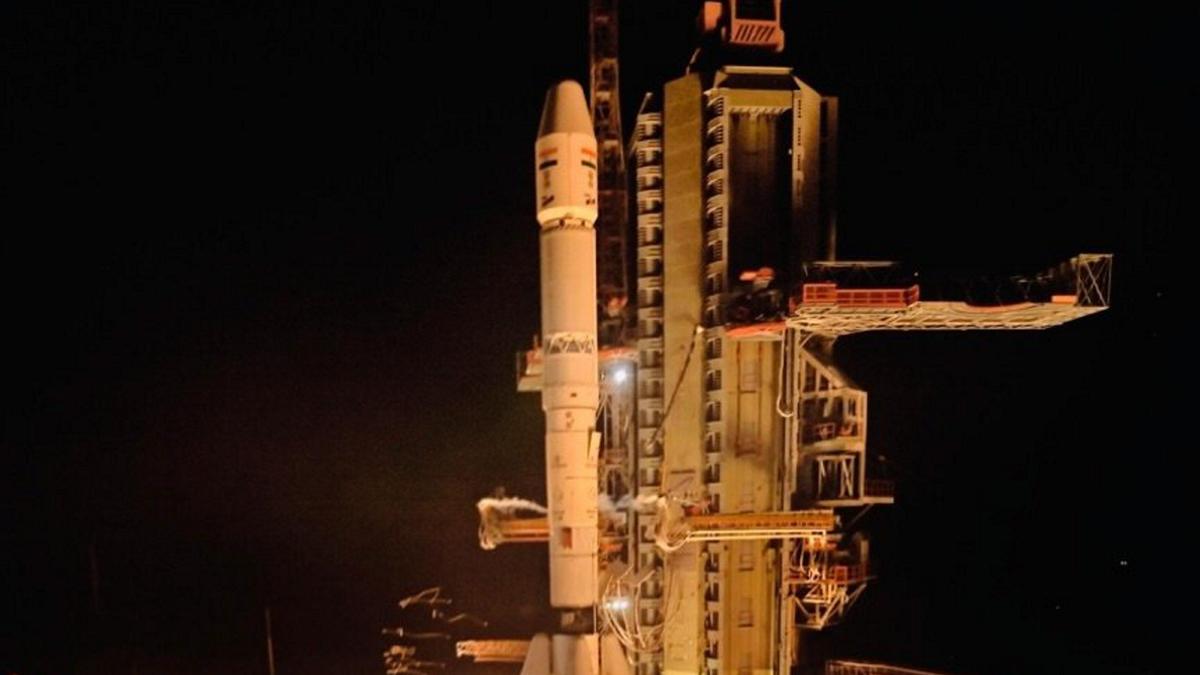
ISRO has successfully maneuvered the NVS-03 satellite into its designated geosynchronous orbit. This milestone, achieved following four complex engine burns, marks a significant advancement in India's next-generation navigation capabilities.
India’s Space Milestone: The Successful Positioning of NVS-03
On November 4, 2026, the Indian Space Research Organisation (ISRO) confirmed that the NVS-03 satellite has successfully attained its intended Geo Synchronous Orbit. This achievement follows a precise launch on October 30, 2026, where the GSLV vehicle initially injected the satellite into an elliptical orbit of 170.3 km x 38080 km. The transition to a stable geosynchronous position is a testament to the engineering prowess of India’s space agency.
The Mechanics of Orbital Insertion
The positioning process involved four distinct orbit maneuvers, requiring a cumulative Liquid Apogee Motor (LAM) engine burn of 6,164 seconds. This critical phase allowed the satellite to reach its final orbit of approximately 35,765 km x 36,196 km at an inclination of 29.980 degrees. Such precision is essential for ensuring that the satellite remains synchronized with the Earth's rotation, a requirement for maintaining consistent coverage for navigation applications.
Strengthening Navigational Infrastructure
NVS-03 represents the third iteration in India’s next-generation navigation satellite series. By building on the success of its predecessors, this mission is designed to enhance the robustness and accuracy of India's indigenous navigation system. These satellites are vital for civilian and strategic sectors, providing precise timing and positioning data that reduce dependency on foreign global navigation satellite systems (GNSS).
Strategic Implications for ISRO
The success of the NVS-03 mission underscores the reliability of the GSLV (Geosynchronous Satellite Launch Vehicle) platform. By consistently demonstrating the ability to perform complex orbital maneuvers, ISRO continues to solidify its reputation as a reliable and cost-effective partner in the global space economy. This mission serves as a building block for future deep-space and earth-observation initiatives.
Future Trends and Sustainability
As India continues to expand its orbital footprint, the focus on 'satellite health'—as highlighted by ISRO—becomes increasingly important. Maintaining operational integrity in the harsh environment of geosynchronous orbit is a significant technical challenge. The success of NVS-03 provides valuable data for the longevity of future payloads, ensuring that India’s navigation network remains resilient against technical degradation.
Conclusion
The successful placement of NVS-03 into its geosynchronous orbit is more than just an engineering victory; it is a strategic step forward for India’s technological sovereignty. With the satellite currently in good health, the focus will now shift to its operational phase, where it will begin contributing to the broader navigation framework, ultimately serving as a cornerstone for India’s digital and physical infrastructure.
Verification Required?