ABVP retains PUCSC presidency as last-minute SOI support bolsters saffron outfit
Source Entity
Asmita Maini
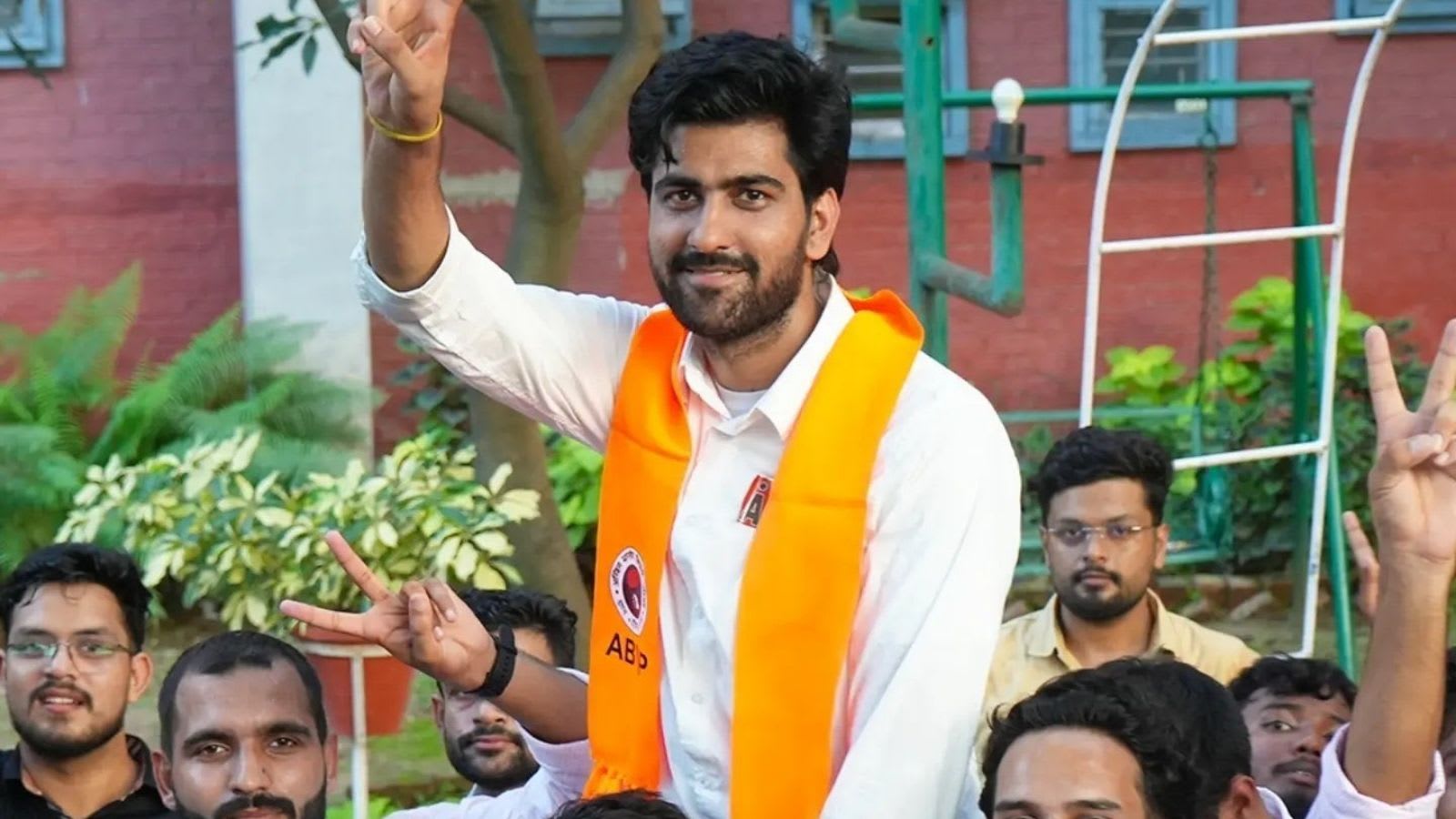
The ABVP has successfully retained the Panjab University Campus Students Council (PUCSC) presidency for a second consecutive term. This victory, bolstered by strategic alliances, serves as a significant political indicator ahead of upcoming Chandigarh municipal and assembly elections.
ABVP Secures Historic Second Consecutive Win at Panjab University
The political landscape of Chandigarh’s academic institutions has seen a significant shift as the Akhil Bharatiya Vidyarthi Parishad (ABVP) successfully retained the president’s post in the Panjab University Campus Students Council (PUCSC). Candidate Ankit Bidhan secured 3,149 votes, defeating Aadil Brar of the Association of Students for Alternative Politics (ASAP) by a margin of 512 votes. This marks a historic milestone, as it is the first time the ABVP has held the presidency for two consecutive terms at this prestigious institution.
Strategic Alliances and Competitive Dynamics
The election results were defined by intense competition and the efficacy of last-minute political realignments. While the ABVP solidified its position, the Aam Aadmi Party (AAP)-backed candidate, Aadil Brar, finished with 2,637 votes, and the Congress-affiliated National Students’ Union of India (NSUI) candidate, Gurman Singh Sidhu, trailed with 2,263 votes. The inclusion of last-minute support from the Students Organisation of Panjab University (SOI) proved to be a decisive factor, illustrating how strategic coalition-building remains a cornerstone of success in university politics.
Beyond the Campus: Broader Political Implications
Experts view this victory as a critical bellwether for the Bharatiya Janata Party (BJP), given the ideological alignment between the ABVP and the parent RSS organization. With the Chandigarh municipal elections and upcoming assembly polls on the horizon, this win provides a psychological and organizational boost to the saffron outfit. The ability to mobilize the student electorate serves as a proxy for party strength, signaling potential trends in urban voter sentiment within the region.
Trends in Chandigarh College Elections
Parallel to the university-level results, student council elections across various Chandigarh colleges highlighted a growing trend of alliance-driven victories. Institutions such as DAV College, Sector 10, and GGDSDC, Sector 32, saw four-party alliances—including groups like the Hindustan Students Association (HSA) and the Indian Students Organisation (ISO)—sweeping all major posts. This shift suggests that fragmented student groups are increasingly finding common ground to counter established political wings, leading to more organized and consolidated electoral outcomes.
Analysis of the 2026-27 Mandate
As the newly elected panels prepare to take charge for the 2026-27 session, the mandate reflects a desire for stability and organizational continuity. The fact that many candidates were elected unopposed in various local colleges indicates a maturing of the student political process, where consensus-building is becoming as important as traditional campaigning. The next two years will be vital to observe how these student leaders navigate the intersection of campus demands and the influence of state-level political agendas.