Yogendra Yadav, Prashant Bhushan, Neha Bora among over 60 protesters detained near Jantar Mantar
Source Entity
The Indian Express
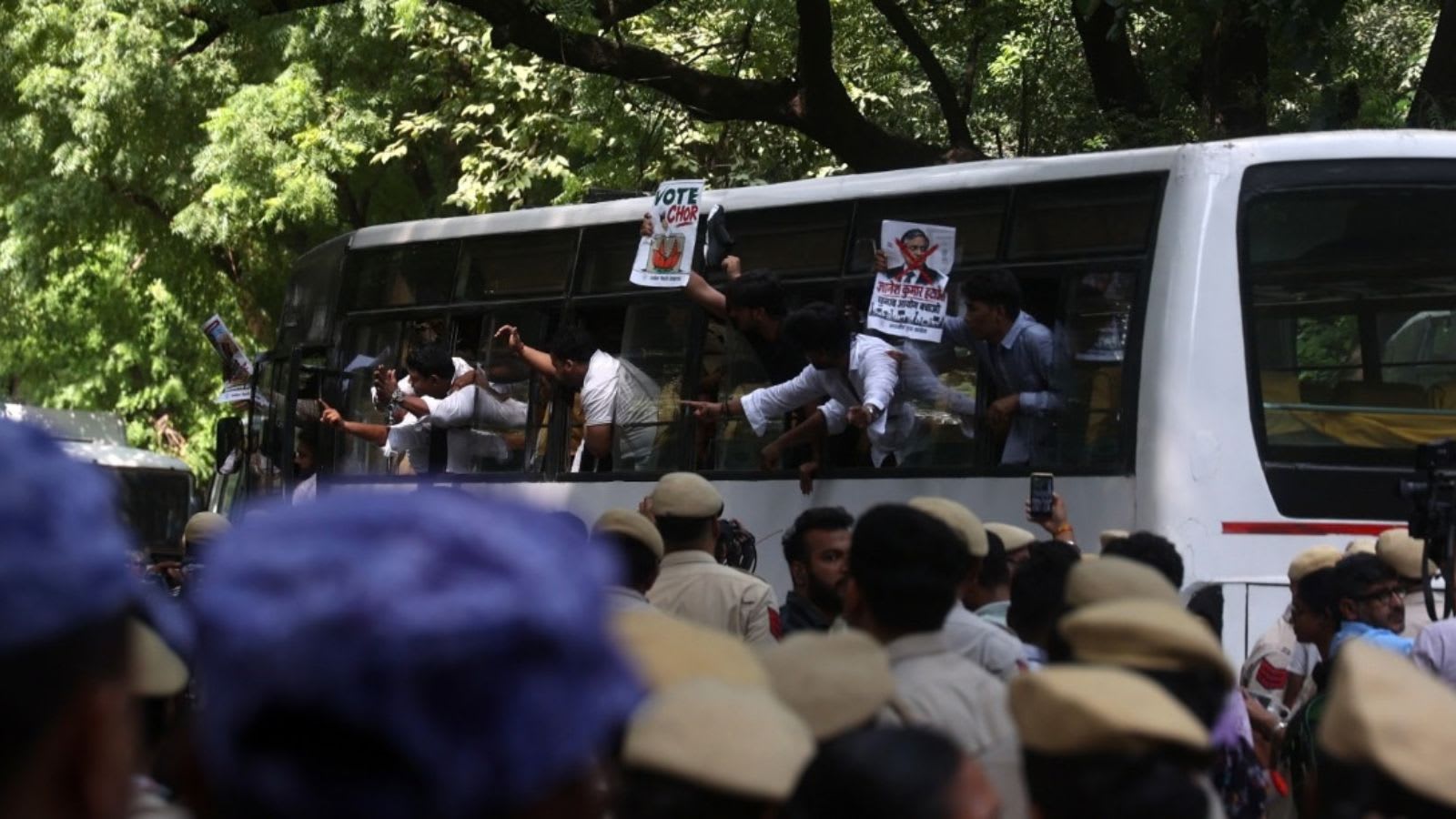
Prominent activists and political figures, including Yogendra Yadav and Prashant Bhushan, were detained by Delhi Police near Jantar Mantar. The protest focused on demanding the resignation of the Chief Election Commissioner and opposing the Special Intensive Revision process.
Detention of Prominent Activists and Political Leaders Near Jantar Mantar
A significant demonstration occurred near Parliament Street in New Delhi this Friday, resulting in the detention of over 60 individuals. High-profile figures, including political analyst Yogendra Yadav, advocate Prashant Bhushan, social activist Anjali Bhardwaj, CPI(M) leader Dipankar Bhattacharya, and AISA leader Neha Bora, were taken into custody as they attempted to gather near the Jantar Mantar protest site.
The Basis for Police Intervention
According to official statements provided by the Delhi Police, the primary reason for the intervention was the lack of prior authorization for the assembly. Furthermore, authorities cited the enforcement of Section 163 of the Bharatiya Nagarik Suraksha Sanhita (BNSS) in the New Delhi district, which explicitly prohibits the congregation of five or more people. This legal framework is frequently utilized by law enforcement to maintain public order in sensitive zones near the national capital's administrative hubs.
Core Demands of the Protest
The protesters organized this demonstration to voice specific grievances regarding the electoral process. Their primary demands centered on the 'Special Intensive Revision' (SIR) process, which has become a point of contention among various political and civil society groups. Additionally, the demonstrators explicitly called for the resignation of Chief Election Commissioner Gyanesh Kumar, signaling deep-seated dissatisfaction with the current leadership and functional transparency of the Election Commission of India.
Contextualizing the Political Climate
The detention of such prominent civil society members highlights the ongoing tension between political dissent and administrative restrictions in India. By targeting the Election Commission's recent procedural changes, the protesters are engaging in a broader debate regarding the integrity and methodology of voter list revisions. The presence of leaders from various student organizations, legal circles, and political parties underscores the coalition-based nature of this specific movement.
Broader Implications and Future Outlook
This incident is not an isolated event but rather part of a recurring pattern of civil unrest surrounding electoral procedures. The frequency of such protests—noted in various reports as having occurred multiple times in recent months—suggests that the friction between activist groups and the state regarding electoral governance is intensifying. As these groups continue to challenge administrative mandates, the government and the Election Commission face increasing pressure to address concerns regarding procedural legitimacy to avoid further public confrontations.
Conclusion
The events at Jantar Mantar reflect a critical juncture in the discourse on democratic accountability. While the police maintain that the detentions were a necessary measure to uphold Section 163 and ensure public order, the participants view their actions as a vital exercise of democratic rights. The situation remains a significant indicator of the current political volatility in India, as stakeholders continue to grapple with the complexities of electoral administration and the limits of public protest.