Working on Economics with Fable 5
Source Entity
Hacker News
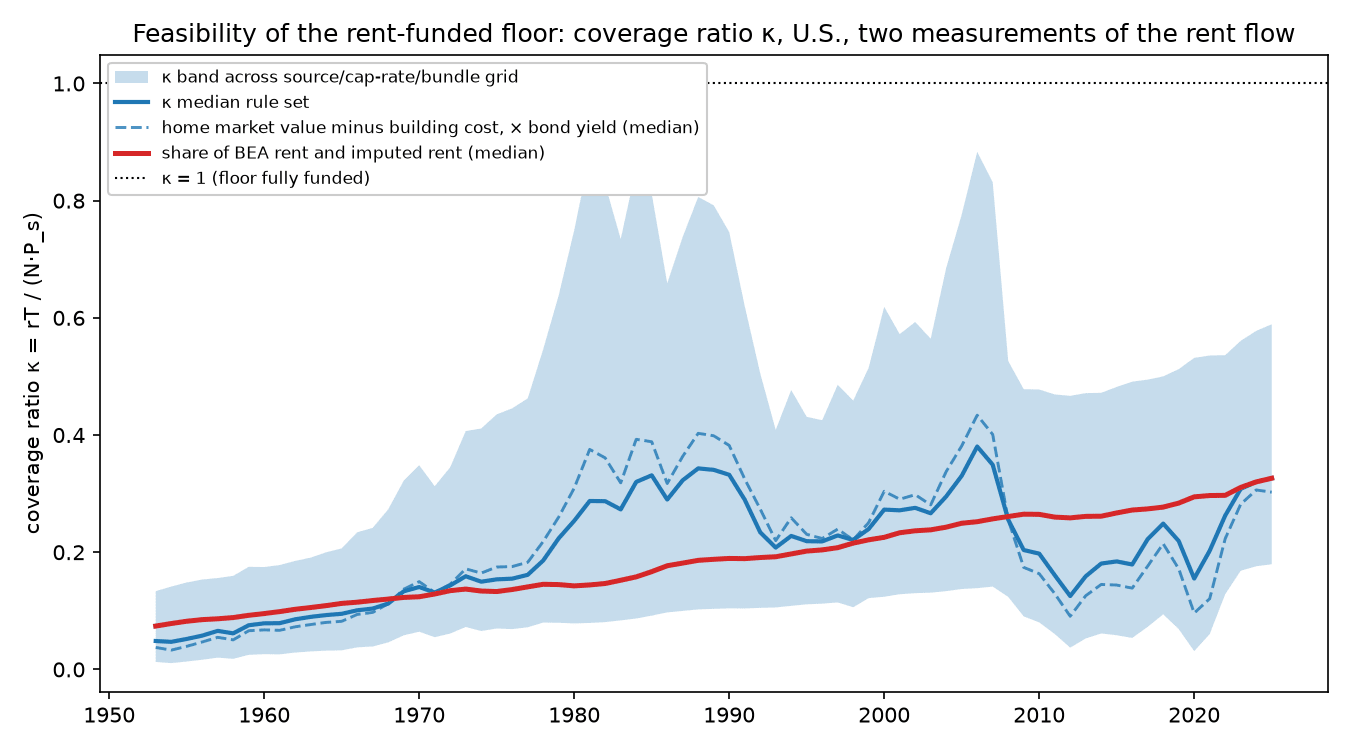
A researcher has developed a new economic theory regarding taxation and labor incentives using AI tools like Opus and Fable. This project, now formalized with a co-author from the Stockholm School of Economics, bridges anecdotal insights with rigorous academic modeling.
The Intersection of AI and Economic Theory
Recent developments in economic research have highlighted an intriguing collaborative process between human researchers and artificial intelligence. By leveraging advanced language models like Opus and Fable, an independent researcher has transitioned from a casual data exercise to the development of a formal economic theory. This journey underscores how AI is shifting from a simple productivity tool to an active intellectual partner capable of challenging existing assumptions and providing counter-evidence from academic literature.
Refining Economic Hypotheses through AI
The initial phase of this project focused on analyzing the complex interplay between tax structures, social benefits, and their subsequent impact on labor supply and consumer behavior. The researcher noted that AI tools played a critical role in this iterative process, frequently interjecting with corrective feedback or citing contradictory academic papers. This feedback loop essentially acted as a dynamic peer-review mechanism, forcing the researcher to refine their hypothesis and address potential flaws before the theory reached a formal stage.
Transitioning to Formal Academic Frameworks
Moving beyond anecdotal observations, the project has now entered a rigorous academic phase. By partnering with a scholar from the Stockholm School of Economics, the researcher is translating their initial narrative-driven theory into a formal mathematical and structural framework. This transition is essential for economic research, as it moves the concepts from subjective interpretations to a testable, reproducible model that can withstand the scrutiny of the broader economic community.
The Future of AI-Assisted Research
This methodology suggests a broader trend in how future economic theories may be constructed. By using AI to bridge the gap between initial conceptualization and formal modeling, researchers can iterate faster and identify potential pitfalls earlier in the process. However, the presence of a human co-author remains vital to ensure that the mathematical framework aligns with real-world economic logic and that the AI’s contributions remain grounded in established economic principles.
Broader Implications for Economic Policy
The ultimate goal of this research—understanding how taxes and benefits influence work and spending—remains one of the most significant challenges in public policy. If this new theory succeeds in providing a more accurate model of human behavior under different fiscal constraints, it could have significant implications for how governments design tax codes. By better predicting how policy changes impact individual incentives, policymakers may be able to create more efficient and equitable economic environments.
Conclusion
In conclusion, the collaboration between the researcher and their academic partner, supported by the analytical capabilities of AI, represents a sophisticated synthesis of modern technology and traditional economic inquiry. While the theory is still undergoing formalization, the process itself highlights the potential for AI to act as a catalyst for deeper intellectual exploration. As this work progresses, it will be interesting to see how the final model contributes to the ongoing debate surrounding fiscal policy and labor economics.