AI boom could make data centers consume 20% of US electricity by 2035: Report
Source Entity
Latest News: Today's Latest News Headlines from India & World | Hindustan Times | Hindustan Times
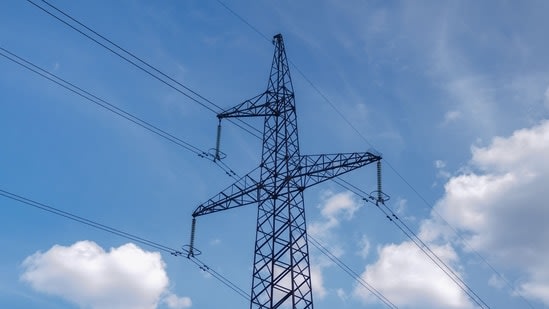
A BloombergNEF report projects that AI-driven data centers will consume 20% of US electricity by 2035, quadrupling current levels. This surge to nearly 200 gigawatts of demand presents significant infrastructure challenges for the national power grid.
The Impending Energy Crisis: AI and the US Power Grid
Recent projections from BloombergNEF (BNEF) have sounded an alarm regarding the intersection of artificial intelligence and national infrastructure. As AI adoption accelerates, the demand for computational power is scaling at an unprecedented rate. The latest data indicates that US data centers, which currently account for approximately 5.9% of national electricity consumption, are on a trajectory to consume 20% of the total power supply by 2035. This fourfold increase represents a profound shift in how the nation must approach energy generation and distribution.
The Mechanics of Hyper-Growth
The primary engine behind this surge is the intensive nature of AI training and inference. Unlike traditional data storage, the processing power required for large language models and generative AI necessitates dense clusters of high-performance chips. BNEF estimates that data center capacity will reach nearly 200 gigawatts (GW) within the next decade, with the majority of this power demand concentrated within the United States. By 2033, the US is expected to host 64% of global AI chips by power demand, effectively cementing its position as the world's computational hub.
Geographical Concentration and Grid Stress
The impact of this growth is not evenly distributed across the country. Specific states, most notably Virginia and Texas, are acting as magnets for data center construction due to existing infrastructure and favorable regulatory environments. This concentration places immense localized pressure on regional power grids. As these facilities demand increasingly massive amounts of electricity, grid operators face the difficult task of balancing the needs of industrial AI operations with those of residential and commercial consumers, potentially necessitating aggressive upgrades to transmission networks.
Scaling Estimates and Forecast Volatility
It is noteworthy that these projections are being revised upward with startling frequency. The current estimate of 194 GW of power demand by 2035 is 83% higher than what BNEF forecasted as recently as December. This volatility suggests that current models may actually be conservative. Other industry bodies, such as the Electric Power Research Institute (EPRI), have similarly doubled their estimates, indicating a consensus among analysts that the exponential demand for AI compute is currently outstripping long-term infrastructure planning.
Macro-Economic and Global Implications
The sheer scale of this energy requirement is difficult to comprehend. The report suggests that new data centers built through 2033 could consume as much electricity as the entire nation of India uses today. This creates a strategic imperative for the United States to modernize its energy portfolio. Whether this involves a massive expansion of renewable energy capacity, a resurgence in nuclear power, or improved grid efficiency, the energy-AI nexus will likely become a primary focus of national economic policy over the next decade.
Future Trends and Conclusion
Looking ahead, the tension between AI innovation and energy availability will likely define the tech sector's trajectory. Companies may be forced to innovate in energy-efficient chip design or even invest directly in private power generation to bypass grid constraints. While the AI boom promises significant economic advancement, it is intrinsically tied to the physical limits of the power grid. As we approach 2035, the ability of the US to provide reliable, sustainable energy will ultimately determine the ceiling for its technological leadership in the global AI race.
Verification Required?