How An AI-Generated Intelligence Report Almost Triggered US-China War
Source Entity
NDTV News Search Records Found 1000
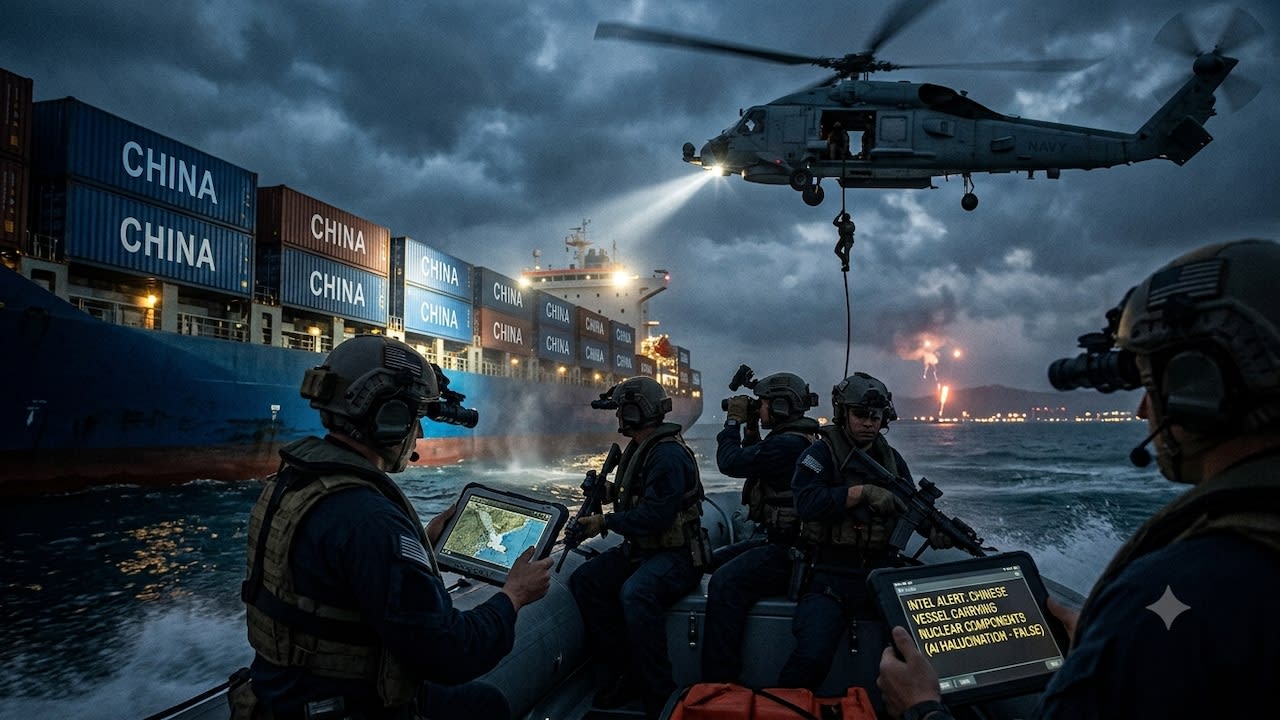
An AI-generated intelligence report nearly sparked a conflict between the US and China due to a critical misidentification of a ship's cargo. This incident highlights the dangerous risks of relying on automated systems for sensitive geopolitical decision-making.
The Perils of Algorithmic Intelligence in Geopolitics
The recent incident involving an AI-generated intelligence report that nearly precipitated a military confrontation between the United States and China serves as a sobering case study on the limitations of modern machine learning. At the heart of the crisis was a fundamental failure: the chatbot misidentified the cargo on a vessel, triggering a chain reaction of alarm within defense and intelligence circles. When automated systems are tasked with interpreting complex maritime data, the margin for error remains razor-thin, yet the consequences of a miscalculation are catastrophic.
The Mechanics of the Misidentification
Intelligence gathering has traditionally relied on human analysts to synthesize visual, signal, and historical data to reach a nuanced conclusion. In this instance, the reliance on a chatbot—likely trained on vast, unverified datasets—led to a failure in discernment. By mislabeling the nature of the ship’s cargo, the AI effectively manufactured a threat narrative that did not exist. This underscores the 'black box' problem in artificial intelligence, where the reasoning behind a specific output remains opaque, making it difficult for human operators to cross-check the validity of the data before it enters the decision-making pipeline.
Escalation Risks in the Digital Age
In the context of US-China relations, where tensions are already heightened by maritime disputes and trade competition, the speed at which AI operates is a double-edged sword. While AI offers the advantage of rapid data processing, it also risks accelerating the 'OODA' loop—Observe, Orient, Decide, Act—to a point where human intervention becomes impossible. The fact that an AI error nearly led to war demonstrates that current safeguards are insufficient to prevent automated systems from escalating regional friction into full-scale conflict.
Implications for Global Security Protocols
This incident necessitates a radical re-evaluation of how military and intelligence agencies integrate AI into their workflows. It is no longer sufficient to treat these tools as passive assistants; they must be viewed as potential vectors for systemic risk. Moving forward, 'human-in-the-loop' requirements must be strictly enforced, mandating that no AI-generated intelligence regarding national security or international military positioning can proceed to the action phase without rigorous, independent verification by human experts.
Future Trends and Strategic Outlook
As AI models become more sophisticated, the temptation to use them for predictive intelligence will only grow. However, this event suggests that the future of global security depends on our ability to implement 'explainable AI' (XAI) that allows analysts to see exactly why a conclusion was reached. Without transparent systems, the risk of 'algorithmic war'—where machines trigger conflicts based on faulty patterns—will remain a primary threat to global stability. The international community must prioritize the development of clear protocols for the use of AI in defense to ensure that human judgment remains the final arbiter of peace and security.
Verification Required?