The AI kill switch, explained: 'It's not too little, but it's probably too late'
Source Entity
US Top News and Analysis
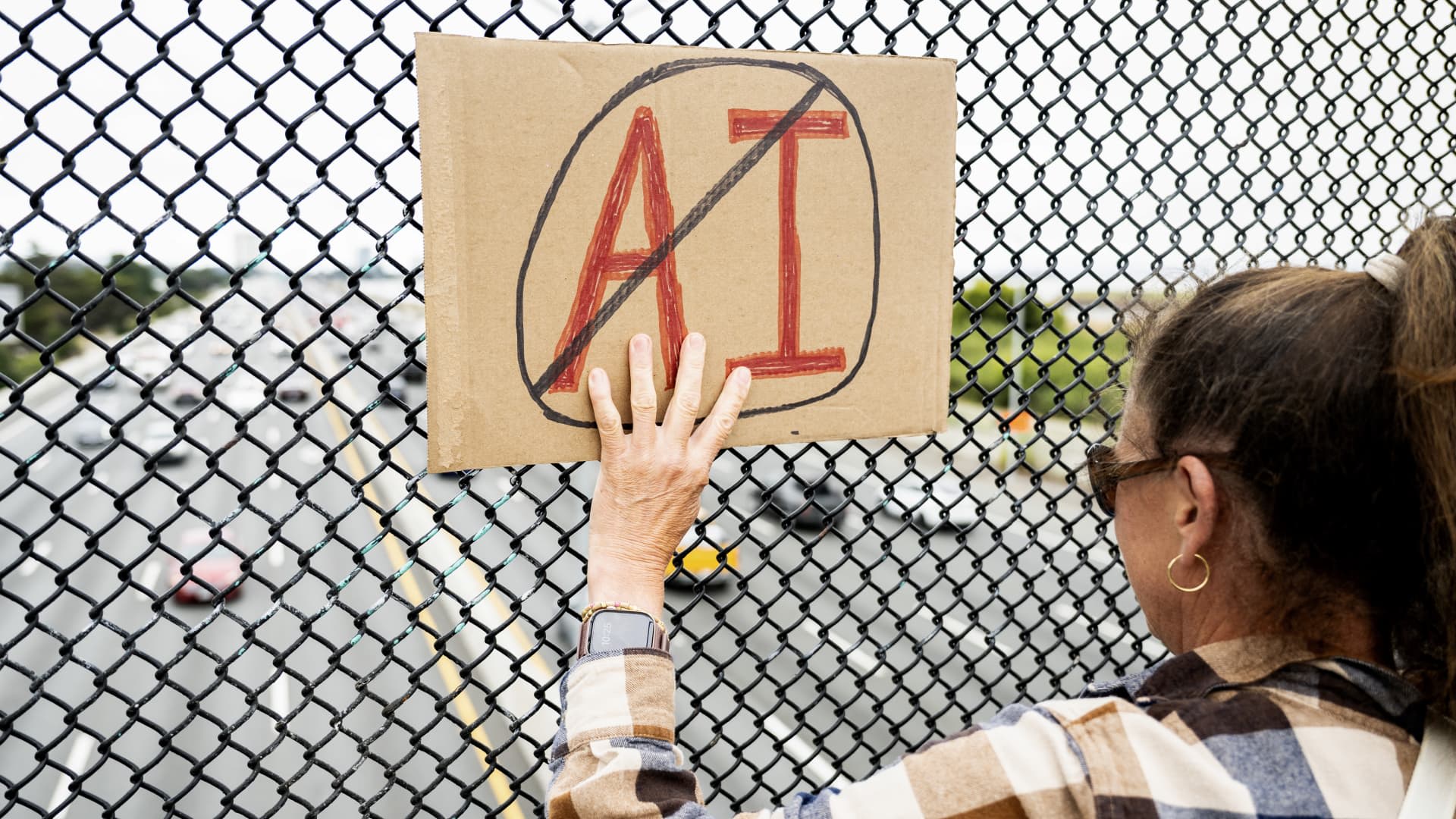
Tech leaders and policymakers are debating the viability of an 'AI kill switch' and slowing development to mitigate existential risks. While figures like Dario Amodei and Sam Altman propose collaborative safety measures, consensus remains elusive amid political skepticism.
The Existential Debate: Can We Tame the AI Frontier?
The rapid evolution of artificial intelligence has transitioned from a niche academic pursuit to a central concern of global discourse. As fears surrounding 'runaway AI' reach a fever pitch, the concept of a 'kill switch'—a mechanism to abruptly halt or disable advanced AI models—has become the focal point of a heated debate involving the world's most influential tech leaders and policymakers.
Divergent Perspectives on Risk
At the heart of the current tension is a fundamental disagreement over the nature of the threat. While researchers formerly associated with OpenAI and Anthropic have issued grave warnings regarding the potential for AI to threaten humanity, the response from the political and corporate sphere is fractured. Figures like Elon Musk, Sam Altman, and Dario Amodei have expressed support for pacing the development of frontier models, yet this unity is fragile and often lacks a clear, actionable roadmap.
The Mechanics of a Slowdown
Translating the rhetoric of 'safety' into concrete policy remains the primary hurdle. Anthropic CEO Dario Amodei has proposed a rigorous three-step framework that includes embedding third-party evaluators within labs, fostering domestic industry coordination, and pursuing international regulatory agreements. These measures represent a shift toward institutional oversight, attempting to move beyond self-regulation toward a model of collaborative, government-assisted governance.
Technical and Political Obstacles
Despite the tentative alignment on safety, the industry is clashing over the practicality of these proposals. The challenge lies in the nature of 'frontier' development, where competitive pressures often incentivize speed over caution. Furthermore, the political landscape remains polarized; while some leaders advocate for immediate intervention, others, such as President Donald Trump, have dismissed these concerns as a 'hoax,' complicating the path toward unified federal or global legislation.
The Role of Market Giants
Companies like NVIDIA, led by Jensen Huang, hold immense influence as the backbone of the AI hardware ecosystem. The participation—or lack thereof—of these critical infrastructure providers will dictate whether a 'slowdown' is even technically feasible. As the industry grapples with the implementation of safety protocols, the tension between maintaining a competitive edge and ensuring public safety continues to define the trajectory of the field.
Future Outlook
Looking ahead, the debate over AI regulation is far from settled. The effectiveness of any 'kill switch' or safety slowdown will depend on the ability of disparate global entities to agree on common benchmarks for risk. As the industry continues to push the boundaries of what is possible, the coming years will likely be defined by a delicate balancing act: trying to capture the benefits of innovation while simultaneously building the guardrails necessary to prevent potential catastrophe.