AI Consumes Less Water Per Dollar Spent Than Almond Milk Or Golf: Report
Source Entity
NDTV News Search Records Found 1000
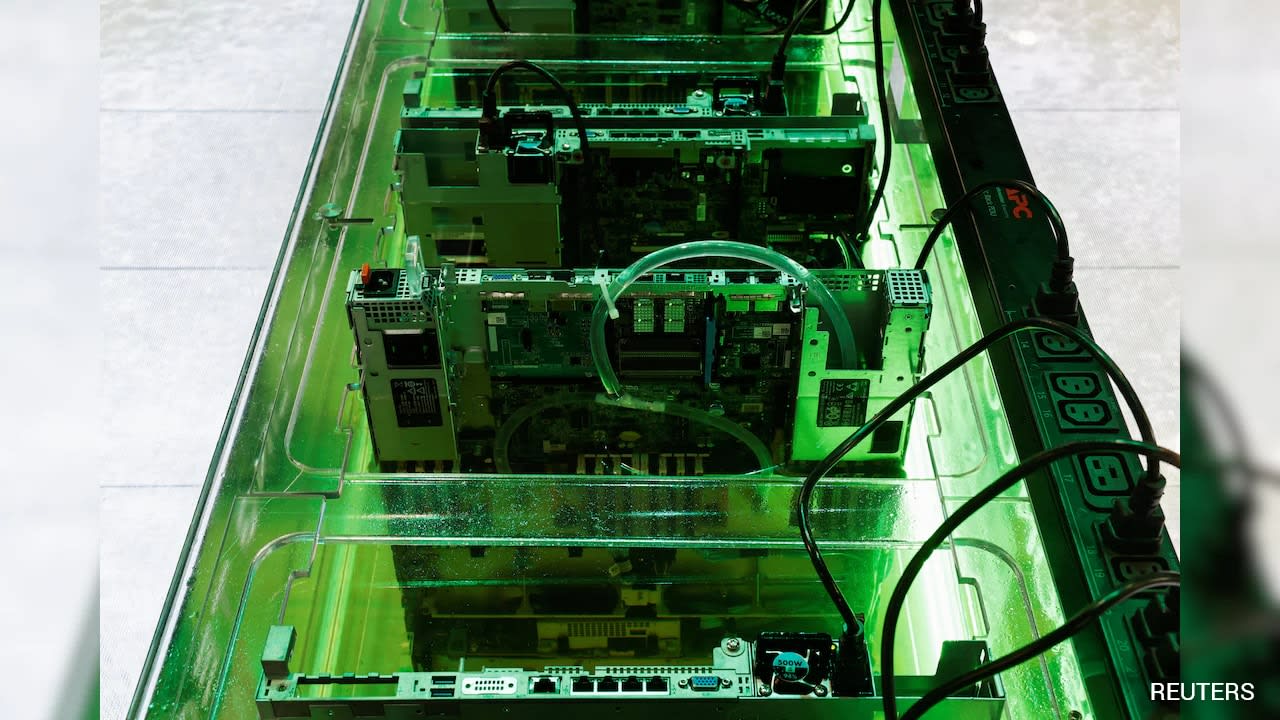
A new report highlights that AI infrastructure uses less water per dollar of economic output compared to agricultural staples like almond milk or recreational activities like golf. This efficiency is driven by innovative immersion cooling technologies that submerge data center servers in liquid.
The Environmental Efficiency of Artificial Intelligence
Recent data suggests a paradigm shift in how we perceive the environmental footprint of the burgeoning artificial intelligence sector. While public discourse has frequently focused on the massive energy and water consumption required to train large language models, a new report offers a nuanced perspective by framing resource usage through the lens of economic output. By comparing water consumption per dollar spent, AI infrastructure appears significantly more efficient than traditional high-water-usage industries such as almond cultivation or the maintenance of golf courses.
The Role of Immersion Cooling
Central to this improved efficiency is the adoption of advanced thermal management solutions, specifically immersion cooling systems. Unlike traditional air-cooling methods, which rely on energy-intensive fans and evaporative water cooling, immersion cooling involves submerging server hardware directly into a thermally conductive, dielectric liquid. This method allows for far superior heat dissipation, effectively reducing the need for constant water-intensive climate control systems that have historically plagued large-scale data centers.
Rethinking Data Center Infrastructure
Data centers have long been criticized for their reliance on potable water for cooling, a practice that puts strain on local utilities during periods of drought. By shifting toward immersion cooling, the industry is not only lowering its operational costs but also drastically reducing its 'water intensity' per unit of computation. This transition is essential as AI workloads continue to expand globally, necessitating a move away from legacy infrastructure that was never designed for the extreme power densities of modern GPU clusters.
Contextualizing Water Usage
To understand the significance of this finding, one must compare it to sectors that have long been scrutinized for their water usage. Almond farming, for instance, requires substantial irrigation, particularly in drought-prone regions, while golf courses require constant watering to maintain turf quality. When measured against these industries, the water 'cost' of AI services appears more sustainable when indexed against the economic value generated. This provides a compelling argument for the role of technology in optimizing resource allocation.
Future Trends and Sustainability
Looking ahead, the integration of immersion cooling is likely to become the industry standard for high-performance computing facilities. As corporations face increasing pressure to meet ESG (Environmental, Social, and Governance) targets, the ability to demonstrate a lower water-to-revenue ratio will be a critical metric for investors and regulators alike. We can expect further innovations in heat recycling, where the waste heat generated by these submerged servers is repurposed for district heating or other industrial applications, further improving the overall circularity of the data center ecosystem.
Conclusion
The report underscores a vital point: the sustainability of AI is not merely about absolute consumption, but about the efficiency of the systems powering it. Through the implementation of immersion cooling, the data center industry is proving that it can scale its operations while simultaneously mitigating its environmental impact. As the technology matures, the continued shift toward these liquid-based cooling solutions will be paramount in balancing the rapid growth of artificial intelligence with global water conservation efforts.
Verification Required?