I don't want to read what you didn't write
Source Entity
Hacker News
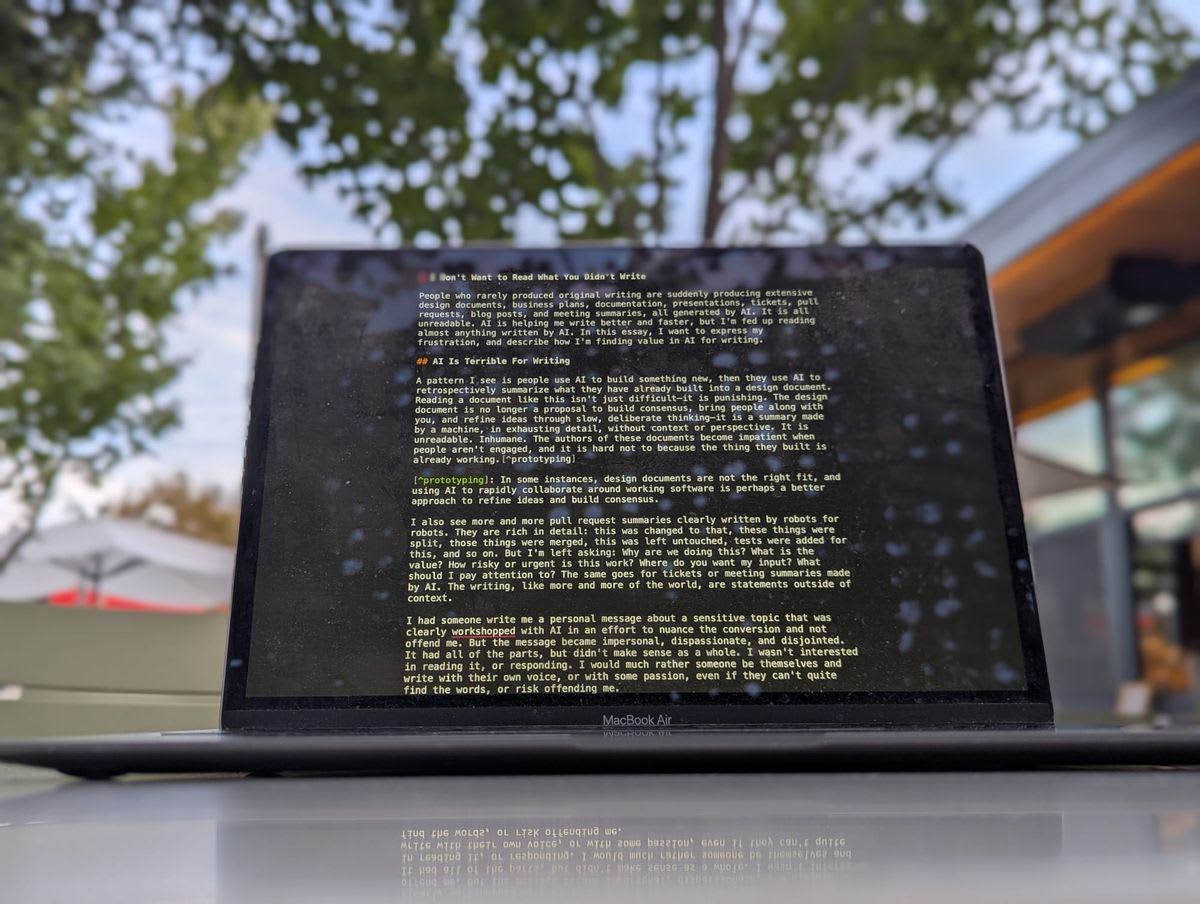
The rise of AI-generated documentation and business communication is leading to a crisis of readability and authenticity in professional environments. While AI offers potential for productivity, its current overuse is creating a culture of superficial, unreadable content that hinders genuine collaboration.
The Crisis of Authenticity in the Age of AI
The recent surge in AI-generated content—ranging from complex business plans and design proposals to routine meeting summaries—has triggered a significant backlash regarding the quality and utility of workplace communication. As individuals increasingly rely on generative tools to draft everything from pull requests to blog articles, a discernible pattern has emerged: the proliferation of content that is technically functional but fundamentally unreadable. This shift represents a departure from writing as a tool for consensus-building and critical thinking, moving instead toward a model of automated content production that often lacks human intent.
The Mechanics of 'Punishing' Documentation
A particularly problematic trend identified is the retrospective use of AI to summarize projects after they have already been completed. When an AI generates a design document based on a finished product, it fails to capture the nuanced decision-making process, trade-offs, and collaborative spirit that such documents are designed to foster. Instead of serving as a proposal to bring stakeholders along on a journey, these documents become hollow artifacts. The result is a reading experience that is described as 'punishing,' as the text lacks the logical flow and human context required to facilitate genuine organizational alignment.
AI as a Catalyst for Productivity vs. Noise
There is a crucial distinction to be made between using AI as a cognitive assistant and using it as a replacement for human thought. While AI can undoubtedly help professionals write faster and improve the clarity of their initial drafts, the current trend of over-reliance is creating an 'echo chamber' of generic outputs. This creates a paradox: the tools intended to streamline communication are, in many instances, obstructing it by burying meaningful insights under layers of AI-generated filler. The frustration expressed by professionals highlights that when the volume of content increases without a corresponding increase in substance, the value of that communication drops precipitously.
The Erosion of Consensus and Collaboration
Historically, documentation served as the primary vehicle for building consensus within teams. By articulating the 'why' behind a project, authors provide a roadmap for their colleagues to understand and support a vision. When AI is tasked with generating these proposals, it often mimics the structure of professional writing while stripping away the specific, idiosyncratic insights that convince readers of a project's merit. This loss of 'human voice' makes it increasingly difficult for teams to engage in the deep, critical analysis necessary for successful project execution.
Future Trends: The Demand for Human-Centric Communication
As organizations grapple with this deluge of synthetic content, we are likely to see a shift toward 'human-first' communication standards. Future workplace trends will likely prioritize authentic, curated insights over the sheer volume of automated updates. The ability to distinguish between AI-assisted productivity and AI-generated noise will become a vital skill for leaders and individual contributors alike. Moving forward, the most effective communicators will be those who use AI to refine their own ideas rather than allowing the AI to generate the ideas themselves, thereby preserving the essential human element that makes communication meaningful.