South African airline defends low-altitude aerial stunt over packed stadium
Source Entity
BBC News
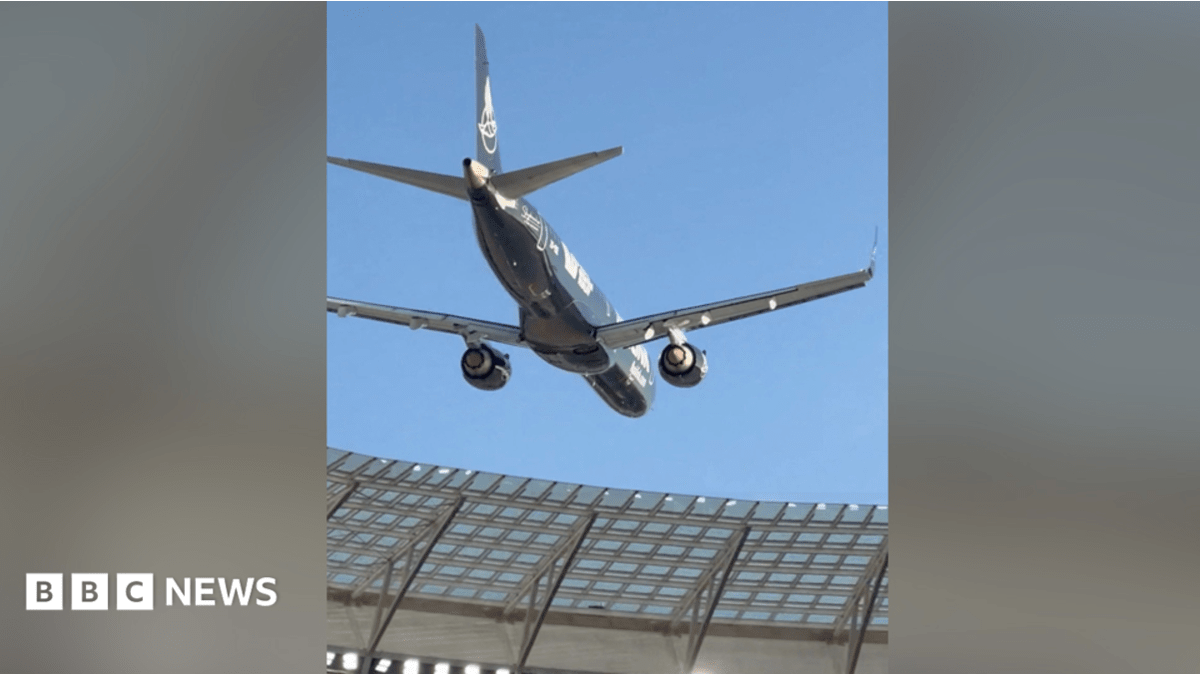
Airlink is defending a low-altitude aerial stunt performed by two aircraft over a packed stadium. Despite safety assurances from the airline, flight tracking data suggests the planes flew within 50 feet of the structure, sparking public safety concerns.
Aerial Maneuvers Under Scrutiny: The Airlink Stadium Flypast
Recent footage of a low-altitude aerial display by Airlink over a packed stadium has ignited a significant debate regarding aviation safety and the boundaries of promotional performance. The airline, in response to public outcry, has maintained that the stunt was the product of meticulous preparation, emphasizing a mantra of "Planning. Precision. Performance." This incident highlights the tension between high-stakes marketing strategies and the imperative of public safety in densely populated environments.
The Airline’s Defense and Operational Protocol
Airlink has sought to mitigate criticism by detailing the expertise behind the cockpit. According to official statements, the operation involved highly experienced crews, with each of the two aircraft staffed by three senior captains. By assigning roles such as commander, co-pilot, and safety/technical officer, the airline aimed to project an image of absolute control. They assert that the maneuver was conducted within approved and rehearsed safety altitude and speed parameters, suggesting that the event was a calculated demonstration rather than a reckless deviation from flight regulations.
Discrepancies in Altitude Data
Despite the airline's claims of adherence to safety protocols, external data provided by Flightradar24 paints a more precarious picture. Their analysis indicates that the lead aircraft passed within 50 feet (15 meters) of the stadium’s roof. This revelation has become the focal point of the controversy, as such a proximity level raises questions about the margin for error. Even with veteran pilots at the controls, the physical reality of flying heavy aircraft at such low altitudes over a crowd of thousands introduces variables that could lead to catastrophic outcomes in the event of a mechanical failure or sudden turbulence.
The Broader Implications for Aviation Safety
This incident serves as a case study in the risks associated with aerial flypasts. While such displays are common in sports and national celebrations, they require a delicate balance between visual impact and the protection of bystanders. The outcry following this event underscores a growing public intolerance for perceived risks, particularly in an era where flight tracking technology allows amateur observers to verify the accuracy of official claims in real-time. The airline industry may now face increased pressure to re-evaluate the necessity of such stunts.
Historical Context and Future Trends
Historically, low-altitude flypasts have been a staple of aviation marketing, designed to inspire awe and demonstrate technical prowess. However, as urban density increases and regulatory bodies become more focused on risk mitigation, the threshold for what is considered an "approved" maneuver is likely to be raised. Future trends suggest that aviation authorities may adopt stricter oversight or outright bans on such displays over populated areas to prevent potential disasters, prioritizing long-term safety over short-term promotional gains.
Conclusion
While Airlink stands by its technical execution, the skepticism from the public and the data provided by flight tracking services highlight the vulnerability inherent in such demonstrations. Moving forward, the conversation will likely shift toward whether the entertainment value of these maneuvers is worth the potential for disaster. The incident serves as a reminder that in the aviation sector, public perception is inextricably linked to the uncompromising standards of safety and risk management.