Airstrikes Hit Sanaa Airport as Houthis Accuse Saudi Arabia of Launching Attack
Source Entity
Latest News: Today's Latest News Headlines from India & World | Hindustan Times | Hindustan Times
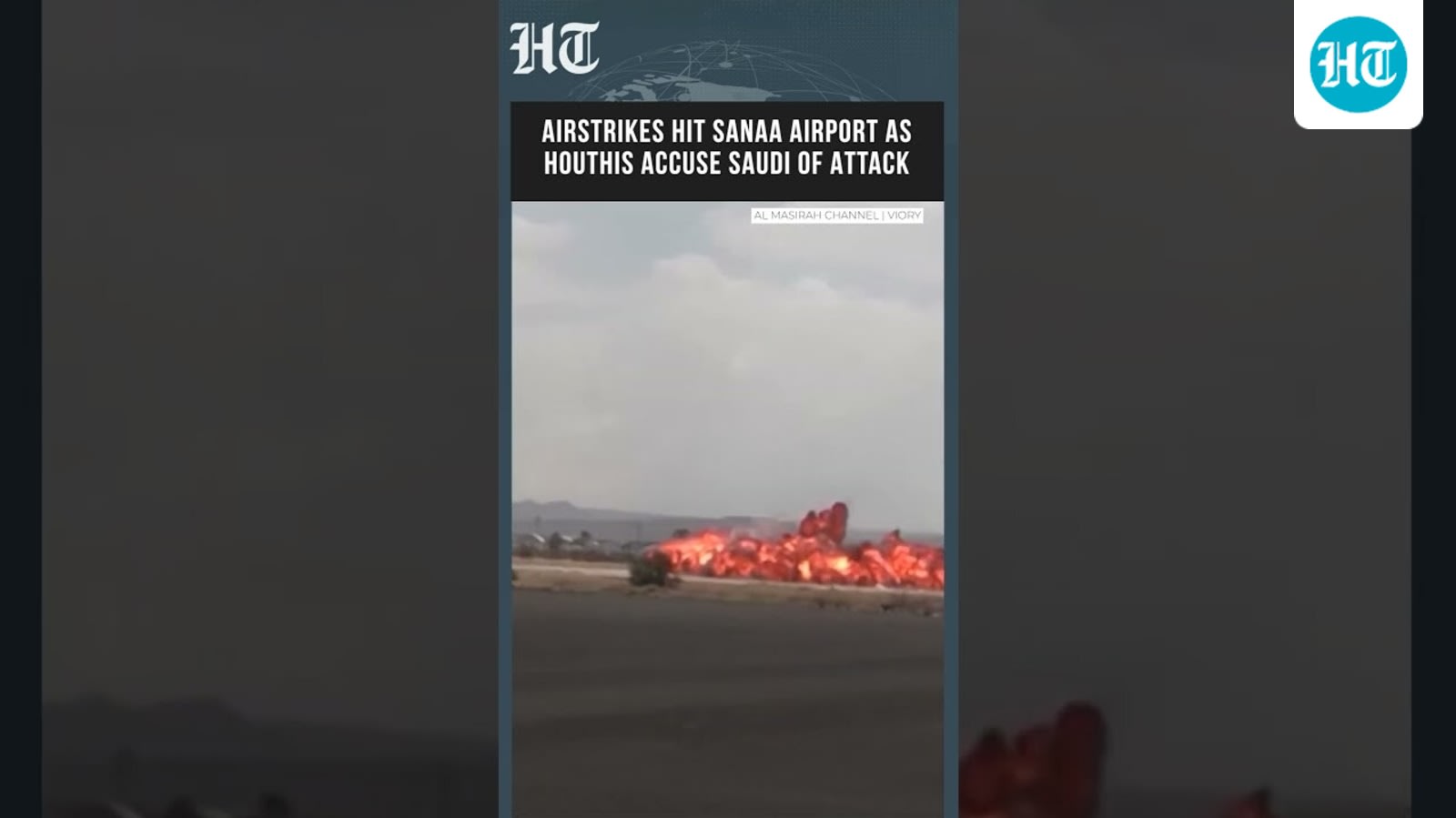
Fresh airstrikes have hit Yemen's Sanaa International Airport as the Houthis accuse Saudi Arabia of carrying out the attack. The latest escalation comes amid rising regional tensions involving the US, Iran, and Red Sea security. Watch the latest developments, damage reports, and what the strikes could mean for the wider Middle East conflict.
Escalation in Yemen: Airstrikes Target Sanaa International Airport
Recent reports indicate that Sanaa International Airport has come under a fresh wave of airstrikes, marking a significant escalation in an already volatile region. The Houthi movement, which controls the capital of Yemen, has explicitly accused Saudi Arabia of orchestrating the attack. This event is not an isolated incident but rather a symptom of the deep-seated geopolitical fractures that have defined the Arabian Peninsula for nearly a decade, signaling that the fragile stability in the region remains precarious.
Strategic Implications of Targeting Infrastructure
The targeting of Sanaa International Airport is strategically significant. Airports serve as critical hubs for logistics, government movement, and the delivery of humanitarian aid. By striking this specific location, the attacking force—alleged by the Houthis to be Saudi Arabia—sends a clear signal of capability and intent to disrupt the Houthis' operational capacity. Such attacks often aim to degrade the command-and-control infrastructure of the insurgent group, but they also carry the heavy risk of civilian casualties and the further degradation of essential services for the Yemeni population.
The Saudi-Houthi Conflict and Regional Proxy Wars
To understand this event, one must look at the historical context of the Saudi-led coalition's intervention in Yemen. Since 2015, Saudi Arabia has sought to reinstate the internationally recognized government and curb the influence of the Houthis, whom Riyadh views as proxies for Iran. The accusation that Saudi Arabia launched these strikes fits into a long-standing pattern of aerial campaigns. However, the timing is particularly sensitive, as Saudi Arabia has recently attempted to pivot toward a more diplomatic approach to exit the Yemeni quagmire, making this sudden escalation a potential setback for peace negotiations.
Convergence with Red Sea Security Crises
This attack occurs amidst a broader security crisis in the Red Sea. In recent months, Houthi forces have launched numerous drone and missile attacks on international shipping lanes, citing solidarity with Palestinians in Gaza. These actions have prompted a military response from a US-led coalition. The airstrikes on Sanaa Airport likely represent a convergence of these conflicts; the Houthis' aggression in the Red Sea has increased the pressure on regional actors to retaliate, creating a feedback loop of violence where airport strikes and maritime attacks reinforce one another.
The Role of Iran and the "Axis of Resistance"
Central to this conflict is the influence of Iran, which provides the Houthis with military technology and strategic guidance. As part of the "Axis of Resistance," the Houthis use their leverage over the Bab el-Mandeb strait to exert pressure on Western and Saudi interests. The airstrikes on Sanaa are often interpreted not just as a tactical strike against a target, but as a strategic message to Tehran. By hitting key Houthi assets, regional powers attempt to signal that Iranian-backed destabilization will meet a proportional and costly response.
Humanitarian Fallout and Future Outlook
Beyond the military maneuvers, the humanitarian implications are dire. Yemen remains one of the world's worst humanitarian crises, and the disruption of airport operations further isolates the country from essential medical supplies and food aid. Looking forward, this escalation suggests a period of increased instability. If the Houthis respond with retaliatory missile strikes on Saudi cities or further attacks on Red Sea shipping, the region could slide back into a full-scale war, undermining years of diplomatic effort to find a political solution to the Yemeni civil war.
Summary
The airstrikes on Sanaa International Airport underscore the volatile intersection of the Yemeni civil war, the Saudi-Iran rivalry, and the current Red Sea security crisis. While the Houthis point toward Saudi Arabia as the aggressor, the event reflects a wider regional struggle for dominance and security, where civilian infrastructure unfortunately becomes a primary battlefield.
Verification Required?