Why did Allahabad High Court rule that wearing a headscarf is not an essential religious practice? | Explained
Source Entity
India Latest News: Top National Headlines Today & Breaking News | The Hindu
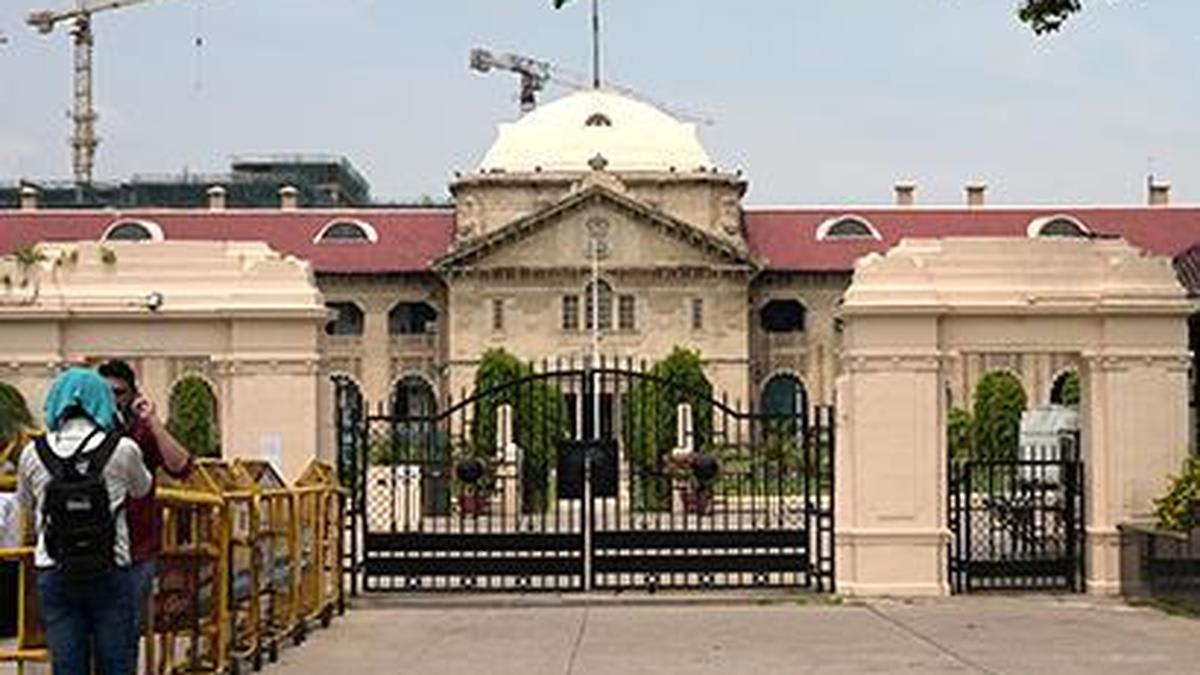
The Allahabad High Court is actively addressing educational equity and religious practices in schools. It has demanded five-year data on RTE admissions while concurrently ruling that headscarves are not essential religious practices in a uniform-prescribed setting.
Judicial Oversight in Uttar Pradesh Schools
The Allahabad High Court has recently emerged as a central arbiter in the governance of private educational institutions within Uttar Pradesh. Through two distinct but equally significant legal interventions, the court is scrutinizing both the socioeconomic obligations of schools under the Right to Education (RTE) Act and the limits of religious expression within private academic settings. These rulings reflect a broader judicial effort to balance institutional autonomy with constitutional mandates and state-led equity policies.
Accountability under the RTE Act
In a significant move toward transparency, the High Court has directed the state government to furnish comprehensive, school-wise data spanning the last five years regarding RTE admissions. The court’s intervention stems from reports that certain private institutions are actively resisting their legal obligation to admit underprivileged children, primarily to avoid the financial impact of waiving fees. By requesting specific data on declined admissions and complaints regarding prohibited capitation fees, the court is signaling a strict crackdown on practices that undermine the inclusivity goals of the RTE Act.
Legal Standards for Religious Practices
Simultaneously, the court addressed the complex intersection of personal faith and school discipline. In the case of a minor student from a Prayagraj-based CBSE school who sought permission to wear a headscarf, the court dismissed the petition. Relying on established judicial precedents, the bench determined that the assertion of the headscarf being an 'essential religious practice' lacked evidentiary support. The court clarified that without authoritative religious texts or substantive proof that the absence of a scarf would jeopardize the fundamental character of the faith, the school’s uniform policy must prevail.
The 'Bare Assertion' Doctrine
Central to the court’s reasoning in the headscarf case is the principle of 'bare assertion.' By requiring petitioners to provide more than just claims—demanding instead historical or theological evidence—the court has set a high bar for religious exemptions in secular or private institutional spaces. This approach ensures that school administrations maintain the authority to enforce standardized dress codes, thereby preventing fragmented policy environments within classrooms.
Broader Implications for Education Policy
The dual focus on RTE compliance and the regulation of religious symbols underscores a shift toward more rigorous judicial oversight of private education in India. By demanding granular data on admissions, the court is forcing a systemic audit of how private schools interface with state policies. Simultaneously, by reaffirming the supremacy of uniform codes, the court is reinforcing a model where school discipline is prioritized over individual religious variance in the absence of constitutional protection for such practices.
Future Trends and Judicial Path
Looking forward, these directives suggest that the Allahabad High Court will likely remain a critical watchdog for educational equity in Uttar Pradesh. The upcoming submission of the five-year RTE data will likely trigger further litigation or administrative action against non-compliant schools. These rulings collectively indicate a trend where the judiciary is increasingly skeptical of both institutional evasion of social mandates and individual deviations from established school codes, favoring a standardized, state-regulated environment for all students.
Multiple Citing Sources
Verification Required?