Nepal floods: Aerial views show trail of destruction after massive debris surge
Source Entity
ABHISHEK MISHRA
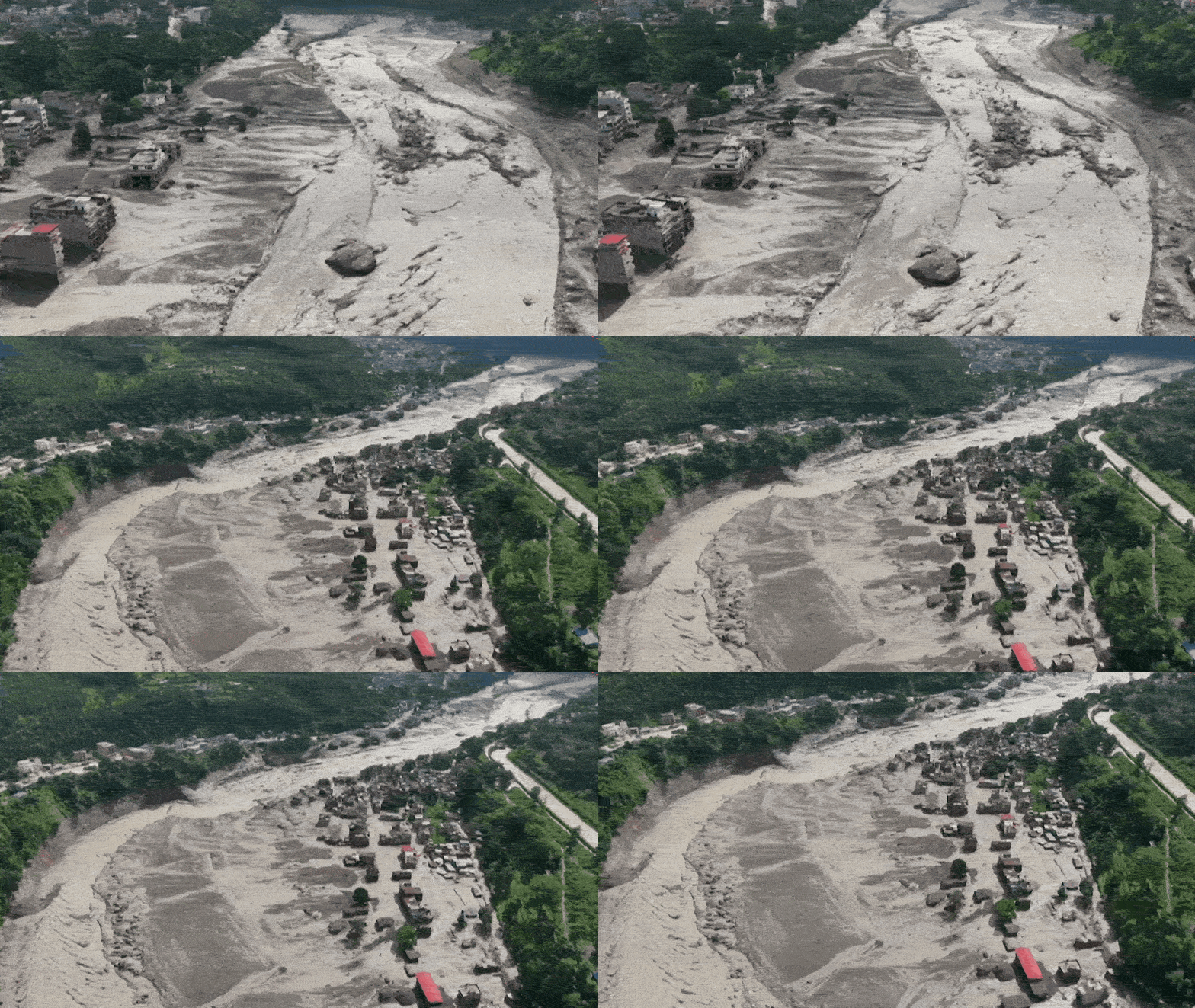
Northern Indian border states are on high alert due to flash floods originating in Nepal, while tensions remain in Rae Bareli following the desecration of an Ambedkar statue. Authorities are actively managing both the hydrological risks and local social disturbances.
Environmental and Social Tensions Across Northern India
Cross-Border Hydrological Crisis
The northern regions of India, specifically Uttar Pradesh and Bihar, are currently facing a dual challenge involving both natural disasters and localized social unrest. Recent flash floods, triggered by heavy rainfall approximately 200 km north of the Indian border in Nepal, have forced authorities to issue high-level alerts. The surge in water levels is exacerbated by the opening of barrage gates, which directly impacts the flow into the Ghaghara, Rapti, and Kosi river systems. Furthermore, the Trishuli river, which integrates flow from the Bhote Koshi originating in Tibet, is expected to swell the Gandak and Narayani rivers, posing a significant threat to low-lying areas in North Bihar and Uttar Pradesh.
Humanitarian Impact and Regional Vulnerability
The scale of the disaster in Nepal is significant, with reports indicating dozens of fatalities and nearly 400 tourists—including 105 Indian nationals—listed as missing. This incident underscores the extreme vulnerability of mountain valley communities to sudden, climate-induced flash floods. The geographical interconnectedness of the Himalayan river basins means that weather events occurring deep within Nepal have immediate and often devastating consequences for the Indian plains. The current situation demands rigorous monitoring of river gauges and coordinated disaster management efforts between Indian and Nepali officials to mitigate potential loss of life and property downstream.
Social Unrest in Rae Bareli
Concurrently, the state of Uttar Pradesh is grappling with social tension in Baburiha village, located within the Gadganj police station limits of the Rae Bareli district. On the night of August 25, 2026, unknown miscreants targeted a statue of Dr. B.R. Ambedkar, smearing it with mud and soot. This act of vandalism has sparked significant public outrage, as Dr. Ambedkar remains a deeply revered figure in Indian social and political life. The incident highlights the potential for localized acts of desecration to ignite community friction and disrupt public order.
Law Enforcement Response and Community Stabilization
In response to the tension in Baburiha, local law enforcement acted swiftly to prevent an escalation. The Additional Superintendent of Police (ASP) of Rae Bareli, alongside the Circle Officer (CO) of Unchahar, arrived on the scene to engage with the aggrieved villagers. By providing public assurances of a thorough investigation and the identification of the perpetrators, authorities were able to de-escalate the immediate anger. Police deployment has been maintained as a precautionary measure to ensure the situation remains under control while the investigation proceeds.
Broader Implications and Future Trends
These two distinct events illustrate the multifaceted nature of governance in Northern India. On one hand, the hydrological risks posed by transboundary rivers reflect the growing challenges of climate change and infrastructure management in the Himalayan region. On the other hand, the incident in Rae Bareli serves as a reminder of the fragility of social harmony and the necessity for proactive policing in managing sensitive community issues. Moving forward, both state and local governments must prioritize robust disaster early-warning systems while simultaneously fostering community dialogue to prevent the recurrence of targeted social provocations.
Multiple Citing Sources