Crashed Amazon cargo jet struck two vehicles, ended up 1,300 feet past runway, NTSB says
Source Entity
US Top News and Analysis
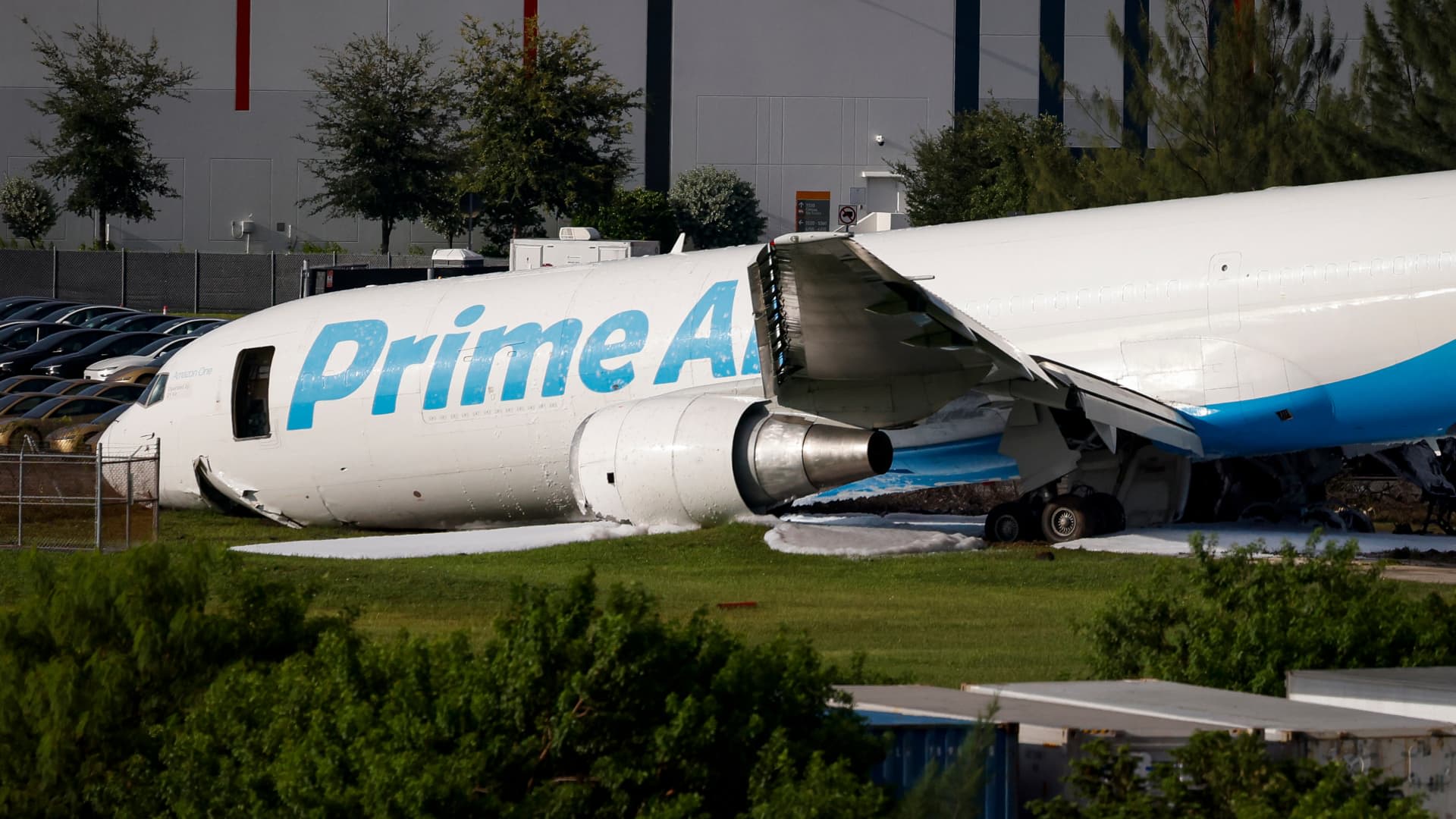
An Amazon Prime Air Boeing 767 cargo jet overran the runway at Miami International Airport after arriving from San Juan on Sunday. The incident, which caused a fire and thick smoke, triggered a temporary ground stop and flight disruptions.
Incident Overview at Miami International Airport
On Sunday, a significant aviation incident occurred at Miami International Airport (MIA) involving an Amazon Prime Air Boeing 767 cargo aircraft. The jet, which had originated from Luis Munoz Marin International Airport in San Juan, Puerto Rico, reportedly overran the runway upon landing at approximately 2 p.m. local time. The event quickly drew public attention as visual evidence, including videos and photographs, surfaced showing the massive aircraft positioned off the runway, resting near a road, while thick plumes of black smoke billowed into the air.
Immediate Operational Impact
The immediate aftermath of the runway overrun necessitated a swift response from airport authorities and the Federal Aviation Administration (FAA). A ground stop was declared at Miami International Airport to ensure the safety of other aircraft and ground personnel while emergency crews addressed the fire and potential hazards posed by the wreckage. This operational pause caused temporary disruptions to flight schedules, impacting the high volume of traffic typically handled by one of Florida’s busiest transportation hubs.
The Mechanics of a Runway Overrun
A runway overrun occurs when an aircraft is unable to come to a complete stop before the end of the paved surface. In the case of this Boeing 767-300, the aircraft exited the controlled environment of the runway and came to a rest on adjacent terrain. The presence of heavy smoke suggests that the landing gear or engine housing may have sustained significant damage upon exiting the runway, potentially leading to a post-impact fire that required immediate suppression efforts.
Regulatory and Safety Investigations
As the FAA manages the immediate fallout, a formal investigation will be launched to determine the causal factors of the overrun. Investigators will likely examine a variety of variables, including weather conditions at the time of arrival, the performance of the aircraft's braking systems, potential mechanical malfunctions, and the flight crew's decision-making process during the approach and landing phase. The data retrieved from the aircraft’s flight data recorder (FDR) and cockpit voice recorder (CVR) will be central to understanding why the Boeing 767 could not safely decelerate within the available runway length.
Broader Implications for Logistics and Aviation
This incident highlights the inherent risks involved in the global logistics network, particularly as e-commerce giants like Amazon rely heavily on dedicated air cargo fleets to maintain rapid delivery timelines. When a critical node in this network, such as a major cargo hub, experiences a disruption, it can have cascading effects on logistics operations. Furthermore, the incident serves as a reminder of the rigorous safety standards required for heavy cargo aircraft operating in high-density urban environments.
Future Outlook and Safety Trends
Moving forward, the aviation industry will likely review the findings of this crash to determine if systemic changes are needed regarding runway safety protocols or aircraft maintenance schedules for cargo operators. While the incident resulted in significant visual damage and operational chaos, the priority for aviation authorities remains the prevention of such overruns through enhanced pilot training, improved runway safety area (RSA) designs, and stricter adherence to landing performance calculations under varying meteorological conditions.
Multiple Citing Sources