Flight recorders recovered from 'devastating' Amazon cargo plane crash
Source Entity
BBC News
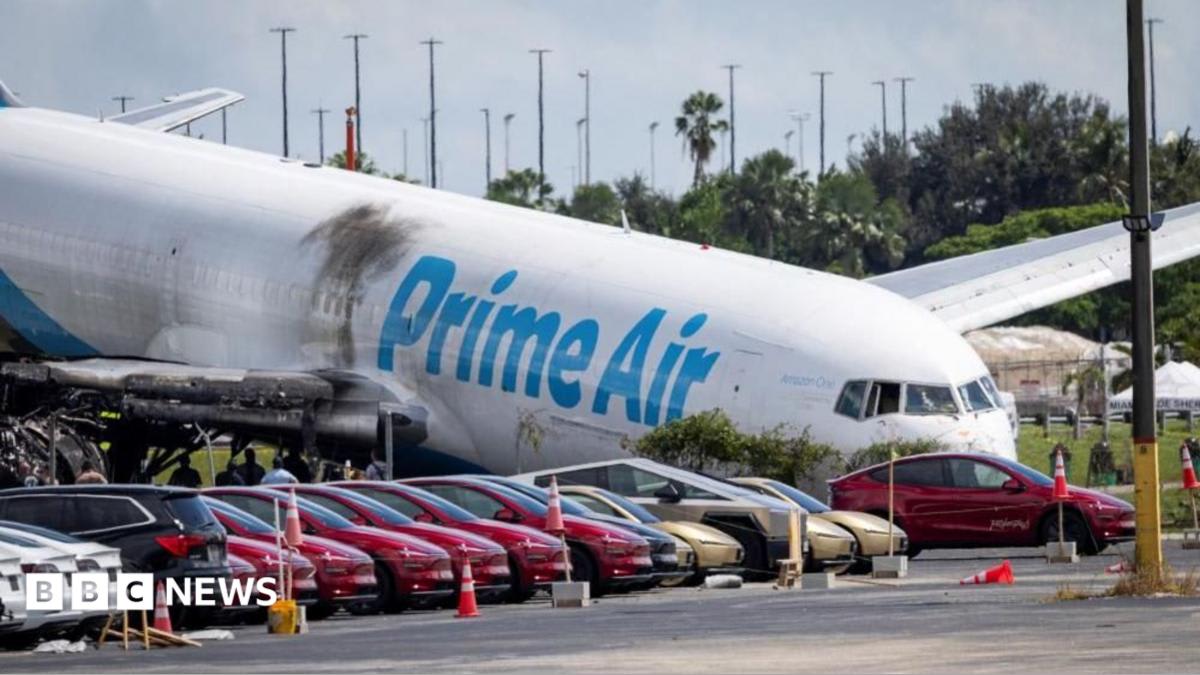
An Amazon Prime Air Boeing 767 cargo jet overshot the runway at Miami International Airport, resulting in at least five fatalities and significant wreckage. Federal authorities, including the NTSB, are currently investigating the cause of the disaster while airport operations face temporary disruptions.
Tragedy at Miami International: An Analysis of the Prime Air Crash
On September 6, 2026, a catastrophic aviation incident occurred at Miami International Airport (MIA) when an Amazon Prime Air Boeing 767-300 cargo jet overshot the runway. The aircraft, operated by 21 Air as Flight 7598, arrived from San Juan, Puerto Rico, around 2:00 p.m. before failing to stop within the designated runway parameters. The plane ultimately came to rest approximately 1,300 feet beyond the runway boundary, impacting vehicles both inside and outside the airport perimeter, resulting in a scene described by NTSB Chair Jennifer Homendy as one of "utter devastation."
The Human and Operational Toll
The immediate aftermath of the crash has been marked by significant loss of life and logistical paralysis. Officials have confirmed that at least five individuals were killed in the incident, with at least five others sustaining injuries. The intensity of the crash, characterized by the aircraft bursting into flames upon impact, necessitated a swift response from emergency services and forced the Federal Aviation Administration (FAA) to issue an immediate ground stop. This disruption rippled through the airport’s operations, causing widespread flight delays and cancellations at one of the busiest transit hubs in the United States.
Investigative Scope and NTSB Involvement
National Transportation Safety Board (NTSB) investigators are currently tasked with determining the causal factors behind this massive overrun. While preliminary reports confirm the plane exited the runway by a significant distance, the technical reasons—ranging from potential mechanical failure to human error or environmental conditions—remain under active investigation. As of the latest briefing, Chair Homendy has not provided a definitive cause, emphasizing that the investigation is in its nascent stages and will require a deep dive into the aircraft’s flight data recorder and cockpit voice recordings.
Visual Evidence and Public Impact
Visual evidence captured by witnesses and news agencies, including NBC 6, depicts the stark reality of the crash. Footage shows the Boeing 767 lying sideways across a road adjacent to the airport, with thick plumes of black smoke billowing into the sky, visible from across the city. The circulation of these images on social media sparked immediate public alarm, with many eyewitnesses documenting the fire and the resulting emergency response as the incident unfolded on a busy Sunday afternoon.
Broader Implications for Cargo Aviation
This incident highlights the inherent risks associated with heavy cargo logistics in densely populated urban environments. The fact that the aircraft struck vehicles outside the airport boundary underscores the critical importance of runway safety areas and buffer zones. As the investigation progresses, aviation experts will likely scrutinize the operational protocols of 21 Air and the maintenance history of the aging Boeing 767-300 fleet. The findings of the NTSB will be instrumental in potentially revising safety standards for cargo operations in high-traffic airports.
Moving Toward Answers
As the recovery efforts conclude, the focus shifts to the forensic analysis of the debris and the reconciliation of flight data. The loss of life in this incident serves as a grim reminder of the vulnerabilities in the aviation supply chain. Stakeholders, including Amazon and the FAA, are expected to cooperate fully with federal investigators to ensure that such a tragedy is not repeated. Future developments will be closely monitored as the NTSB continues to release updates on this evolving story.
Multiple Citing Sources