American woman amazed by 5-minute home blood test in Mumbai: 'Only possible in India'
Source Entity
Latest News: Today's Latest News Headlines from India & World | Hindustan Times | Hindustan Times
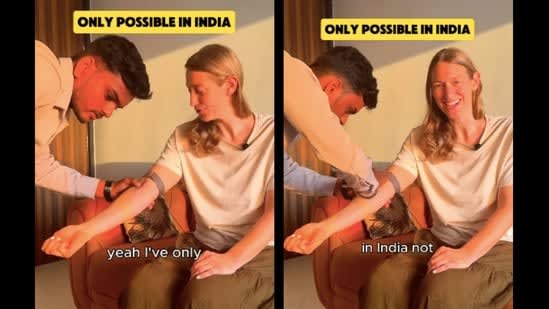
An American woman's viral video highlighting the incredible speed and convenience of a home blood test in Mumbai has sparked discussions about the efficiency of India's private healthcare delivery systems compared to Western standards.
The Viral Intersection of Healthcare and Logistics: An American Perspective on Mumbai
In a recently viral social media video, an American woman expressed profound amazement after experiencing a home blood collection service in Mumbai, India. The core of her astonishment lay in the sheer speed and seamless execution of the process, which she claimed took only five minutes from the moment of request to the completion of the test. Her exclamation—'Only possible in India'—serves as a poignant commentary on the stark contrast between the highly flexible, on-demand service economy of an Indian metropolis and the often rigid, bureaucratic healthcare frameworks found in the United States.
The Rise of On-Demand Diagnostics in India
This incident highlights a broader trend within the Indian healthcare landscape: the aggressive expansion of home-based diagnostic services. Over the last decade, India has seen a surge in health-tech startups and established laboratory chains that leverage mobile applications to bring clinical services directly to the patient's doorstep. By decoupling the diagnostic process from the physical clinic, these services have solved a critical pain point in cities like Mumbai, where traffic congestion and high population density make visiting a lab a time-consuming ordeal. The efficiency the American visitor experienced is the result of a highly optimized logistical network of phlebotomists who operate similarly to ride-sharing drivers, dispatched via real-time GPS to the nearest patient.
Comparative Analysis: India vs. Western Healthcare Models
From an analytical standpoint, the woman's surprise underscores the systemic differences in healthcare delivery between India and the West. In the United States, obtaining a blood test typically involves multiple layers of administration: scheduling an appointment, verifying insurance coverage, and traveling to a designated facility. The 'friction' in the American system is often a byproduct of strict regulatory compliance and insurance-driven protocols. In contrast, the private healthcare sector in India has embraced a consumer-centric, 'uberized' model that prioritizes speed and accessibility. This agility allows for a level of convenience that can seem almost surreal to those accustomed to the structured, slower pace of Western medical administration.
The Role of the Gig Economy in Medical Logistics
Beyond the medical aspect, this event reflects the maturity of India's gig economy. The ability to deploy a trained medical professional to a home within minutes requires a sophisticated integration of technology and human labor. Mumbai, as a financial and commercial hub, has become a testing ground for these hyper-local delivery models. The phlebotomist's ability to navigate the city's complex geography and provide professional care in a domestic setting demonstrates a unique blending of professional medical training with the agility of the modern service economy. This 'last-mile' connectivity is what transforms a standard medical procedure into a high-efficiency service experience.
Socio-Economic Implications and Accessibility
While the viral video focuses on the convenience for an expatriate or visitor, the broader implication is the democratization of diagnostics. By removing the barrier of travel, home blood tests encourage more frequent health screenings and earlier detection of chronic conditions. However, it is important to note that this efficiency is primarily a feature of the private healthcare tier. The contrast between these rapid, high-tech private services and the overburdened public healthcare infrastructure remains a significant point of discussion in Indian socio-economics. The 'Mumbai experience' described by the visitor represents the pinnacle of private sector efficiency, which continues to push the boundaries of what is possible in urban healthcare.
Future Trends in Global Healthcare Delivery
Looking forward, the model of rapid, home-based diagnostics seen in Mumbai is likely to influence global trends. As telehealth continues to grow worldwide, the demand for 'at-home' clinical components will increase. We can predict a future where the integration of AI-driven scheduling and portable diagnostic tools further reduces the time between a doctor's order and the sample collection. The American woman's reaction is a harbinger of a shift in consumer expectations; as people experience this level of efficiency, they will begin to demand similar agility from healthcare providers globally, potentially forcing Western systems to streamline their administrative hurdles.
Summary
The American woman's amazement is more than just a reaction to a fast blood test; it is a recognition of India's unique ability to blend technology, labor, and logistics to create hyper-efficient service models. This event illuminates the strength of India's private health-tech ecosystem and provides a compelling case study in how on-demand services can revolutionize traditional medical delivery.
Verification Required?