BJP-led govts in 21 states to bring UCC before 2029: Shah
Source Entity
TNN & Agencies
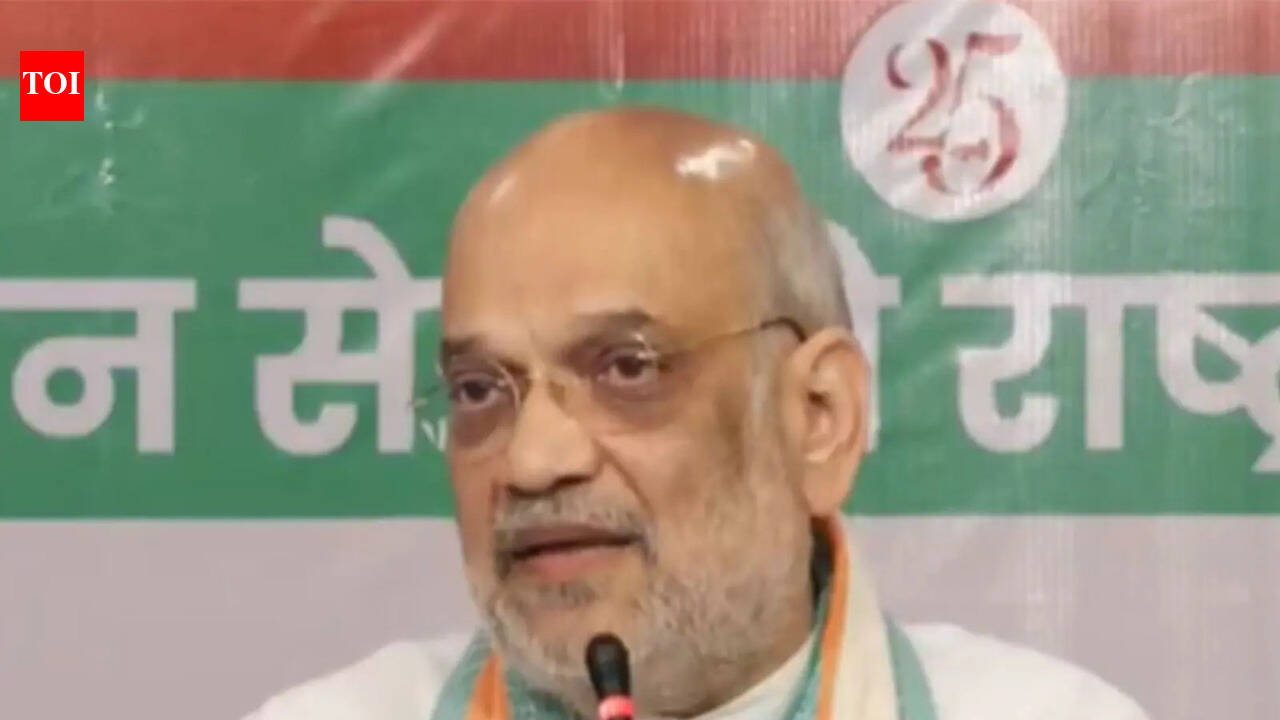
Union Home Minister Amit Shah has announced that all 21 BJP-NDA-led states will implement a Uniform Civil Code (UCC) before the 2029 Lok Sabha elections. This initiative follows the party's 2024 manifesto commitments and builds on previous legislative reforms like the abolition of triple talaq.
The Roadmap for a Uniform Civil Code in India
Union Home Minister Amit Shah recently reaffirmed the Bharatiya Janata Party's (BJP) long-standing commitment to social and legal reform by announcing that all 21 states currently governed by the BJP-led National Democratic Alliance (NDA) will implement a Uniform Civil Code (UCC) prior to the 2029 Lok Sabha elections. This declaration, made during a press interaction in Mumbai, marks a significant pivot in the party's legislative agenda as it approaches a quarter-century of political prominence under the leadership of Prime Minister Narendra Modi.
Building on Legislative Precedent
The push for a UCC is framed by the government as a continuation of its broader social reform agenda. Home Minister Shah explicitly linked this upcoming initiative to previous landmark legislative achievements, most notably the abolition of 'triple talaq' and the abrogation of Article 370. By positioning the UCC as a mechanism to provide equal rights to women across religious communities, the government is attempting to build a narrative of constitutional uniformity that transcends traditional personal law frameworks.
The Strategic 2029 Timeline
The selection of the 2029 deadline is deeply significant, as it aligns the state-level implementation of the UCC with the next general election cycle. By pursuing this policy at the state level, the BJP is effectively utilizing its federal strength to create a 'bottom-up' legislative shift. This approach allows the party to test the legal and social waters in various regions, potentially creating a template for a national framework should the political climate permit.
Policy Integration and Challenges
The UCC remains a central pillar of the BJP's 2024 election manifesto. While the government has successfully overhauled the criminal justice system through the implementation of the Bharatiya Nyaya Sanhita, the UCC represents a more complex challenge, as it touches upon sensitive personal laws involving marriage, inheritance, and adoption. The Home Minister's comments suggest that while the UCC is a firm objective, other complex issues, such as the National Register of Citizens (NRC), remain in a state of ongoing consultation with stakeholders.
Broader Implications for Indian Jurisprudence
The implementation of a UCC across 21 states would fundamentally alter the legal landscape of India. Historically, India has operated under a system where personal laws are governed by religious affiliation. A shift toward a uniform code would represent a move toward a singular civil legal identity. This transition is not merely administrative; it is a profound ideological shift that seeks to harmonize diverse cultural and religious practices under a unified constitutional umbrella.
Conclusion
As the BJP moves toward the 2029 electoral horizon, the UCC will likely remain a defining feature of its governance model. With the Home Minister’s clear mandate to his state units, the coming years will be defined by rigorous legislative debates and administrative preparations. The success of this endeavor will depend on how the state governments navigate the balance between constitutional uniformity and the diverse social fabric of the Indian electorate.