AMU’s wants women on campus, not at the ballot box
Source Entity
India Latest News: Top National Headlines Today & Breaking News | The Hindu
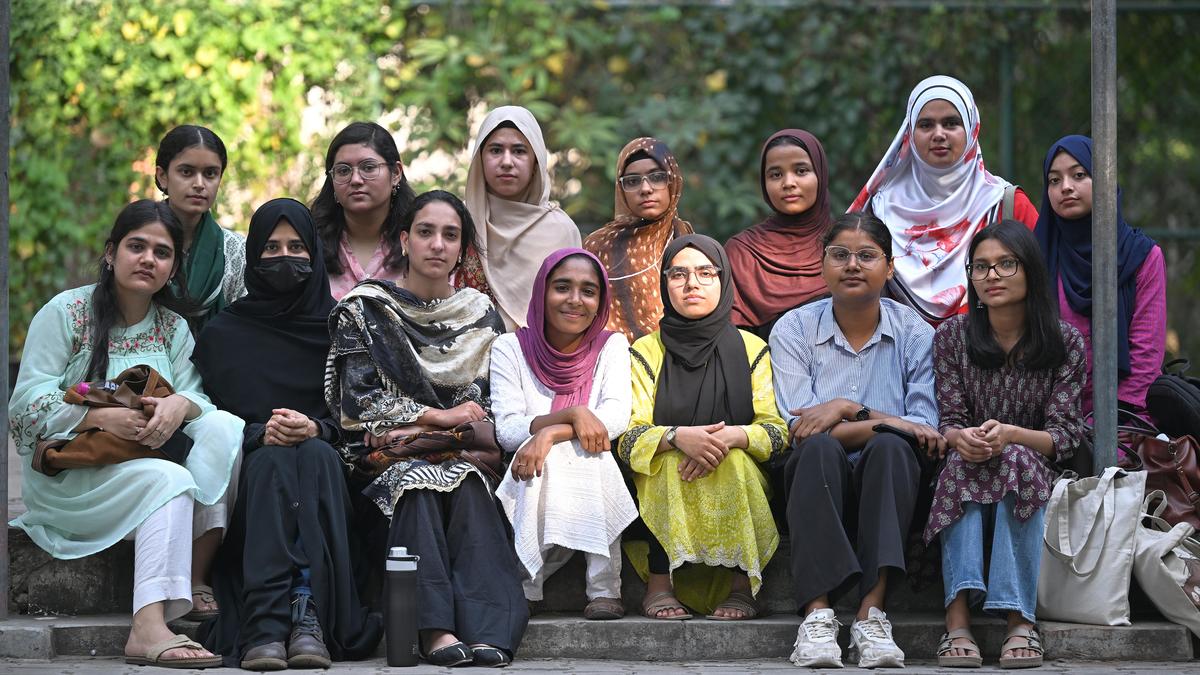
Women students at Aligarh Muslim University are protesting their exclusion from the university-wide Students' Union (AMUSU) elections. This systemic disenfranchisement highlights ongoing tensions regarding gender equality and student representation within the institution.
The Struggle for Representation at AMU
The recent discourse surrounding the Aligarh Muslim University Students’ Union (AMUSU) elections has brought a persistent, systemic issue to the forefront: the disenfranchisement of approximately 4,000 women students at the Women’s College. While male candidates actively campaign across the sprawling campus, the women who form a significant portion of the student body remain sidelined, unable to cast their votes in the university-wide electoral process. This exclusion is not merely an administrative oversight but a reflection of historical structures that have long separated the political agency of women from the central governing body of the university.
The Anatomy of Exclusion
At the heart of this conflict is the structural barrier imposed by the university’s electoral rules, which maintain a clear demarcation between the Women’s College and the main AMUSU. By denying these 4,000 students the right to participate in the general elections, the university effectively curtails their ability to influence policies that directly impact their academic and social lives. The encounter between candidate Saquib Ali Khan and students Zunaira Habib Alvi and Rahat Ul Aien serves as a microcosm of this tension, where the promise of a long-awaited democratic process is marred by the reality of gender-based inequality.
Historical Context and Institutional Hurdles
AMU has long been an institution steeped in tradition, but these traditions are increasingly being challenged by a student body that demands equitable participation. The fact that these elections are occurring after an eight-year hiatus makes the exclusion of female voices even more pronounced. Historically, the separation of the Women’s College was intended to provide a dedicated space for education, but in the modern context, it has become a barrier to civic engagement. The 'separate-union' rules act as a gatekeeper, preventing a unified student voice and perpetuating a hierarchy where male students possess greater political leverage.
The Broader Implications for Campus Politics
This situation raises critical questions about the role of universities as bastions of democracy. When an educational institution limits the voting rights of its female students, it sends a message that their concerns—ranging from safety and infrastructure to curriculum and administration—are secondary to those of their male counterparts. This lack of representation fosters a culture where gender discrimination is codified into the rules of governance, rather than being actively dismantled by the administration.
Future Trends and Necessary Reforms
Moving forward, the pressure from student activists is likely to intensify. As Zunaira Habib Alvi and Rahat Ul Aien have demonstrated, there is a growing refusal among the student body to accept these limitations as the status quo. If AMU is to align itself with contemporary standards of inclusivity, it must undertake a comprehensive review of its election bylaws. Future trends suggest that if the administration fails to integrate the Women’s College into the AMUSU, they will face escalating protests and a potential loss of institutional legitimacy among a generation that prioritizes equality as a non-negotiable right.
Conclusion
The fight for suffrage at AMU is a testament to the resilience of students seeking to transform their campus into a more equitable space. By highlighting the gap between the rhetoric of democratic elections and the reality of exclusion, these women are forcing a necessary conversation about the future of gender representation in higher education. Addressing this disparity is essential for the university to foster a truly representative and progressive academic environment.
Verification Required?