Closing the Sea: Lessons from Ancient Mediterranean Blockades
Source Entity
Hacker News
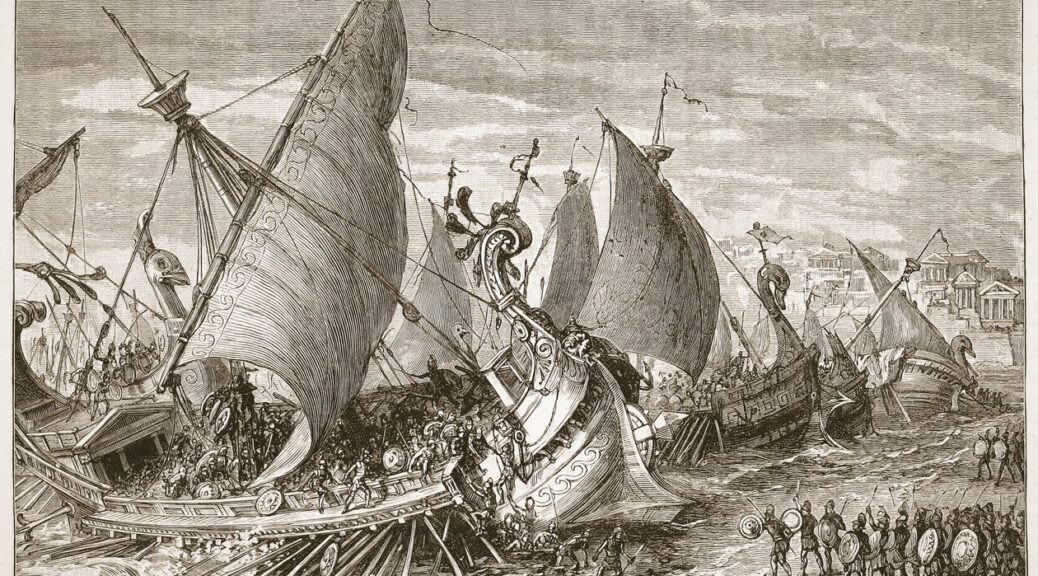
Dr. Stephen DeCasien examines the historical continuity of naval blockades, drawing parallels between ancient Mediterranean strategies and contemporary maritime security. The analysis emphasizes that the core tenets of naval power remain consistent despite evolving technology.
The Enduring Strategic Logic of Maritime Blockades
In his exploration of ancient naval warfare, Dr. Stephen DeCasien revives the wisdom of Rear Admiral William A. Moffett, who famously noted that the challenges faced by ancient maritime powers mirror those of the modern era. By grounding his analysis in Arthur M. Shepard’s 'Sea Power in Ancient History,' DeCasien illustrates that the fundamental principles of sea power are not tied to specific eras, but are instead perennial constants in the theater of geopolitics. This historical continuity suggests that the strategic dilemmas of today’s naval commanders are merely modern iterations of problems that have plagued maritime civilizations for millennia.
Defining the Blockade: Corbett’s Framework
Central to this discourse is the work of British naval theorist Julian Corbett, who provided a critical taxonomy for understanding maritime containment. Corbett’s distinction between commercial blockades and other forms of naval interdiction is essential for deciphering the intent behind modern naval deployments. By categorizing the blockade as an instrument of both economic pressure and military denial, Corbett’s framework allows us to see how ancient Mediterranean powers used their fleets not just for battle, but as tools of systemic coercion against rival states.
The Historical Context of Mediterranean Power
Historically, the Mediterranean served as the ultimate testing ground for blockade tactics. Ancient naval powers often sought to control strategic choke points to starve an opponent of resources or to stifle trade routes essential for economic survival. DeCasien’s invocation of this history serves as a reminder that the geographical realities of the Mediterranean have not changed. The physical constraints that dictated the success or failure of a blockade in the age of triremes continue to influence the operational planning of modern navies seeking to exert influence in the same waters.
Modern Implications and Strategic Continuity
When we apply these historical lessons to the present, the implications for modern maritime security are profound. The reliance on global shipping lanes and the vulnerability of maritime commerce mean that the 'blockade' is as relevant today as it was in the ancient world. Whether through physical presence or the threat of interdiction, the ability to control the sea remains a primary objective for state actors. DeCasien suggests that by studying these ancient precedents, contemporary strategists can better anticipate how adversaries might leverage geography to achieve strategic dominance.
Future Trends in Naval Warfare
Looking forward, the integration of new technologies—such as autonomous vessels and advanced surveillance—will likely change the 'how' of naval blockades, but not the 'why.' The goal of isolating an opponent from the global economy remains a cornerstone of naval strategy. As nations continue to contest maritime domains, the historical lessons regarding the limitations and strengths of blockades will remain vital. Understanding these patterns allows for a more nuanced approach to international relations, where naval power is recognized as a tool of political, not just military, signaling.
Conclusion
Ultimately, Dr. DeCasien’s analysis underscores a vital truth: history is a diagnostic tool for the present. By examining ancient Mediterranean blockades, we gain a clearer understanding of the persistent nature of maritime power. The lessons extracted from antiquity provide a roadmap for navigating current geopolitical tensions, proving that while the ships have evolved, the strategic imperatives of sea power remain unchanged.