‘We don’t spend to look rich’: Ankur Warikoo shares family money rules
Source Entity
TOI LIFESTYLE DESK
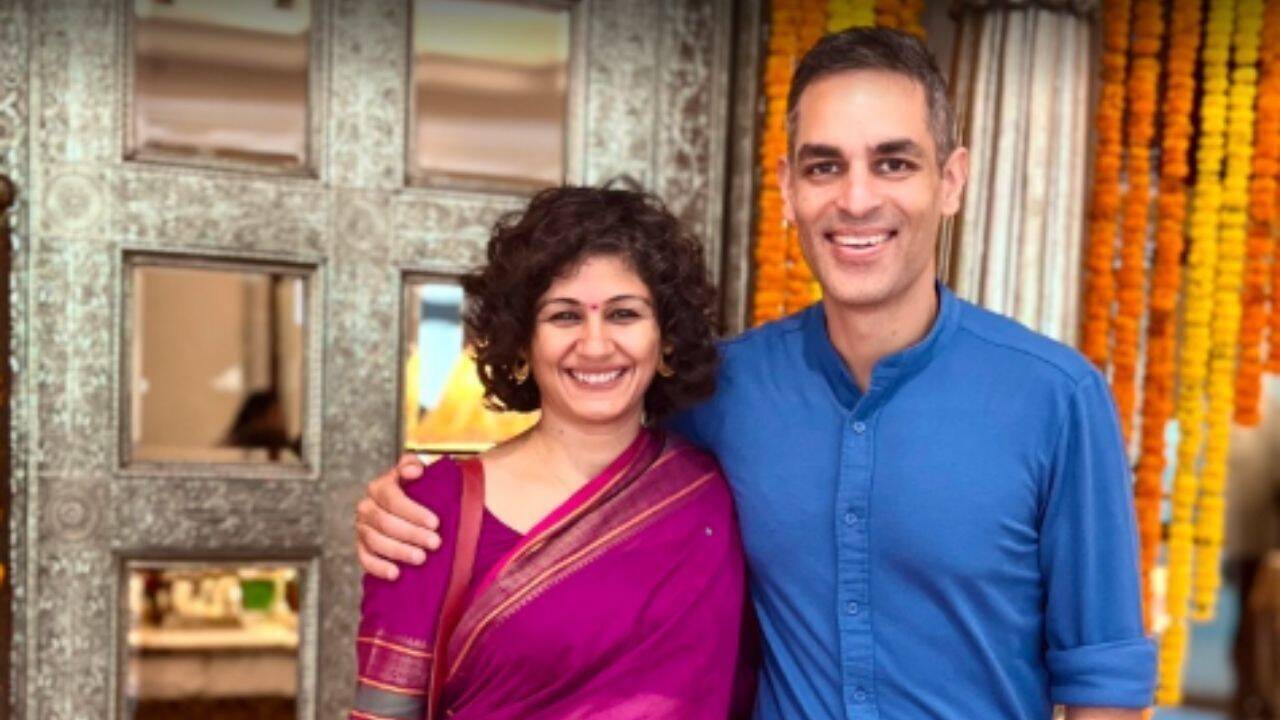
Ankur and Ruchi Warikoo have shared five core financial principles for family well-being, emphasizing the prioritization of wealth building over luxury, investing in health and lifelong learning, and the practice of investing income before covering expenses.
Deconstructing the Warikoo Family Financial Philosophy
In an era dominated by social media-driven conspicuous consumption, Ankur and Ruchi Warikoo have presented a counter-narrative through their five family money rules. Their approach represents a fundamental shift from the traditional 'spend-then-save' mentality to a 'wealth-first' framework. By explicitly stating, "We don’t spend to look rich," the couple addresses the psychological trap of lifestyle inflation, where individuals increase their spending as their income rises, often leaving them with little to no actual net worth despite a high-status appearance.
The Dichotomy of Wealth vs. Status
The core of the Warikoos' philosophy lies in the distinction between appearing rich and being wealthy. While 'looking rich' involves the acquisition of luxury goods and status symbols that typically depreciate in value, 'building wealth' focuses on the accumulation of assets that generate future income or security. This discipline is critical in the modern economic landscape, where credit availability often encourages consumers to prioritize immediate gratification over long-term solvency. By rejecting the pressure of outward appearances, the Warikoos prioritize financial independence, ensuring that their resources are used to create a safety net rather than a facade.
Investing in Intangible Assets: Health and Experience
A significant portion of their strategy involves the strategic allocation of funds toward health and enriching experiences. Unlike material goods, investments in health provide a long-term biological dividend, reducing future medical costs and increasing overall productivity and quality of life. Similarly, prioritizing experiences over luxury items aligns with psychological research suggesting that experiential purchases provide longer-lasting happiness than material ones. This shift in spending suggests a move toward 'value-based spending,' where money is viewed as a tool to enhance the human experience rather than a means to acquire objects.
The 'Pay Yourself First' Mechanism
One of the most actionable rules shared is the commitment to investing income before covering daily expenses. In financial planning, this is known as the "Pay Yourself First" model. By automating or prioritizing investments at the start of the month, the couple eliminates the risk of spending their surplus on non-essential items. This forced scarcity in the remaining budget encourages more mindful spending and ensures that wealth accumulation is a non-negotiable habit rather than a hopeful afterthought. This approach is a cornerstone of the Financial Independence, Retire Early (FIRE) movement, which emphasizes high savings rates to achieve autonomy.
The Infinite ROI of Continuous Learning
Perhaps the most forward-thinking of their rules is the absence of a fixed budget for education. By treating learning as an uncapped investment, the Warikoos acknowledge that in a rapidly evolving global economy, the most valuable asset is one's own skill set. This philosophy views education not as a one-time phase of life (like a degree) but as a lifelong requirement for relevance and growth. This strategy hedges against economic volatility, as continuous upskilling allows individuals to pivot their careers and increase their earning potential regardless of market shifts.
Broader Implications and Future Trends
The transparency of these rules reflects a growing trend in India and globally toward 'financial mindfulness.' As more people move away from traditional gold-and-real-estate-only portfolios toward diversified investments and personal development, the Warikoos' rules serve as a blueprint for the modern middle and upper-middle class. We can expect to see a rise in this 'quiet wealth' trend, where the metric of success shifts from the brand of one's car to the size of one's portfolio and the quality of one's health.
Summary
The Warikoo family's financial rules are a holistic blend of disciplined saving, strategic investing, and a commitment to personal growth. By decoupling their identity from material luxury and anchoring it to health, learning, and wealth, they provide a sustainable model for family well-being that prioritizes long-term freedom over short-term validation.