Congresswoman Anna Paulina Luna claims GTA VI Leonida Senator Camila Fuentes is based on her
Source Entity
Latest News: Todays Latest News Headlines from India & World | Hindustan Times
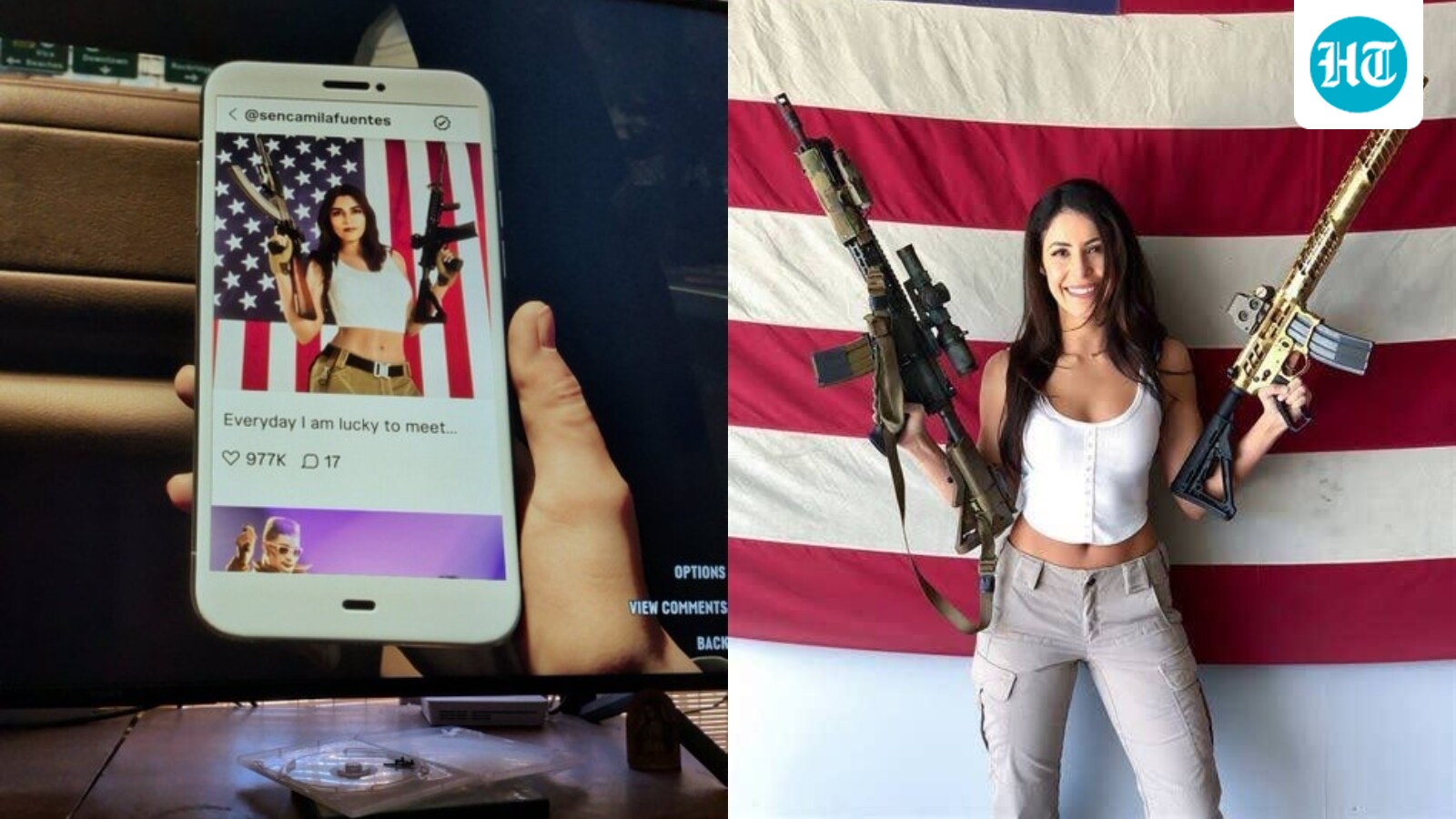
Florida Congresswoman Anna Paulina Luna has suggested she is the inspiration for the 'GTA VI' character Camila Fuentes. The comparison stems from striking visual similarities and a shared career trajectory as conservative politicians.
The Intersection of Pop Culture and Political Identity
The recent assertion by Florida Republican Congresswoman Anna Paulina Luna regarding her alleged likeness to a character in the upcoming Grand Theft Auto VI (GTA VI) has sparked a fascinating intersection between digital media and contemporary political branding. Luna, a representative for Florida’s 13th congressional district, took to social media to highlight the visual parallels between herself and the fictional character Camila Fuentes, a senator within the game’s version of Florida, known as Leonida.
Analyzing the Visual Evidence
The claim originated after Luna shared a side-by-side comparison on Instagram, featuring herself in a now-iconic pose—standing before an American flag while brandishing firearms—aligned with the character design of Fuentes. The visual cues in the game appear to mirror the aesthetic choices often utilized by modern politicians to project strength and patriotism. This alignment suggests that Rockstar Games, the developer of the Grand Theft Auto series, may have drawn inspiration from the real-world political climate of Florida to populate their satirical open-world environment.
The Nature of Rockstar’s Satire
It is essential to understand that Grand Theft Auto has long been defined by its biting, hyperbolic satire of American culture. By incorporating elements of real-world figures—such as the Cuban pop star-turned-politician archetype represented by Fuentes—the developers ground their fictional Leonida in a recognizable, albeit exaggerated, reality. For a sitting Congresswoman to acknowledge this likeness publicly underscores the pervasive nature of modern media, where political figures are increasingly becoming cultural icons whose public images are consumed and repurposed by entertainment franchises.
Implications of Digital Representation
This interaction highlights a broader shift in how political figures engage with digital spaces. Historically, politicians maintained a clear distance from pop culture to preserve a sense of gravitas. However, Luna’s reaction—commenting, “Don’t hate the player, hate the game”—suggests a pivot toward embracing digital notoriety. By participating in this conversation, she effectively leverages the massive marketing machine of the most anticipated video game in history to reinforce her own brand identity among a younger, digitally native demographic.
Future Trends in Political Branding
As video games continue to evolve into massive, hyper-realistic social platforms, the blurring lines between real-world politics and virtual entertainment will likely intensify. We can expect to see more instances where public figures are either parodied or referenced in big-budget media, forcing a new standard for how political reputations are managed in the metaverse. This event is not merely a curiosity; it is a precursor to a future where political visibility is inextricably linked to the cultural narratives constructed by global entertainment giants.
Conclusion
While the inclusion of a "lookalike" character in Grand Theft Auto VI remains an interpretation by the Congresswoman and her supporters, the discourse surrounding Camila Fuentes serves as a testament to the game's commitment to reflecting the chaotic, hyper-partisan spirit of modern Florida. Whether or not Rockstar Games officially confirms the inspiration, the incident successfully bridges the gap between legislative reality and virtual satire, solidifying the game's status as a cultural mirror for the American experience.
Verification Required?