Watch: Anti-migrant boat protesters block roads in Portsmouth
Source Entity
BBC News
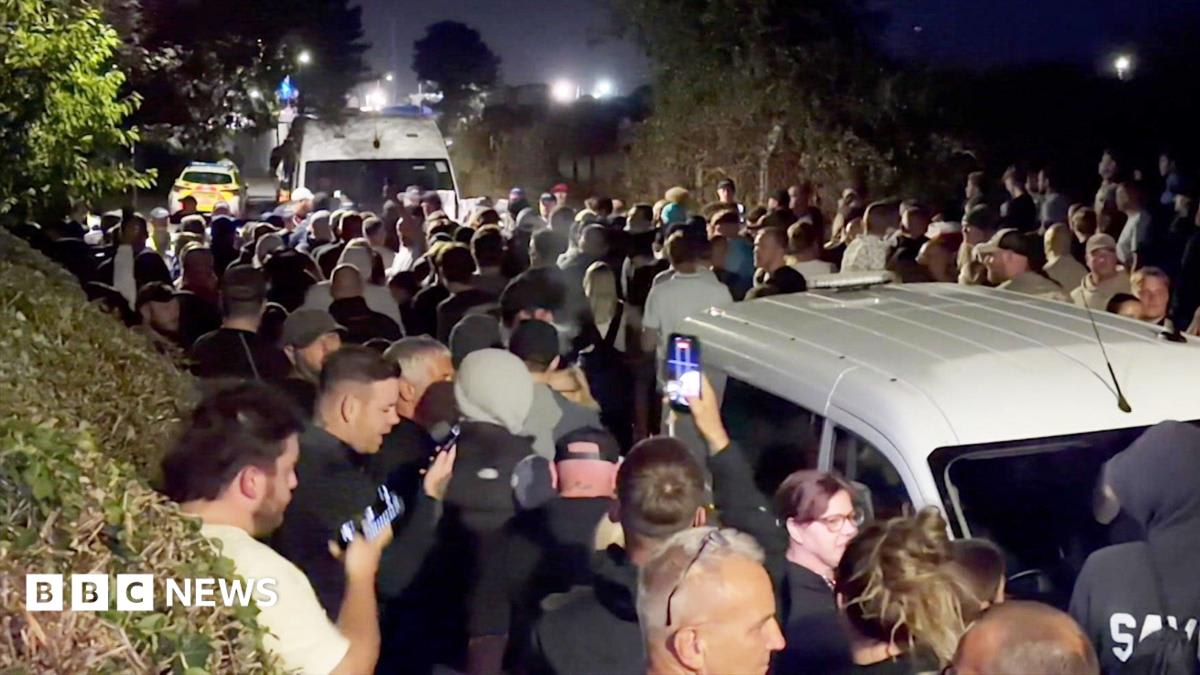
Anti-migrant protesters blocked roads in Portsmouth to prevent 140 asylum seekers from leaving a ferry port. The UK government has condemned the demonstration, labeling the behavior of the masked participants as intimidating and thuggish.
Tensions Flare in Portsmouth Over Migrant Arrivals
Recent events in Portsmouth highlight the escalating friction surrounding the arrival of asylum seekers via the English Channel. Hundreds of protesters gathered to block roads and intercept approximately 140 migrants who arrived in a single dinghy, marking the second major instance of civil unrest over the weekend. This confrontation underscores the intense public polarization regarding border security and the humanitarian response to small-boat crossings.
Government Response to Civil Unrest
The UK government has issued a sharp condemnation of the protests, explicitly characterizing the actions of the demonstrators as "intimidating and thuggish behaviour." The presence of protesters dressed in black and wearing masks has heightened concerns among authorities regarding public safety and the potential for organized disruption. By condemning these tactics, the government aims to signal that while public dissent is a democratic right, obstructionist tactics that threaten the safety of individuals—including the migrants and law enforcement—will not be tolerated.
Law Enforcement and Public Safety
Hampshire Police were forced to intervene, managing the large crowds and urging the public to avoid the Eastney Landing ferry port area. To restore order, officials implemented a dispersal order, a critical legal tool that allows police to remove individuals from a specific area to prevent harassment or disorder. The threat of arrest for those failing to comply illustrates the severity with which local authorities are treating these attempts to obstruct the processing of asylum seekers.
The Dynamics of Channel Crossings
The arrival of 140 individuals in a single dinghy reflects the ongoing volatility of Channel crossings, which remain a significant logistical and political challenge for the UK. Portsmouth, a key maritime hub, has become a flashpoint as these arrivals directly intersect with local residential and industrial infrastructure. The concentration of protesters at the port signifies a growing trend of localized resistance that seeks to physically intervene in the arrival process, moving beyond traditional political discourse.
Broader Implications and Future Trends
This incident is emblematic of the broader national debate concerning the UK’s border policies. As groups continue to organize large-scale protests, the risk of violent escalation remains a primary concern for the Home Office and local police forces. Future trends suggest that if these protests continue to disrupt public order, the government may be forced to adopt even stricter policing strategies, including permanent exclusion zones around processing centers, to ensure the safe and orderly transition of migrants through the immigration system.
Conclusion
The Portsmouth protests serve as a stark reminder of the social divisions caused by the migrant crisis. While the government maintains a firm stance against the intimidation of those arriving on British shores, the persistence of these demonstrations indicates that the issue will continue to test the boundaries of public order and political tolerance in the months ahead.