Apple launches new app to study how people use AI for health
Source Entity
Ivan Mehta
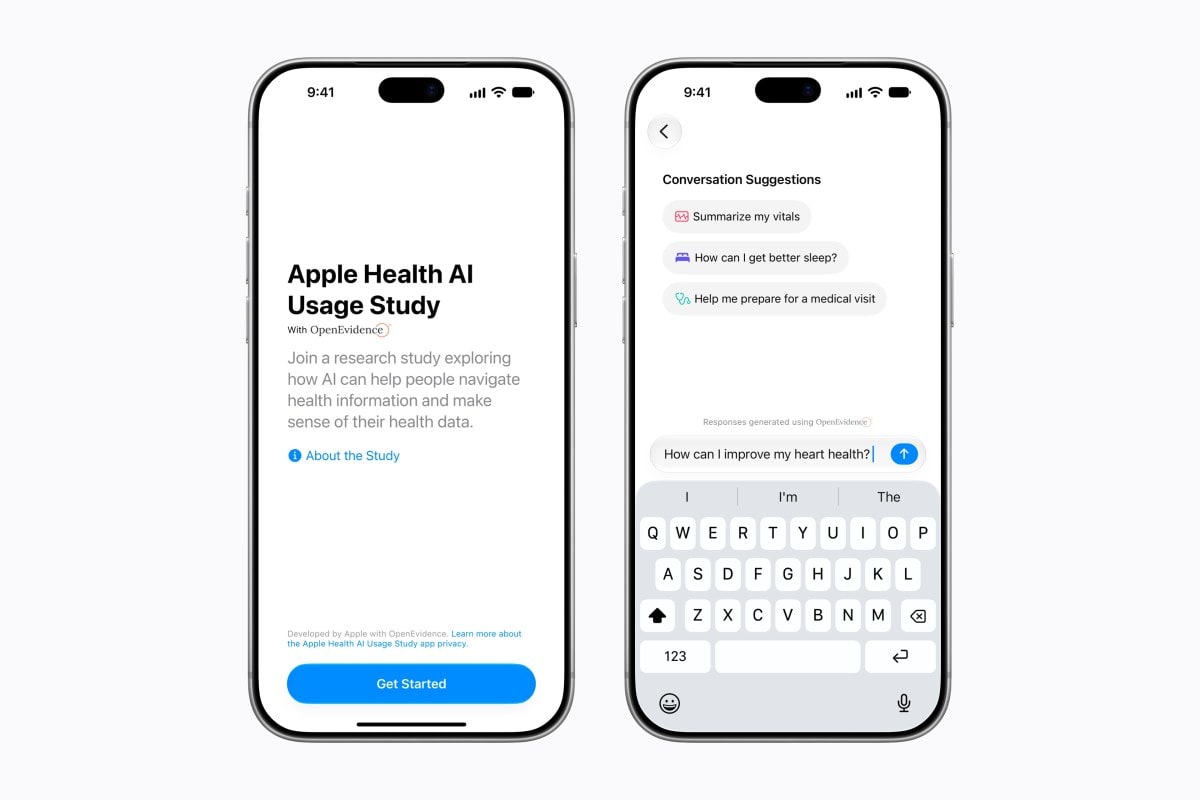
Apple has launched the Apple Health AI Usage Study in collaboration with OpenEvidence to evaluate how users interact with AI-driven health tools. The study aims to determine the effectiveness and clinical grounding of AI-generated medical answers for up to 200,000 U.S. participants.
Apple Enters the Clinical AI Research Space
Apple has officially signaled its intent to refine the intersection of artificial intelligence and consumer health by launching the 'Apple Health AI Usage Study.' Unlike the rapid, consumer-facing deployment models favored by competitors like OpenAI and Anthropic, Apple is opting for a research-first approach. By collaborating with OpenEvidence, a platform specialized in clinical AI, Apple is positioning itself to evaluate not just the popularity of AI health tools, but their actual utility and medical accuracy in a real-world setting.
Methodology and Clinical Grounding
The core of this initiative lies in the partnership with OpenEvidence, which utilizes medical information sourced from high-authority publications like The New England Journal of Medicine. This signifies a shift in the AI landscape from general-purpose chatbots to specialized, evidence-based systems. Participants will be tasked with asking medical questions through a dedicated iOS app, subsequently rating the responses based on criteria such as accuracy and helpfulness. This feedback loop is essential for refining how Large Language Models (LLMs) handle the high-stakes environment of medical advice.
Strategic Scope and Requirements
Apple’s study is significant in its scale and exclusivity. By targeting up to 200,000 participants in the U.S. over a 12-month period, the company is gathering a massive dataset that will likely inform future iterations of Apple Intelligence. The stringent hardware requirements—specifically the iPhone 15 or later and the upcoming iOS 26—suggest that Apple is leveraging its proprietary on-device processing capabilities to ensure privacy and performance, a hallmark of its broader ecosystem strategy.
The Competitive Landscape of Health AI
While rivals are rushing to integrate conversational health tools into the mainstream, Apple is taking a more cautious, data-driven approach. By focusing on 'clinically grounded answers,' Apple is aiming to mitigate the risks of AI 'hallucinations'—a common issue where chatbots confidently provide incorrect medical information. This study serves as a litmus test for whether AI can reliably act as a supplemental tool for healthcare professionals and patients alike.
Future Implications for Digital Health
This initiative could fundamentally change how users interact with health data on their devices. If successful, the study may lead to the integration of more robust, medically validated AI features within the Apple Health ecosystem. As AI continues to permeate the medical field, Apple's emphasis on clinical oversight suggests that the next generation of health-tech will be defined by its ability to balance conversational ease with rigorous, source-based verification.