The Mac Mini is still mighty, just not as cheap
Source Entity
Antonio G. Di Benedetto
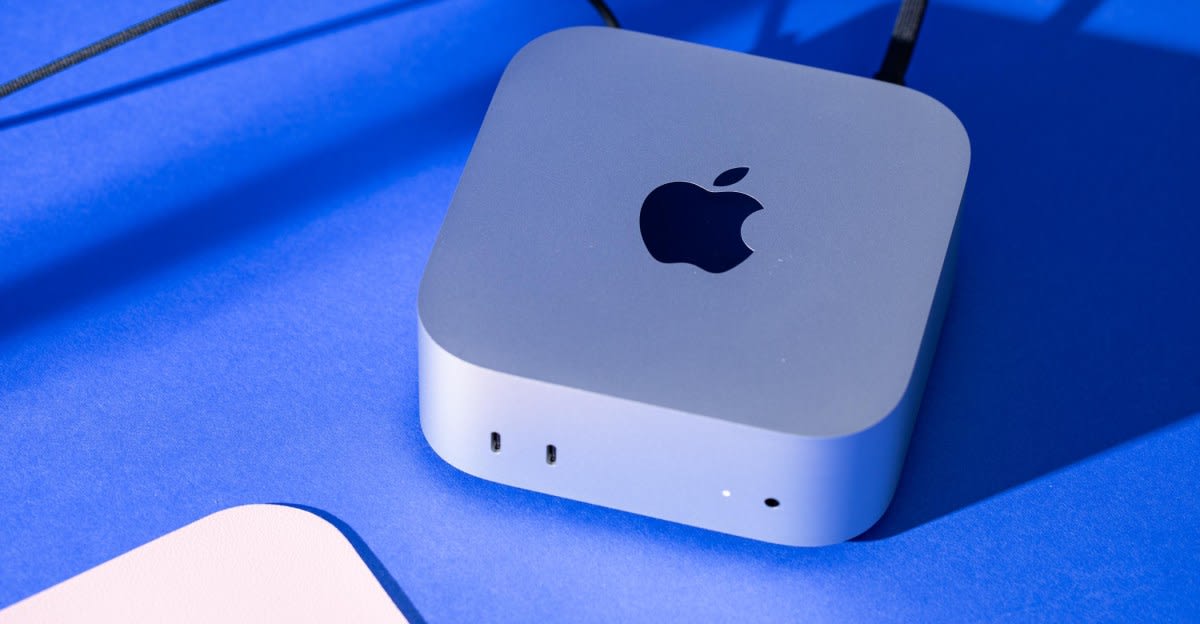
Apple has launched the new M6-powered Mac Mini, featuring a compact 0.82L redesign, alongside the high-performance M5 Ultra Mac Studio. These machines are specifically targeting professional AI development and heavy-duty 3D rendering workflows.
The Evolution of Apple's Desktop Power
Apple has recently signaled a shift in its desktop hardware strategy, focusing on extreme miniaturization for the consumer-facing Mac Mini and unprecedented computational density for the professional Mac Studio. The 2024 redesign of the Mac Mini, which shrinks the chassis to a mere 0.82 liters, represents a significant engineering achievement. By creating a device smaller than some gaming laptop power bricks, Apple is effectively redefining the desktop footprint, allowing for versatile mounting options that were previously impossible for a machine of this caliber.
The M6 Chip: A New Benchmark for Compact Computing
The introduction of the M6 chip in the 2024 Mac Mini marks a pivotal moment for Apple Silicon. By increasing both the count and the variety of cores available, Apple is positioning the Mini not just as a budget entry point, but as a robust machine capable of handling demanding tasks in a fraction of the space. This transition from the M4 architecture indicates a focus on sustained efficiency, ensuring that the device remains cool and responsive despite its drastically reduced physical volume.
The M5 Ultra: Powering the AI Revolution
Contrasting the portability of the Mini, the M5 Ultra Mac Studio addresses a completely different tier of computing. With specifications such as a 36-core CPU, 80-core GPU, and 256GB of RAM, this machine is explicitly engineered for AI developers and high-end 3D visual effects artists. The $12,299 price point reinforces its status as a specialized workstation, moving beyond the needs of typical content creators into the realm of enterprise-grade local model processing.
Local AI and the Future of Compute
One of the most profound implications of the new M5 Ultra hardware is its capability to run local AI agents. As developers move away from cloud-dependent models due to privacy and latency concerns, the M5 Ultra provides the necessary throughput to run local agents like OpenClaw and Hermes Agent effectively. This hardware effectively bridges the gap between the speed of cloud-based intelligence and the security of on-device processing, potentially altering how developers approach AI integration.
Competitive Landscape and Benchmarking
The performance of the M5 Ultra Mac Studio is being measured against industry stalwarts, including the previous M3 Ultra and dedicated desktop PCs equipped with high-end GPUs like the RTX 5090. This comparison highlights a significant trend: Apple is aggressively targeting the professional workstation market by offering a cohesive ecosystem where thermal performance and memory architecture are optimized for specific, resource-heavy workflows rather than just raw clock speeds.
Strategic Implications
Ultimately, these releases suggest a bifurcated strategy. Apple is betting that consumers want smaller, cleaner workspaces for their daily productivity needs, while simultaneously providing professionals with the specialized hardware required to build the next generation of AI applications. By optimizing their silicon for these specific use cases, Apple continues to push the boundaries of what is possible in compact and mid-sized desktop form factors.