PM Modi, Rahul Gandhi & Trump on Apple's secret word graylist: Report
Source Entity
KARAN MANRAL
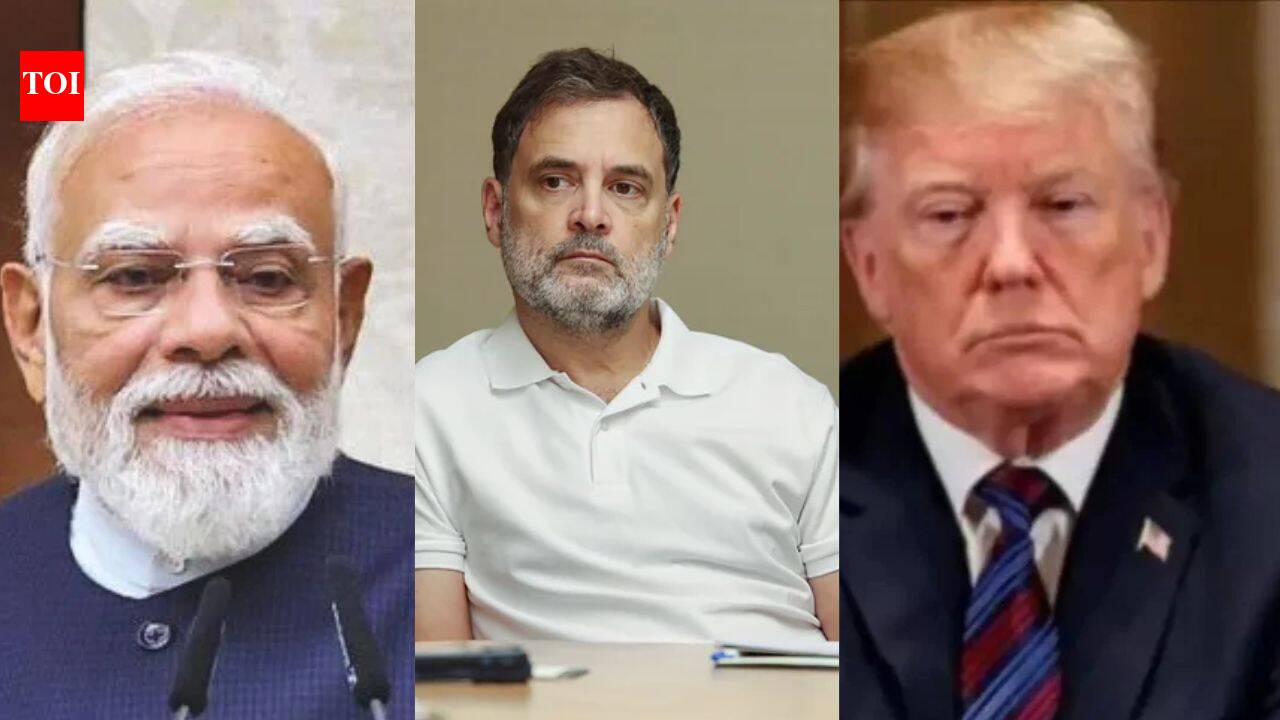
Researcher Derik Kauffman discovered a massive 'grey list' of over 100,000 phrases that Apple’s iOS keyboard prevents from appearing in predictive text or swipe-typing. The list includes offensive content alongside political figures like Donald Trump and Rahul Gandhi, sparking a debate over corporate censorship.
The Hidden Algorithmic Filter: Understanding Apple’s Grey List
Recent findings by researcher Derik Kauffman have shed light on a previously undisclosed mechanism within Apple’s iOS keyboard: a massive, multilingual 'grey list' containing over 100,000 words and phrases. This collection of restricted terms is specifically excluded from the system's predictive text and swipe-typing capabilities. While users retain the ability to type these words character by character, the keyboard’s refusal to offer them as suggestions or process them via swipe-typing creates a subtle, automated barrier to communication.
The Mechanics of the Restriction
The list, which spans every major language, functions as a form of algorithmic friction. When a user employs swipe-typing, the system often autocorrects the input to steer the user away from these flagged phrases. For example, reports indicate that the system may alter specific inputs, such as changing 'left wing conspiracy' to 'left wrong conspiracy.' This behavior suggests that Apple is not merely ignoring these phrases but actively managing the keyboard's output to avoid propagating certain types of content.
Diversity of Flagged Content
The content of the list is remarkably broad. While a significant portion is comprised of standard offensive language, slurs, and terms related to illicit substances or sexual explicit content, the inclusion of political terminology has triggered significant scrutiny. Phrases ranging from 'dictator Trump' to mentions of 'illegal immigrant' and even specific geopolitical commentary like 'Australia is a very bad place' suggest that Apple is filtering for more than just profanity. High-profile political figures, including PM Narendra Modi, Rahul Gandhi, and Donald Trump, have been identified as part of these restricted datasets.
Transparency and Corporate Responsibility
Kauffman has characterized this mechanism as a 'very light-touch form of censorship.' Because Apple operates on a global scale with billions of active devices, even a minor algorithmic nudge can have a profound impact on public discourse and the speed of digital communication. The lack of transparency regarding why these specific terms were chosen—and by whom—raises critical questions about the role of technology companies in moderating language. When a private corporation unilaterally decides which political phrases are 'suggestible,' they effectively curate the boundaries of acceptable digital speech.
Future Implications for Algorithmic Governance
This discovery invites a broader conversation regarding the power of Big Tech to shape language. As predictive text and AI-driven completion tools become more integrated into our daily interactions, the 'grey list' becomes a powerful tool for influence. If companies continue to implement these secret filters without public oversight or clear guidelines, the risk of 'shadow-banning' specific political or social viewpoints increases. Moving forward, users and regulators may demand more transparency regarding how these lists are curated, updated, and audited to ensure they do not unfairly suppress legitimate discourse under the guise of content moderation.
Conclusion
While Apple’s intent may be to maintain a 'clean' and user-friendly typing experience, the discovery of this extensive list underscores the tension between corporate safety standards and freedom of expression. As AI continues to mediate how we communicate, the debate over who controls the dictionary of the future—and what words are permitted to be suggested—will undoubtedly become a central theme in tech policy and digital ethics.