This space company is betting its future on a propellant available everywhere
Source Entity
Eric Berger
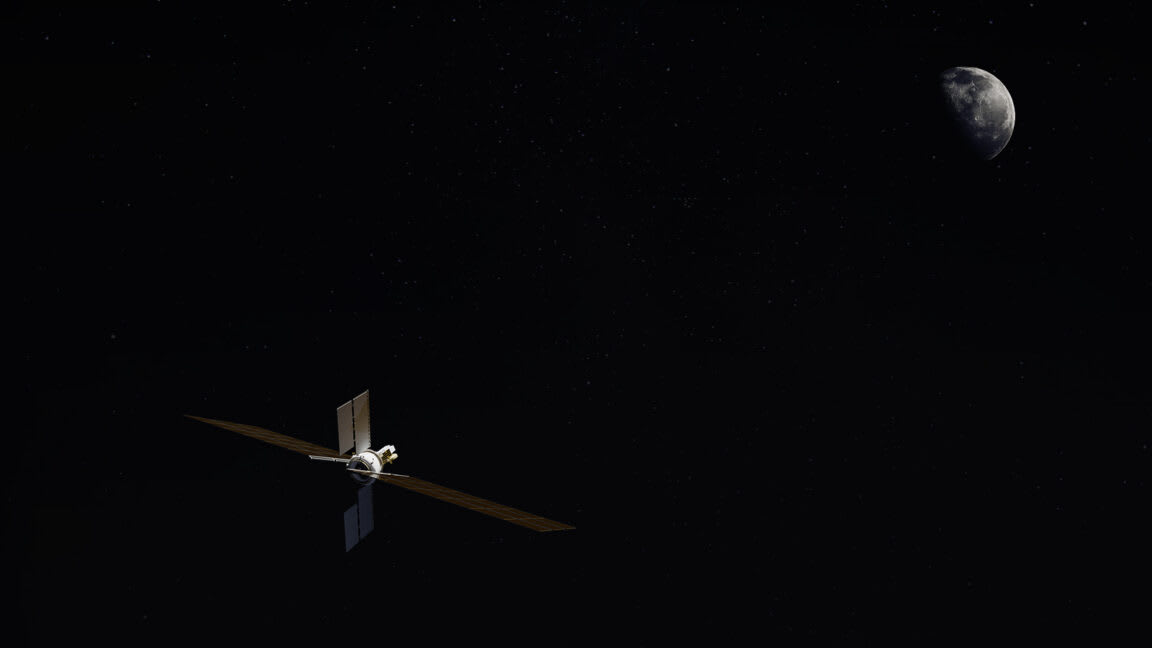
Former SpaceX engineers founded Argo Space to develop in-space infrastructure using water-based propulsion. This technology aims to eliminate the need for Earth-sourced propellants by utilizing harvestable water found in the solar system.
The Shift Toward In-Space Infrastructure
The aerospace industry is currently witnessing a pivotal transition from merely launching payloads into orbit to establishing a permanent, sustainable architecture in space. Robert, Ryan, and Kirby Carlisle, who gained extensive experience during the formative Falcon 9 years at SpaceX, represent this new wave of industry pioneers. Having participated in the refinement of rocket refurbishment and launch sales, the brothers identified a critical bottleneck in the space economy: the reliance on Earth-supplied fuel, which is both expensive and logistically restrictive.
The Vision of Argo Space
In late 2022, the Carlisles founded Argo Space with a distinct mission to move beyond traditional launch services. Their objective is to build the foundational infrastructure necessary for deep-space logistics. By focusing on spacecraft rather than launch vehicles, they are positioning themselves to solve the 'tyranny of the rocket equation,' where the mass of fuel required to carry fuel limits the effective payload capacity of any mission.
Water as the Future of Propulsion
At the heart of Argo Space's strategy is the decision to utilize water as a propellant. Water is not only ubiquitous across the solar system but is also potentially harvestable from lunar ice deposits. By centering their propulsion technology on a resource that can be extracted in situ, the company aims to decouple space exploration from the high costs of lifting mass out of Earth's deep gravity well. This strategy mirrors broader trends in the industry, where 'In-Situ Resource Utilization' (ISRU) is seen as the only viable path to long-term lunar and planetary exploration.
Engineering for the Long-Term
Drawing upon their tenure at SpaceX, the brothers are applying high-level engineering rigor to the challenges of orbital mechanics and propellant storage. Transitioning from rocket design to spacecraft infrastructure requires a shift in mindset—from the violent, high-thrust demands of atmospheric ascent to the long-duration, high-efficiency requirements of in-space maneuvering. Their background in the Falcon 9 program provides them with a unique perspective on the operational realities of modern aerospace hardware.
Broader Implications and Future Trends
This move signifies a growing trend in the private space sector: the move toward 'space-native' companies. As we look toward the future, the ability to refuel or repurpose assets already in orbit will be the defining factor in the expansion of the human footprint in space. If Argo Space successfully validates water-based propulsion at scale, it could drastically lower the entry barrier for orbital manufacturing, satellite servicing, and deep-space logistics, effectively turning the solar system into a more accessible environment for commercial endeavors.
Conclusion
The path carved by the Carlisle brothers represents a strategic evolution in the aerospace sector. By prioritizing water-based propulsion and in-space infrastructure, Argo Space is attempting to solve the core logistical challenges that have hampered space exploration for decades. Their focus on sustainable, resource-efficient technology is likely to be a cornerstone of the next generation of spaceflight development.