ECI’s credibility under question: Former CEC Ashok Lavasa
Source Entity
India Latest News: Top National Headlines Today & Breaking News | The Hindu
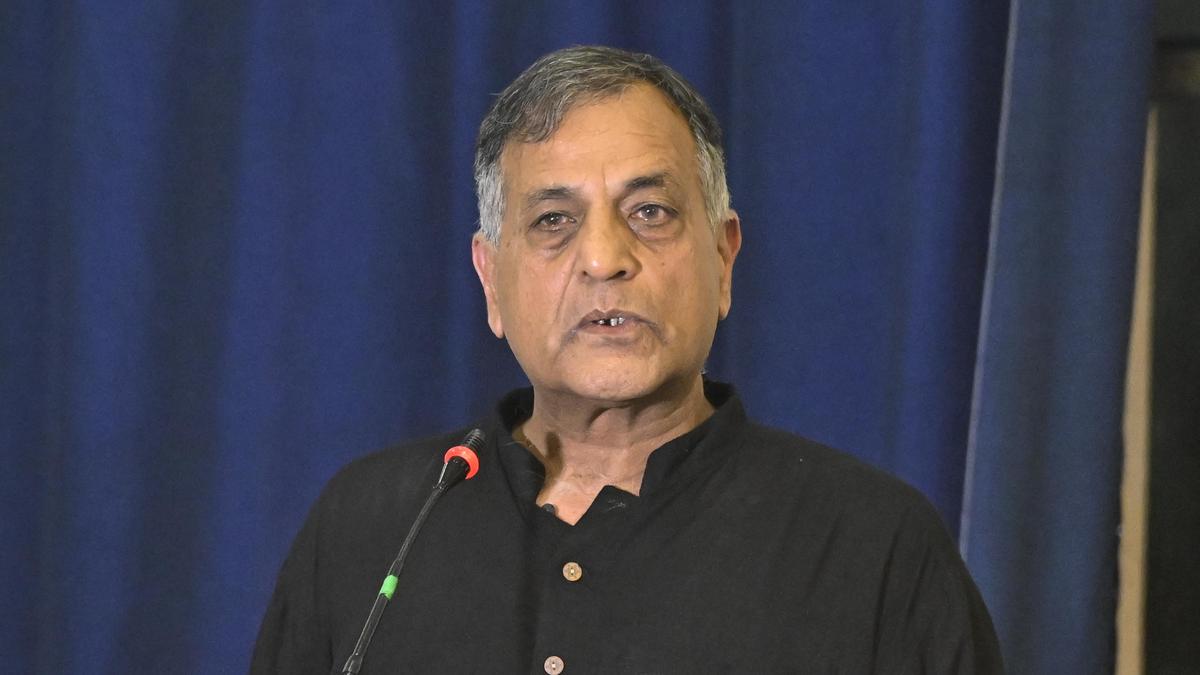
Former Chief Election Commissioner Ashok Lavasa has raised serious concerns regarding the Election Commission of India's credibility following controversies surrounding the Special Intensive Revision (SIR) exercise. He highlighted unprecedented voter anxiety over mass name deletions, calling for urgent institutional reform to restore public trust.
The Crisis of Confidence: Ashok Lavasa on the ECI
Former Chief Election Commissioner (CEC) Ashok Lavasa has publicly voiced profound concern regarding the current state of the Election Commission of India (ECI). His critique centers on the Special Intensive Revision (SIR) exercise, which has sparked widespread controversy due to allegations of mass voter name deletions. Lavasa’s remarks, delivered at a public convention in Kolkata, highlight a dangerous erosion of institutional trust that he argues is unprecedented in the history of Indian democracy.
The Impact of the Special Intensive Revision (SIR)
The core of the current tension lies in the SIR process, which is intended to update and purify electoral rolls. However, reports of mass deletions have fueled significant public anxiety. Lavasa notes that unlike previous revisions, which were largely administrative and routine, the current climate is defined by fear. Voters are now questioning the integrity of the process, fearing that their fundamental right to franchise is being compromised by opaque administrative decisions.
Institutional Credibility and Internal Dissent
Beyond the logistical failures of the SIR, the ECI faces a crisis of internal cohesion. The commission, which is tasked with the monumental duty of overseeing the world’s largest democratic exercise, has been marred by perceptions of internal dissent and a lack of transparency in its decision-making processes. Lavasa emphasizes that when the institution responsible for safeguarding the democratic process becomes the subject of public protest—including calls for the resignation of the CEC—the very foundation of the electoral system is at risk.
Political Backlash and Democratic Integrity
The controversy has transcended administrative criticism, drawing in prominent voices like actor and activist Prakash Raj, who has characterized the SIR exercise as fundamentally detrimental to democratic values. This broader critique suggests that the concerns are not merely technical but are perceived as an extension of ruling party influence over independent bodies. Such perceptions complicate the ECI's ability to act as a neutral arbiter in future elections.
The Path Forward: Restoring Public Trust
For Lavasa, the remedy for this crisis is a return to radical transparency. He argues that the ECI must address the 'unprecedented moves' that triggered the current anxiety and engage in a more open dialogue with the electorate. Without a concerted effort to regain public trust and demonstrate accountability, the ECI risks long-term damage to its reputation as an independent constitutional body. The future of Indian elections depends on the commission’s ability to prove that it remains a servant of the voter, rather than a tool of political maneuvering.
Conclusion
Ashok Lavasa’s intervention serves as a critical warning for the health of India's democratic institutions. By highlighting the shift from routine administrative work to a climate of mass anxiety and public protest, he underscores the urgent need for the ECI to reconcile its operational procedures with the requirements of democratic accountability. The restoration of its credibility is not just a procedural necessity but a constitutional imperative to ensure that every voter feels secure in their right to participate in the democratic process.
Multiple Citing Sources
Verification Required?