Asia Power Index 2026: US takes the lead, India listed at No. 3
Source Entity
Aanya Mehta
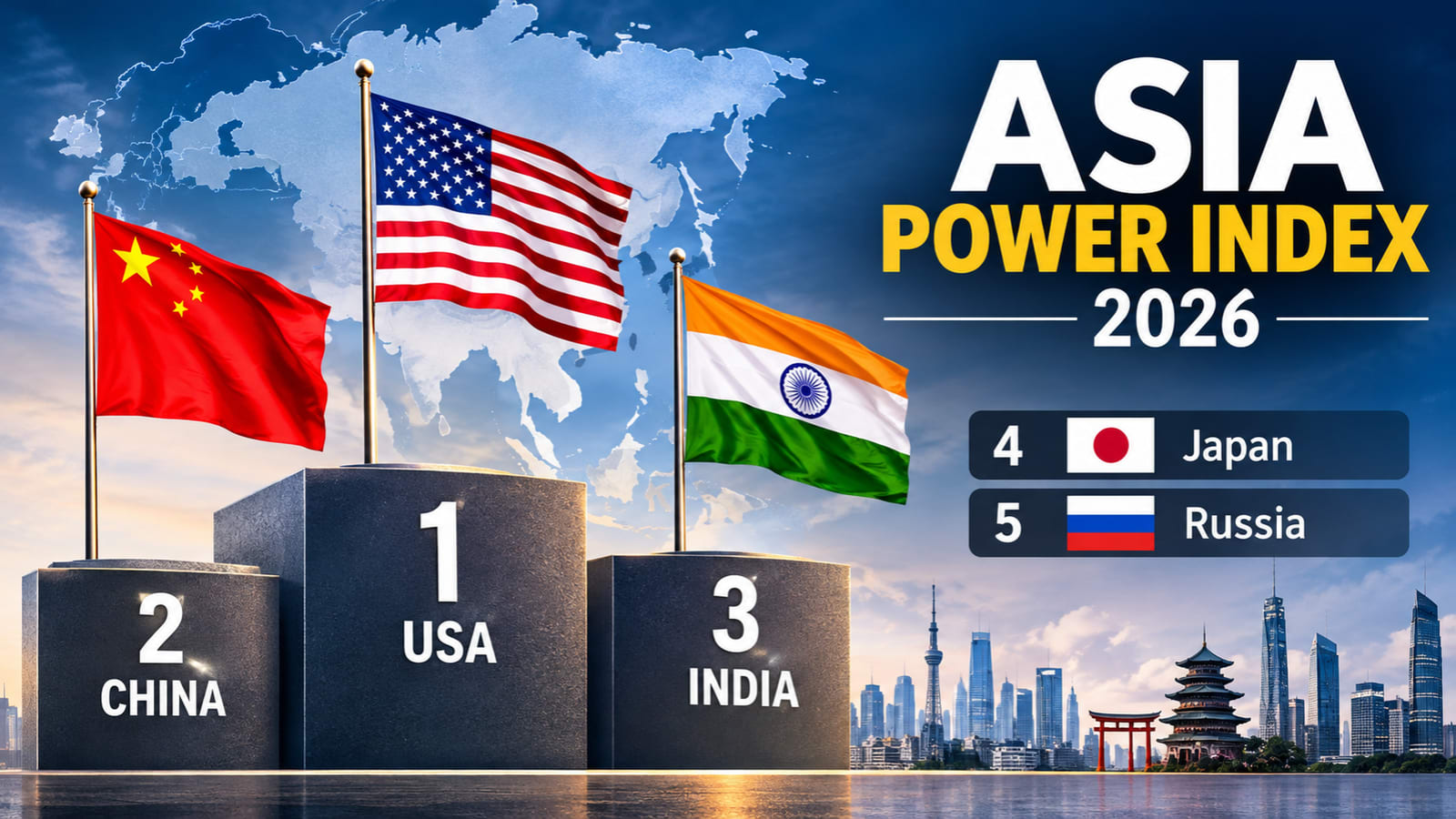
The 2026 Lowy Institute Asia Power Index identifies the US and China as the region's superpowers, with India securing the third position. Despite economic fluctuations, India has notably narrowed the power gap with China, signaling a significant shift in regional influence.
The Shifting Geopolitical Landscape: Analyzing the 2026 Asia Power Index
The recently released 2026 Asia Power Report by the Lowy Institute offers a critical diagnostic of the geopolitical architecture governing the Indo-Pacific. By systematically evaluating both tangible resources and intangible influence, the index serves as a bellwether for the shifting balance of power in a region that has become the primary theater of global competition. The findings confirm that the hierarchy of influence remains dominated by established superpowers, yet beneath the surface, the relative standings of emerging nations are undergoing profound transformations.
The Superpower Duality and the Rise of India
At the apex of the index, the United States and China retain their designations as the region’s only two superpowers. This classification underscores the structural reality that, despite various internal challenges and external pressures, both nations possess the unique combination of military, economic, and diplomatic reach required to shape regional outcomes. However, the most compelling takeaway from the 2026 report is the consolidation of India’s position at number three. While classified as a 'major power,' India’s trajectory is marked by a deliberate narrowing of the power gap with China, reaching its smallest margin since 2018.
Navigating Economic Fluctuations
One of the most nuanced aspects of the 2026 report is the acknowledgment of India’s economic performance. The index notes a dip in India's relative economic capability, yet this has not translated into a decline in its overall geopolitical standing. This suggests that India’s influence is increasingly derived from its strategic partnerships, diplomatic agility, and its role as a critical counterweight in regional security frameworks. The resilience of its 40.5-point score demonstrates that state power is multifaceted and not solely tethered to short-term economic fluctuations.
The Middle Power Hierarchy
Beyond the top three, the index highlights a robust tier of 'middle powers' that are essential to regional stability. Japan, Russia, Australia, South Korea, Singapore, Indonesia, and Malaysia round out the top ten. These nations are increasingly influential in setting regional standards, managing supply chain resilience, and navigating the security dilemmas posed by superpower competition. Their inclusion in the top ten reflects a regional order where middle powers are no longer passive observers but active participants in the balance of power.
Strategic Implications and Future Trends
Looking forward, the narrowing gap between India and China suggests that the Indo-Pacific is moving toward a more multipolar reality than the binary superpower competition initially suggested. As India continues to leverage its strategic weight, the regional balance of power will likely become more fluid. The Lowy Institute’s data provides a roadmap for policymakers to understand these shifts, emphasizing that sustained power is contingent upon the ability to adapt to changing economic realities while maintaining diplomatic influence.
Conclusion
The 2026 Asia Power Index provides a sobering yet insightful look at the state of international relations in Asia. By tracking the distribution of power, the report confirms that while the US and China remain at the helm, the rise of India and the strategic contributions of middle powers are reconfiguring the regional landscape. As these nations navigate the complexities of 2026 and beyond, the focus will likely remain on how effectively they can translate their resources into sustained geopolitical impact.