Austrian woman debunks ‘myths about India that people still believe’
Source Entity
Latest News: Todays Latest News Headlines from India & World | Hindustan Times | Hindustan Times
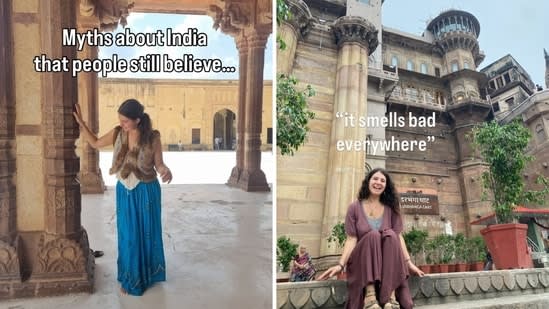
An Austrian content creator married to an Indian man is using social media to challenge negative global stereotypes about India. Her viral campaign highlights the country's diversity, natural beauty, and safety, urging a more balanced perspective beyond common myths.
Challenging Global Narratives: The Austrian Perspective on India
In an era dominated by rapid digital consumption, the image of a nation is often shaped by viral clips and anecdotal evidence. A recent social media campaign by an Austrian content creator, who is married to an Indian man, has gained significant traction by challenging pervasive stereotypes about India. By leveraging her personal experiences as a traveler and resident, she is systematically dismantling narratives that have long painted the subcontinent as a monolith of pollution and chaos. This effort serves as a critical counter-point to the reductive tropes often found in Western media.
The Nuance of Cleanliness and Infrastructure
Central to the creator's argument is the acknowledgement of reality without letting it define the whole. She openly admits that India faces challenges regarding waste management and cleanliness in specific urban pockets. However, she contextualizes this by noting that such issues are not unique to India, but are global challenges found in varying degrees across every country. By reframing the conversation from an indictment of the nation to a critique of global urban management, she invites her audience to view India’s infrastructure through a more objective lens.
Beyond the Clichés: The Diversity of India's Geography
One of the most compelling aspects of her advocacy is the focus on India’s vast, untouched natural beauty. While global discourse often fixates on crowded metropolitan centers, her content redirects attention to the breathtaking mountain ranges, pristine rivers, and serene, well-maintained villages. This juxtaposition is vital for correcting the 'single-story' narrative that many outsiders hold. By highlighting regions where residents exhibit a strong civic sense, she demonstrates that the experience of India is contingent on the specific geography and culture one interacts with.
The Impact of Intercultural Experiences
As someone married into an Indian family, the creator offers a unique, intimate perspective that bridges the gap between outsider observation and internal reality. This duality allows her to address sensitive topics like safety and weather with a level of credibility that a typical tourist might lack. Her viral reach suggests a growing appetite among global audiences for authentic, human-centric stories that challenge preconceptions rather than reinforcing them.
Implications for Future Travel and Perception
This trend of 'myth-busting' content is likely to influence how future travelers approach the subcontinent. As more creators utilize their platforms to provide nuanced, balanced accounts of their travels, the stereotypical 'hazard-focused' travel advice may give way to more culturally aware tourism. The broader implication here is a shift in soft power; when individual citizens act as cultural ambassadors, they can significantly alter the brand image of a nation, moving it away from stagnant stereotypes toward a more dynamic, multifaceted identity.
Conclusion
The Austrian creator's intervention is a reminder of the power of social media to correct skewed global narratives. By grounding her arguments in personal experience and acknowledging both the flaws and the wonders of the country, she has created a template for responsible digital storytelling. Her efforts underscore the importance of looking beyond surface-level tropes to understand the complex, diverse, and evolving reality of India today.
Verification Required?