‘I thought, I’ve tried everything else, why not give AI a shot?’: the long-lost family reunited by ChatGPT
Source Entity
Jenny Kleeman
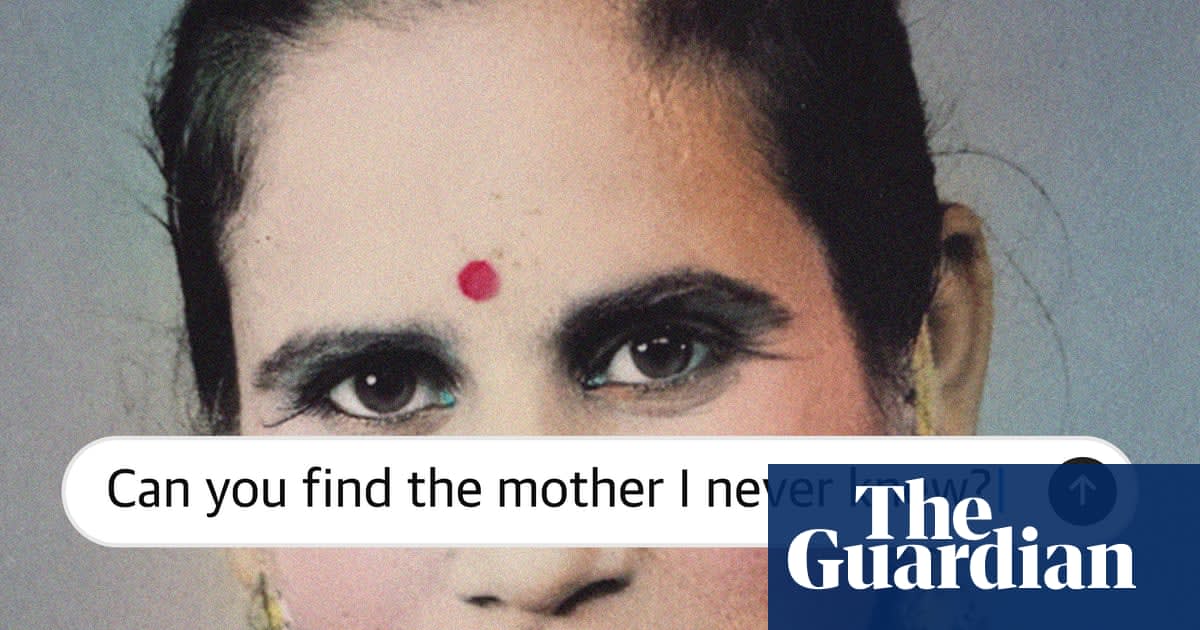
Avtar Singh, a man raised by his grandparents in India, successfully reunited with his long-lost mother in Canada using ChatGPT. This heartwarming story highlights the transformative potential of artificial intelligence in overcoming complex genealogical and historical barriers.
A Journey Across Decades: The Reunion of Avtar Singh
The Origins of a Hidden History
The story of Avtar Singh begins in the 1960s in Amritsar, India, where the foundations of his identity were built on whispers and half-truths. As a young boy known by the nickname 'Titu,' he navigated a childhood marked by rumors that his mother was not his biological parent, but rather someone living abroad. These childhood whispers, dismissed by Avtar as mere neighborhood gossip, were eventually confirmed to be true. He had been raised by his paternal grandparents while his father sought a new life as a teacher in Canada. This arrangement, common for families seeking better opportunities abroad during that era, left Avtar in the care of a stern police officer grandfather and a deeply nurturing grandmother who provided him with the love he would carry throughout his life.
Navigating the Complexity of Family Structures
For many families in the mid-20th century, the separation of children and parents was a necessary sacrifice for economic stability. Avtar’s father’s departure for Canada reflects a broader historical trend of the Indian diaspora moving westward to secure professional advancement. The emotional labor fell upon the grandparents, who stepped into parental roles to ensure Avtar’s upbringing. While Avtar felt loved and protected, the lingering truth of his parentage created a divide that would eventually span continents and decades, illustrating the profound emotional impact of migration on familial cohesion.
The Role of Modern Technology in Genealogy
As an adult, the desire to bridge the gap between his past in Amritsar and his family in Canada led Avtar to explore unconventional avenues for investigation. Faced with limited traditional records and the passage of time, he turned to artificial intelligence. By utilizing ChatGPT, Avtar was able to synthesize fragmented memories and historical context to navigate the complexities of finding his long-lost mother. This case serves as a compelling example of how generative AI is shifting from a mere productivity tool to a personal assistant capable of solving deeply human, genealogical, and emotional puzzles.
Bridging the Digital and Human Divide
What makes this story particularly significant is the application of AI to reconcile personal history. Avtar’s decision to 'give AI a shot' signifies a growing trend where individuals leverage large language models to process vast amounts of unstructured personal data. By feeding the AI details of his early life, the names of his relatives, and the timeline of his father’s migration, Avtar managed to cut through the noise of decades of separation. This suggests that AI can act as a powerful catalyst for reconnection, particularly for those whose family histories were obscured by distance or cultural shifts.
Future Implications for Personal Narratives
As we look to the future, the integration of AI into personal research will likely become more commonplace. The successful reunion of Avtar Singh and his mother demonstrates that technology can facilitate healing and closure that might have been impossible just a decade ago. It highlights a future where AI does not replace human connection but instead provides the map to find it. As these tools become more intuitive, they will likely become standard for individuals seeking to reconstruct their heritage, ensuring that stories like Avtar’s are not lost to the sands of time.
Conclusion
The reunion of Avtar Singh is more than just a technological success story; it is a testament to the enduring nature of familial bonds. By embracing modern tools to resolve the mysteries of his past, Avtar has demonstrated that even the deepest voids of time and geography can be crossed with the right support. His journey serves as a beacon of hope for others seeking to uncover their own histories, proving that the intersection of human memory and machine intelligence can lead to deeply meaningful resolutions.