Baking a Model: A Metaphor for LLM Training
Source Entity
Hacker News
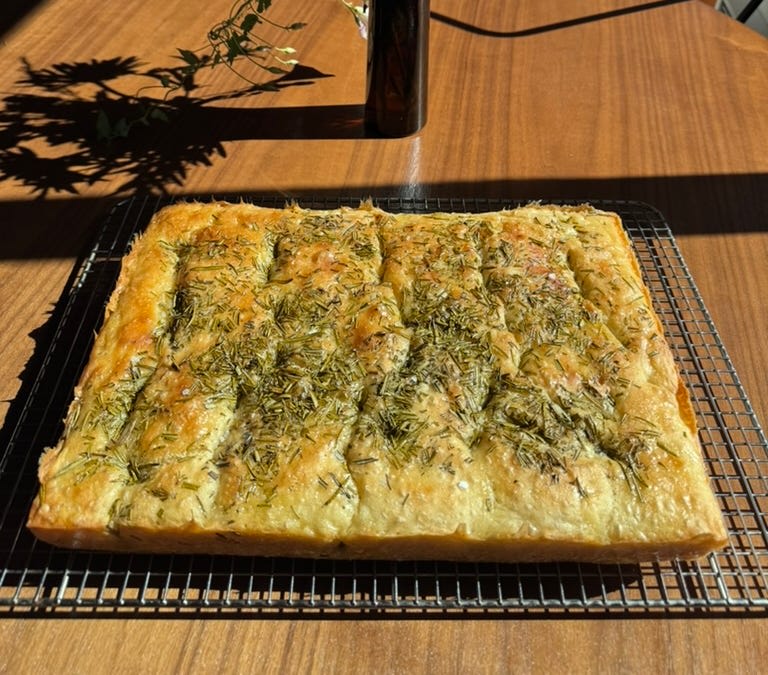
The article draws a creative parallel between the intricate process of baking bread and the technical construction of Large Language Models (LLMs). It explores the author's transition from early fascination with hardware instruction sets to a modern interest in the underlying mechanisms of AI training.
The Art and Engineering of AI Construction
The intersection of human craftsmanship and computational architecture offers a profound lens through which we can understand the rapid evolution of Artificial Intelligence. By comparing the tactile, precise nature of baking to the abstract, data-heavy process of training Large Language Models (LLMs), the author highlights a fundamental human drive: the desire to demystify complex systems to gain a sense of mastery and control. Just as a baker must understand the chemical reactions of yeast and flour, an AI engineer must comprehend the mathematical foundations of neural networks.
From Hardware Manuals to Neural Architectures
The author's journey, beginning with the study of Motorola 6800 instruction sets, reflects a generational shift in how we interact with technology. In the era of early microprocessors, understanding power and control meant literal manipulation of boolean expressions and timing tables at the hardware level. Today, that same intellectual obsession has migrated to the software layer, specifically the 'machinery' that constructs LLMs. This transition signifies that while the platform has shifted from silicon gates to transformer architectures, the core curiosity remains the same: how do we build things that think?
The Metaphor of 'Baking' a Model
Using 'baking' as a metaphor for model training is not merely a stylistic choice; it is a pedagogical tool that grounds the ephemeral nature of AI in physical reality. Baking, like model training, requires specific inputs (ingredients/data), precise conditions (temperature/hyperparameters), and a transformative process that turns raw components into something entirely new. This analogy helps bridge the gap for non-experts, suggesting that the 'recipe' for an AI model is as much about the quality of the 'ingredients'—the dataset—as it is about the 'baking' process—the training loop.
The Mechanism of Transformation
The fascination with the 'machinery' of model construction points toward a growing trend in the tech industry: a move away from black-box consumption toward an era of transparency and optimization. As developers and researchers begin to treat model construction as a craft, we see an increase in the demand for explainable AI. Understanding how models are 'baked' allows for better troubleshooting, reduced bias, and more efficient resource allocation during the training phase.
Broader Implications and Future Trends
As we look forward, the democratization of the 'baking' process—where more individuals can participate in the construction of specialized models—will likely redefine the landscape of software development. If the construction of intelligence becomes as accessible as learning a craft, we may see a surge in localized, highly efficient models tailored to specific tasks. This shift promises to move us beyond the era of massive, general-purpose models toward a more nuanced, 'artisanal' approach to AI development.
Conclusion
Ultimately, the comparison between baking and LLM training emphasizes that technology, at its highest level, is an expression of human intent. By viewing the construction of AI as a tangible process, we can better appreciate the complexity involved while remaining grounded in the reality that these systems, like a loaf of bread, are fundamentally built by human choices, constraints, and creative applications of technical principles.