Bengaluru City Police Commissionerate to be split into multiple units?
Source Entity
India Latest News: Top National Headlines Today & Breaking News | The Hindu
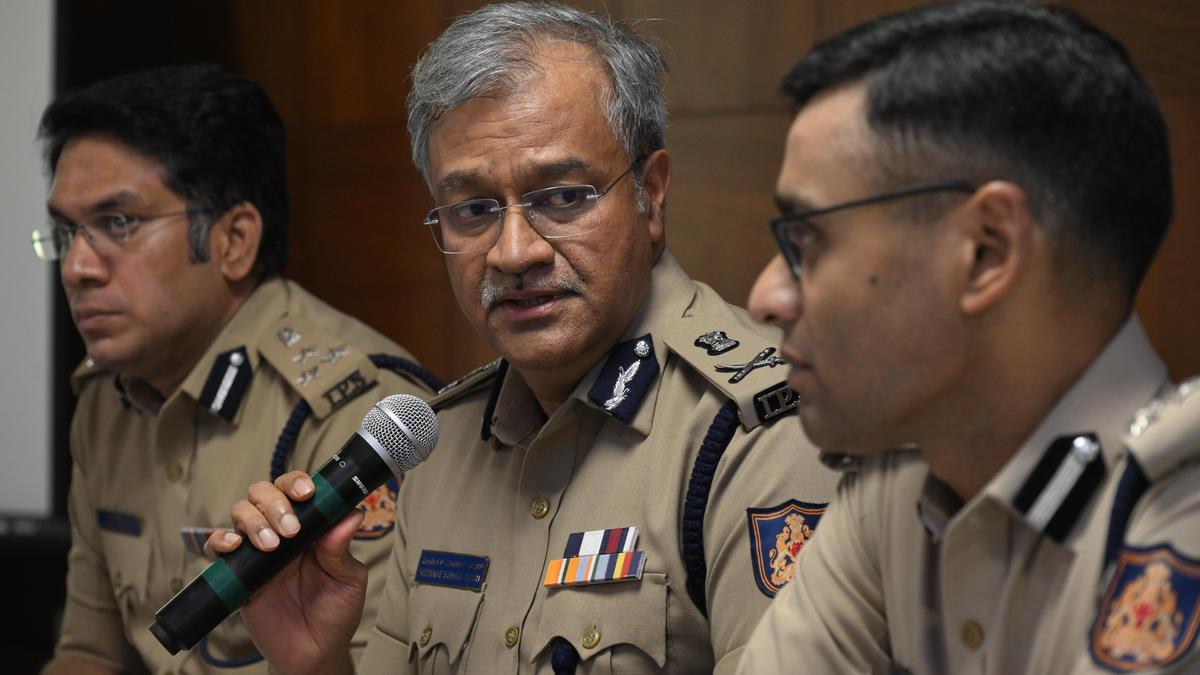
Bengaluru is considering splitting its single police commissionerate into multiple units to align with the administrative models of other Indian megacities like Delhi and Mumbai, aiming to improve law enforcement efficiency as the city expands.
Administrative Evolution: The Proposed Restructuring of Bengaluru Police
Bengaluru is currently facing a critical juncture in its urban governance, specifically regarding the management of law and order. The proposal to split the Bengaluru City Police Commissionerate into multiple units marks a significant shift in how the city intends to handle its burgeoning population and expanding territorial footprint. For years, Bengaluru has operated under a centralized commissionerate system that manages both the urban core and sprawling suburban fringes. However, as the city transforms into a global tech hub with an exponentially increasing population, the strain on a single administrative head has become evident, prompting a move toward decentralization.
Comparative Analysis with Indian Megacities
To understand the necessity of this move, one must look at the administrative blueprints of other Indian Tier-1 cities. Metropolises such as Delhi, Mumbai, Kolkata, Hyderabad, and Chennai have long since adopted a multi-commissionerate or multi-zonal approach. In these cities, the vastness of the urban sprawl makes a single point of command impractical. By splitting the jurisdiction, these cities can ensure that police leadership is more closely connected to the specific socio-economic and geographic challenges of different sectors. Bengaluru remains a notable outlier in this regard, maintaining a large, singular commissionerate that is awkwardly surrounded by rural district police units, creating a fragmented boundary between urban and rural law enforcement.
Operational Bottlenecks and the Rural-Urban Divide
The current structure creates significant operational challenges, particularly at the periphery of the city. The juxtaposition of a high-density urban commissionerate against rural district police units often leads to jurisdictional complexities during cross-border crimes or large-scale traffic management events. When a city grows as rapidly as Bengaluru has, the "suburban" areas often evolve into urban centers themselves, yet they remain tethered to an administrative structure that may not be equipped for urban-specific policing. This gap often results in slower response times and a lack of specialized resources in the outer rings of the city, which are now home to millions of IT professionals and industrial workers.
Implications for Law Enforcement and Governance
Splitting the commissionerate would likely lead to the creation of specialized units—potentially divided by cardinal directions (North, South, East, West)—each with its own dedicated leadership and resource allocation. This would allow for a more granular approach to policing. For instance, the policing needs of the high-tech corridors in the East differ vastly from the commercial hubs of the Central Business District or the residential clusters in the South. Decentralization would enable commissioners to tailor their strategies to the specific crime patterns and traffic demands of their respective zones, thereby increasing overall accountability and efficiency.
Future Trends in Urban Policing
Looking forward, this restructuring is likely the first step toward a broader integration of "Smart City" policing. With multiple commissionerates, the city can more easily implement localized surveillance grids, zone-specific emergency response systems, and specialized task forces for cybercrime and traffic management. We can expect a trend where administrative boundaries are redrawn to match the actual footprint of the urban sprawl rather than relying on outdated colonial-era district lines. This evolution will be essential for Bengaluru to maintain its status as a livable, secure global city.
Conclusion
The proposed split of the Bengaluru City Police Commissionerate is not merely a bureaucratic change but a necessary evolution to match the city's growth. By aligning itself with the models used in Delhi and Mumbai, Bengaluru can eliminate the friction between its urban and rural police units and provide a more responsive, localized security apparatus. This transition will be pivotal in ensuring that the city's infrastructure for safety keeps pace with its economic and technological ascent.
Verification Required?