Bengaluru Traffic Police’s 101-skywalk proposal moves towards implementation
Source Entity
India Latest News: Top National Headlines Today & Breaking News | The Hindu
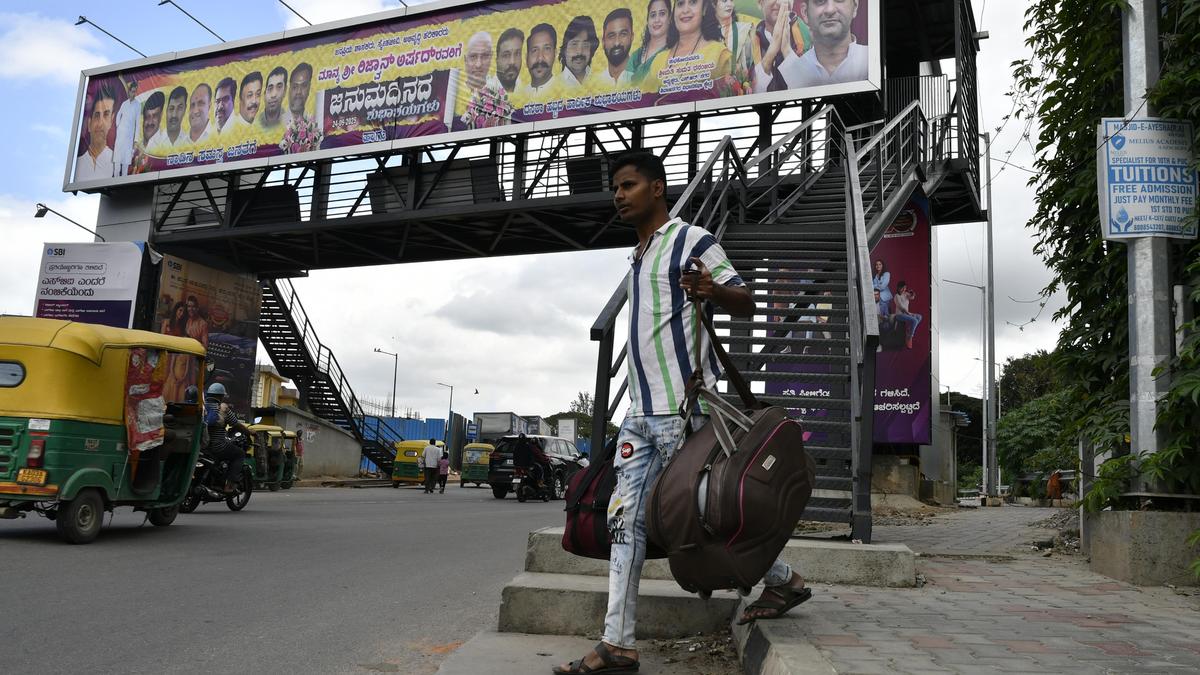
The list of proposed skywalks features several notorious junctions, such as T.C. Palya Junction, Budigere Junction, Santhe Circle in Yelahanka, Aurobindo Junction in Jayanagar, Iblur Junction, and Jalahalli Cross
Addressing Urban Gridlock: Analysis of Bengaluru's 101-Skywalk Initiative
Bengaluru, widely recognized as the 'Silicon Valley of India,' has long struggled with an infrastructure deficit that has failed to keep pace with its explosive population and economic growth. The recent proposal by the Bengaluru Traffic Police to implement 101 skywalks across the city's most notorious junctions marks a critical strategic shift toward separating pedestrian movement from vehicular traffic. By targeting high-congestion zones such as T.C. Palya Junction, Budigere Junction, Santhe Circle in Yelahanka, Aurobindo Junction in Jayanagar, Iblur Junction, and Jalahalli Cross, the city is attempting to resolve a fundamental conflict in its urban design: the struggle for road space between pedestrians and an ever-increasing volume of vehicles.
Enhancing Pedestrian Safety and Traffic Fluidity
The selection of specific junctions like Iblur and Jalahalli Cross is not incidental; these areas are known for high accident rates and severe bottlenecks. In many of these locations, pedestrians are forced to navigate narrow, often non-existent sidewalks or risk crossing multi-lane highways during peak hours. The implementation of skywalks aims to eliminate these 'conflict points.' By elevating pedestrian crossings, the traffic police intend to reduce the frequency of sudden stops and pedestrian-related delays, which currently contribute to a ripple effect of congestion across the city's arterial roads. This systemic separation is essential for improving the overall 'Level of Service' (LoS) of the city's road network.
The Broader Context of Urbanization in Bengaluru
To understand the necessity of this proposal, one must look at the historical trajectory of Bengaluru's urbanization. The city transitioned from a 'Pensioner's Paradise' to a global tech hub in a matter of decades, leading to a sprawl that outstripped the capacity of its original colonial-era and post-independence road layouts. The reliance on private vehicles and the rapid expansion of the periphery—evident in the inclusion of Budigere and Yelahanka in this proposal—has created a fragmented transit system. The skywalk initiative is a reactive measure to this sprawl, attempting to retrofit safety and efficiency into an already saturated urban environment.
Economic Implications of Traffic Mitigation
Traffic congestion in Bengaluru is not merely a convenience issue; it is an economic drain. Thousands of man-hours are lost daily in traffic, impacting the productivity of the IT and biotechnology sectors that anchor the city's economy. By streamlining the flow at notorious junctions like Aurobindo Junction and T.C. Palya, the city can potentially reduce commute times and lower the fuel consumption and emissions associated with idling engines. If these 101 skywalks successfully reduce the number of minor accidents and traffic stalls, the cumulative effect will be a more predictable and efficient logistics and commuting environment, which is vital for maintaining the city's attractiveness to global investors.
Implementation Challenges and Accessibility Concerns
Despite the promise of the proposal, the transition from planning to implementation is fraught with challenges. The primary hurdle will be land acquisition and the physical constraints of existing narrow roads. Furthermore, for skywalks to be effective, they must be inclusive. Historically, many urban skywalks in Indian cities have been underutilized because they lack elevators or ramps, making them inaccessible to the elderly, people with disabilities, and those with luggage. To avoid these pitfalls, the Bengaluru Traffic Police and implementing agencies must ensure that the 101 proposed structures adhere to universal design standards, ensuring that the 'path of least resistance' for the pedestrian is the skywalk, not the dangerous street level.
Predicting Future Trends in Bengaluru's Transit
This proposal signals a move toward a more tiered approach to urban mobility. We can expect a future where Bengaluru increasingly separates different modes of transport—Metro rails above, skywalks for pedestrians, and optimized corridors for vehicles below. This 'verticalization' of transit is the only viable path for hyper-dense cities where horizontal expansion is no longer possible. If successful, this project could serve as a blueprint for other Indian metros facing similar crises, shifting the focus from simply building more roads to managing the existing space more intelligently.
Conclusion
The proposal for 101 skywalks is a bold attempt to reclaim safety and efficiency in one of India's most congested cities. By focusing on notorious junctions like Iblur and Jalahalli Cross, the Bengaluru Traffic Police are targeting the root causes of many daily bottlenecks. While the success of the project depends heavily on inclusive design and seamless execution, the initiative represents a necessary evolution in Bengaluru's urban planning, prioritizing the safety of the pedestrian while striving to unlock the city's paralyzed traffic flow.
Verification Required?