Two-wheeler ban on airport road, Electronics City flyovers temporarily put on hold by Bengaluru police
Source Entity
News Today: Breaking News, Top Headlines & Live Updates | The Hindu
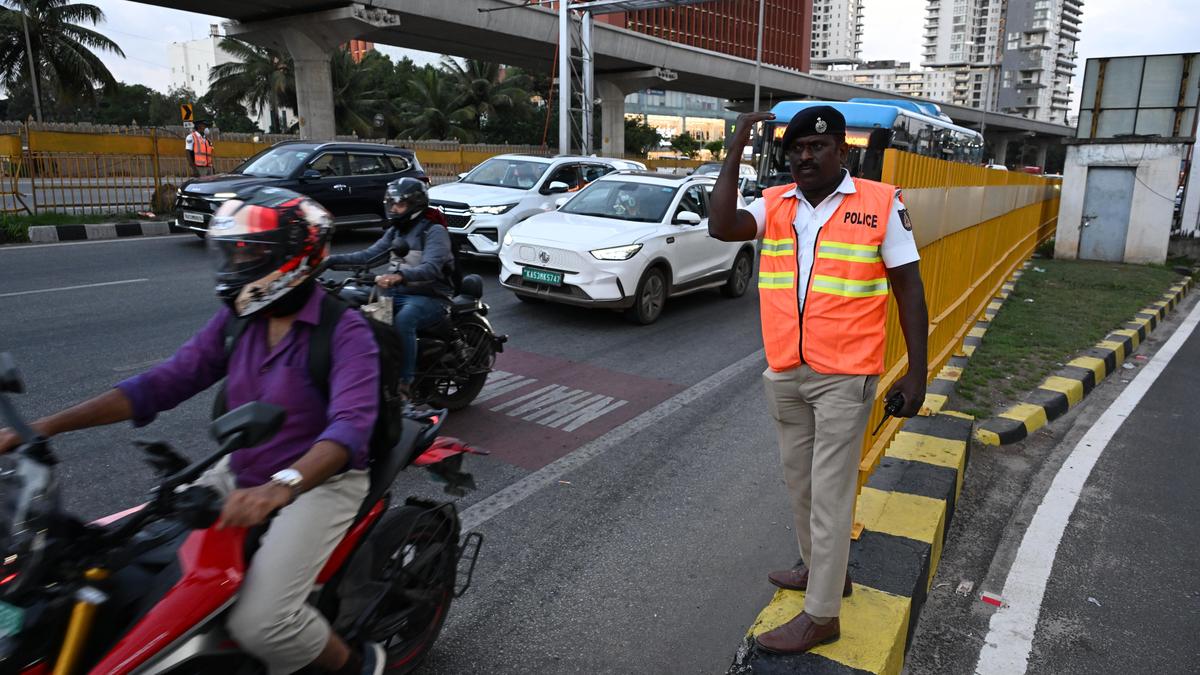
The Bengaluru Traffic Police have suspended a planned ban on two-wheelers for the Airport Road and Electronics City flyovers following traffic congestion. Authorities now plan to implement vehicle restrictions in a phased manner to better manage flow.
Bengaluru Traffic Policy Shift: Two-Wheeler Ban Paused
The Bengaluru Traffic Police (BTP) recently made a significant pivot in their urban mobility strategy by temporarily halting a planned ban on two-wheelers across the Kempegowda International Airport (KIA) Road and Electronics City elevated corridors. This decision comes just days after the BTP initiated a broader effort to restrict specific vehicle categories on five major flyovers to enhance road safety and optimize traffic throughput in one of India's most congested cities.
The Impact of Pilot Implementation
Initial assessments following the September 4 implementation revealed a stark contrast in results across the city's infrastructure. While the BGS Flyover, Peenya Flyover, and the Double Decker Flyover (Silk Board to Ragigudda) showed signs of improved, smoother traffic movement, the pilot restrictions on the airport and Electronics City corridors caused immediate, unintended consequences. The sudden diversion of two-wheelers created significant bottlenecks and traffic conflicts at entry and exit points, leading to longer queues that hampered the very efficiency the policy intended to create.
Phased Strategy Over Blanket Bans
In response to the feedback from the pilot phase, the BTP has opted for a more cautious, phased approach. Rather than enforcing a blanket prohibition on two-wheelers, authorities will now look to introduce restrictions incrementally. This strategic shift acknowledges that major infrastructure corridors in Bengaluru serve as critical lifelines for thousands of commuters, and abrupt changes to traffic patterns can trigger cascading delays across the city’s arterial road network.
Balancing Safety and Accessibility
At the core of this policy debate is the tension between safety and accessibility. Elevated corridors are designed for high-speed, continuous flow, and the presence of two-wheelers—often considered more vulnerable—posed safety concerns that prompted the initial ban. However, the sheer volume of two-wheelers in Bengaluru makes them an essential component of the daily commute. The BTP's decision to pause the ban underscores the complexity of managing urban transit in a rapidly expanding metropolis where infrastructure capacity is often outpaced by vehicle growth.
Future Outlook for Bengaluru Traffic
Moving forward, the BTP will likely utilize data from the successful corridors—such as the Peenya and BGS flyovers—to refine their approach for the remaining stretches. By implementing restrictions in phases, authorities hope to mitigate the "diversion shock" that occurred during the initial attempt. Future trends suggest that Bengaluru will continue to experiment with dynamic lane management and vehicle-specific restrictions as it attempts to balance the needs of private vehicle owners with the necessity of maintaining fluid traffic movement on its high-traffic elevated corridors.
Verification Required?