What is BIMSTEC, and why is it in focus ahead of its 30th anniversary?
Source Entity
The Indian Express
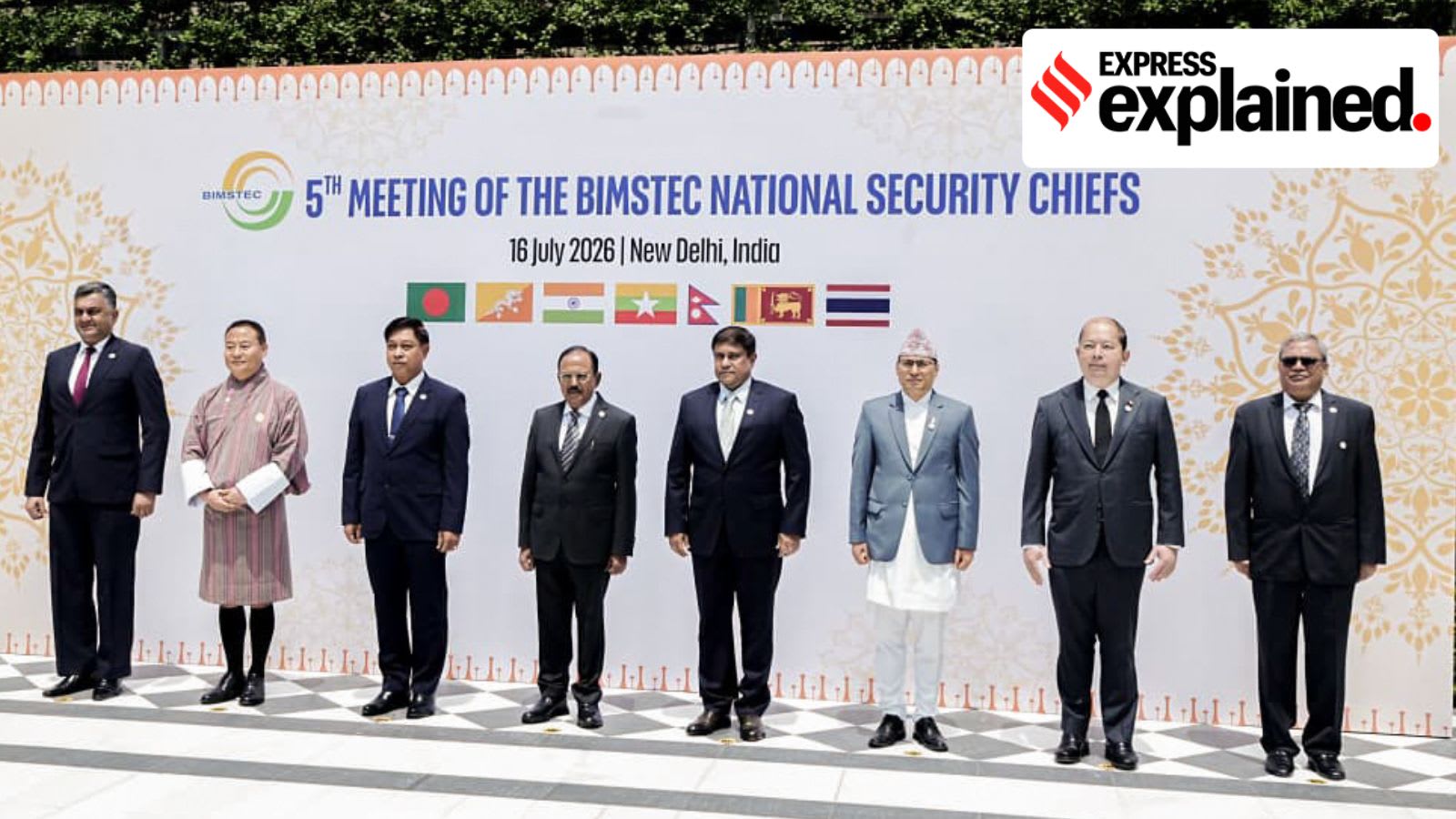
BIMSTEC is intensifying regional security cooperation ahead of its 30th anniversary, focusing on maritime law, cybercrime, and disaster relief. Recent meetings in New Delhi underscore the bloc's growing strategic importance in the Bay of Bengal.
Strengthening Regional Security: The Evolution of BIMSTEC
As the Bay of Bengal Initiative for Multi-Sectoral Technical and Economic Cooperation (BIMSTEC) approaches its 30th anniversary, the organization is undergoing a critical transition from a primarily economic forum to a more robust regional security architecture. The recent 5th Meeting of the BIMSTEC National Security Chiefs in New Delhi, attended by National Security Advisor Ajit Doval, signals a definitive shift toward addressing non-traditional security threats that transcend national borders.
Addressing Evolving Security Challenges
The security landscape of the Bay of Bengal is becoming increasingly complex. Member nations are now prioritizing collaborative frameworks to combat terrorism, transnational crime, and the growing menace of cybercrime. By aligning their security agendas, these seven nations are recognizing that the stability of the region is a prerequisite for the economic integration that BIMSTEC was originally founded to foster.
Maritime Law and Disaster Resilience
A cornerstone of the recent New Delhi discussions was the endorsement of guiding principles for maritime law enforcement and disaster relief operations. Given that the Bay of Bengal is a vital maritime thoroughfare prone to climate-induced natural disasters, this cooperation is essential. Establishing these protocols ensures that member states can coordinate effectively during emergencies, thereby enhancing the collective resilience of the region.
Strategic Importance of the Bay of Bengal
BIMSTEC serves as a vital bridge between South and Southeast Asia. With the global focus shifting toward the Indo-Pacific, the Bay of Bengal has emerged as a theater of immense geopolitical significance. By deepening cooperation, BIMSTEC is positioning itself as a primary vehicle for regional stability, ensuring that the maritime domain remains secure and open for trade and peaceful transit.
Future Trends and Institutional Maturation
Looking toward its 30th anniversary, BIMSTEC is demonstrating a newfound maturity. The transition from bureaucratic meetings to operational security cooperation suggests that the bloc is moving toward a more institutionalized structure. Future trends will likely see intensified joint training exercises, shared intelligence databases, and a more synchronized approach to regional disaster management protocols.
Conclusion
The proactive stance taken by BIMSTEC leadership during the New Delhi meeting marks a turning point for the organization. By addressing security as a fundamental pillar of development, the bloc is better prepared to navigate the challenges of the next decade. As it moves toward its third decade, BIMSTEC’s ability to turn these guiding principles into actionable policy will be the ultimate test of its regional relevance.